Tang Bou

‘In year 6, going into year 7, I was a bit of a chubby boy. Obviously, there’s a bit of bullying you get from school back then. I wanted to change myself. So I wouldn’t eat that much and I’d lose weight quickly. My dad, obviously he’s worried. I’d always tell him there was something wrong with my stomach, that I can’t eat. That was my excuse at the time. So the reason I share that story is because every morning before I’d go to school, my dad would take me here to make me eat beef soup. Just the soup, so my stomach would get better. Just a small bowl of beef soup every day in the morning and then one day I’m like, “You know, dad, I’m not sick anymore”.’
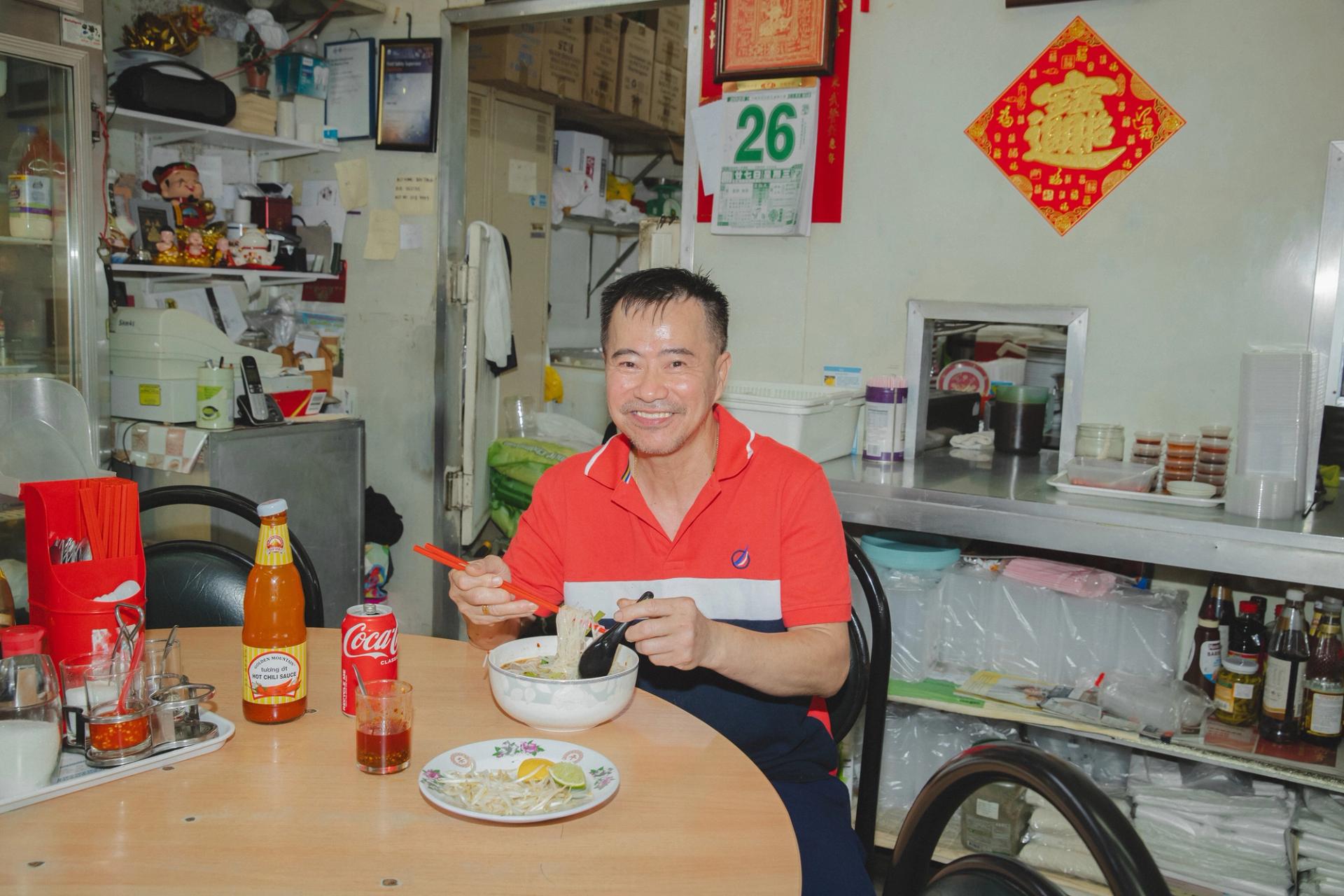
Step into Tang Bou’s kitchen in Cabramatta and you’ll find a 25-year-old boiler that’s bubbled and frothed long enough to cook a million bowls of Cambodian noodle soup.
Owner Bou Tang has run this Western Sydney restaurant since 1997 and hasn’t tired of the dish. He eats the noodle soup constantly, sometimes even savouring 2 bowls in one day.
This meaty broth loaded with rice noodles and greens offers relief and restoration to many people. Regulars across the generations have ordered it repeatedly and international visitors seek out Tang Bou’s arcade location for this signature dish.
‘They know. USA, they come. Cambodia, they come over, bring a friend,’ Tang says.
‘In our Chinese-Cambodian community, when someone comes from overseas, the first thing they ask is, “Do you want to go eat noodles?” And the first place a lot of people think about is this restaurant. It’s the soup that’s welcoming. The soup that brings you into Australia as part of the community.’
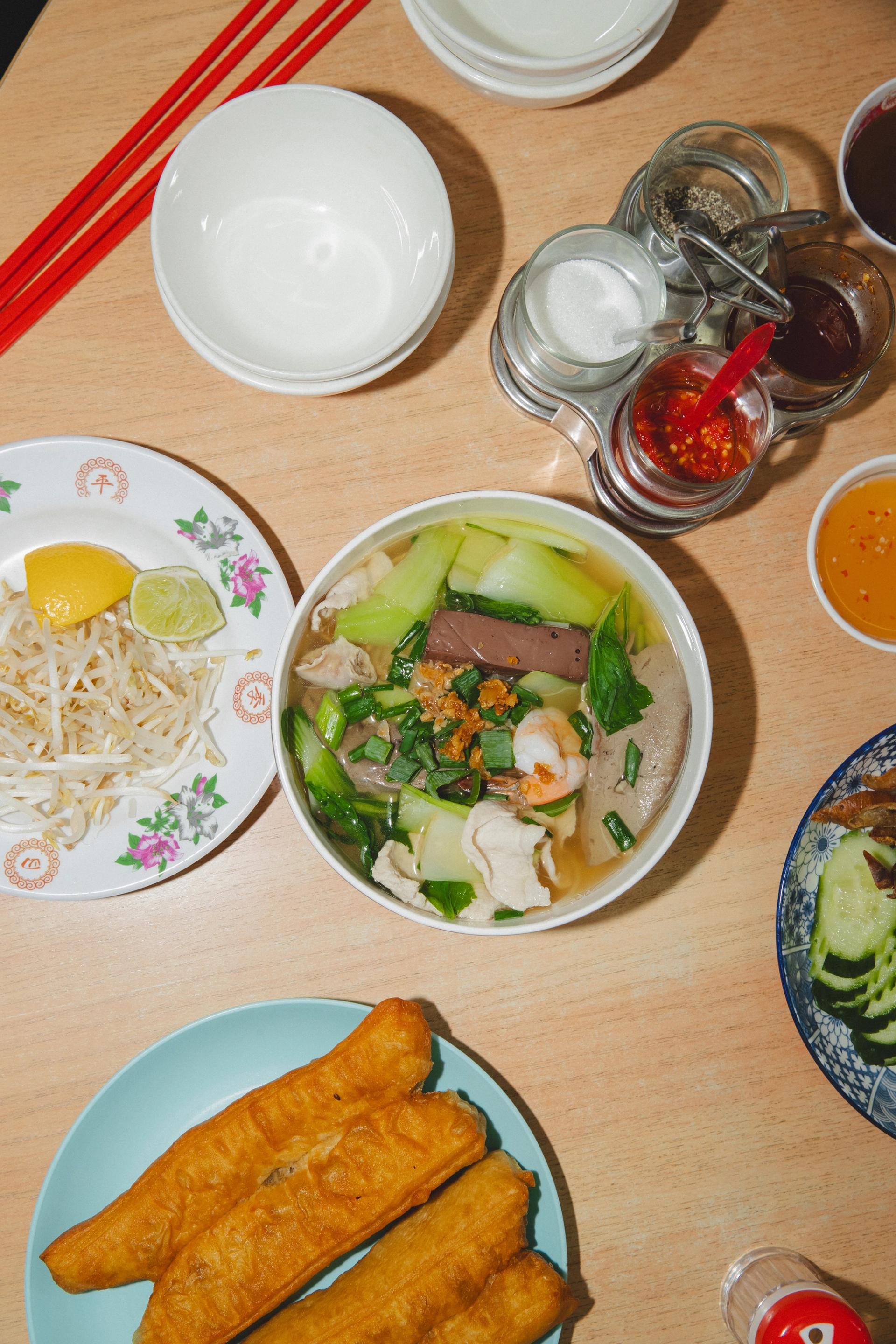
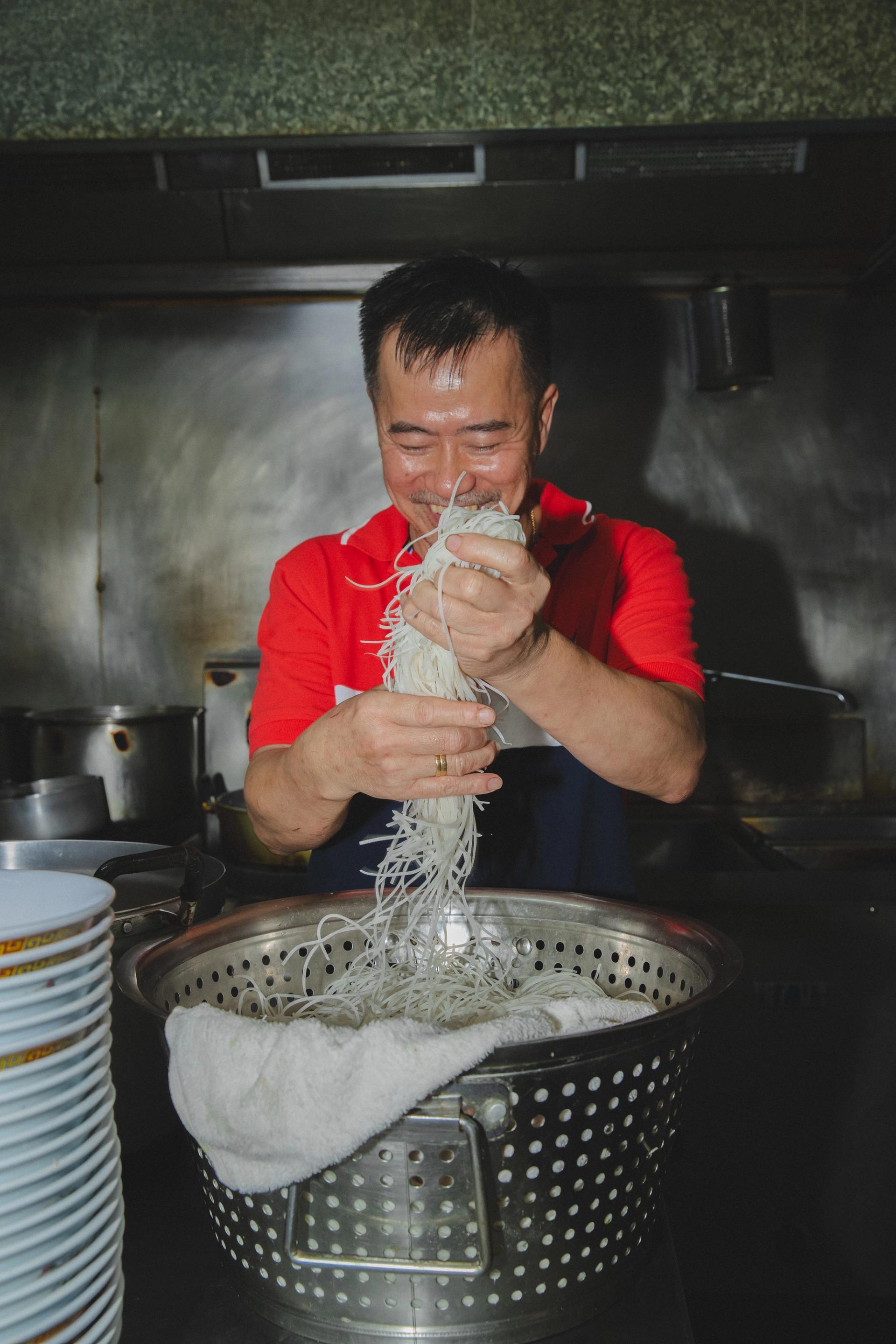
Tang grew up eating this soup in Cambodia. To transport its flavours here, much prep is required before the noodles can start dancing in the boiler’s high-heat bubbles. Then they’re scooped into finished bowls and sent to tables. Diners can accessorise their order with sprouts, chilli sauce and lemon.
The heart of the dish, of course, is the broth. It requires Tang to clean pork bones and leave them simmering in water for 2 hours.
‘He switches off the flame and lets it sit overnight. In the morning, he lets it boil again for another hour and then it’s ready to go. It’s a whole night process,’ says Kevin La, who has been a regular at Tang Bou since childhood.
The first step begins at 4pm, when the bones are delivered to Tang Bou.
Family is foundational to the story of the restaurant: Tang’s twin brother was vital to the doors opening and the kitchen being ready.
‘He helped me,’ says Tang. And long before he oversaw his own menu, Tang worked close by at his sister’s Cambodian eatery, Dong Son, which still thrives today. It was their father who taught them the cooking essentials.
‘His dad used to run a big kitchen back in Cambodia. It was grand enough to host wedding feasts,’ La says.
‘When he [Bou Tang] was young, whenever his dad would cook, he would always watch and learn. That was the way he found a bond.’
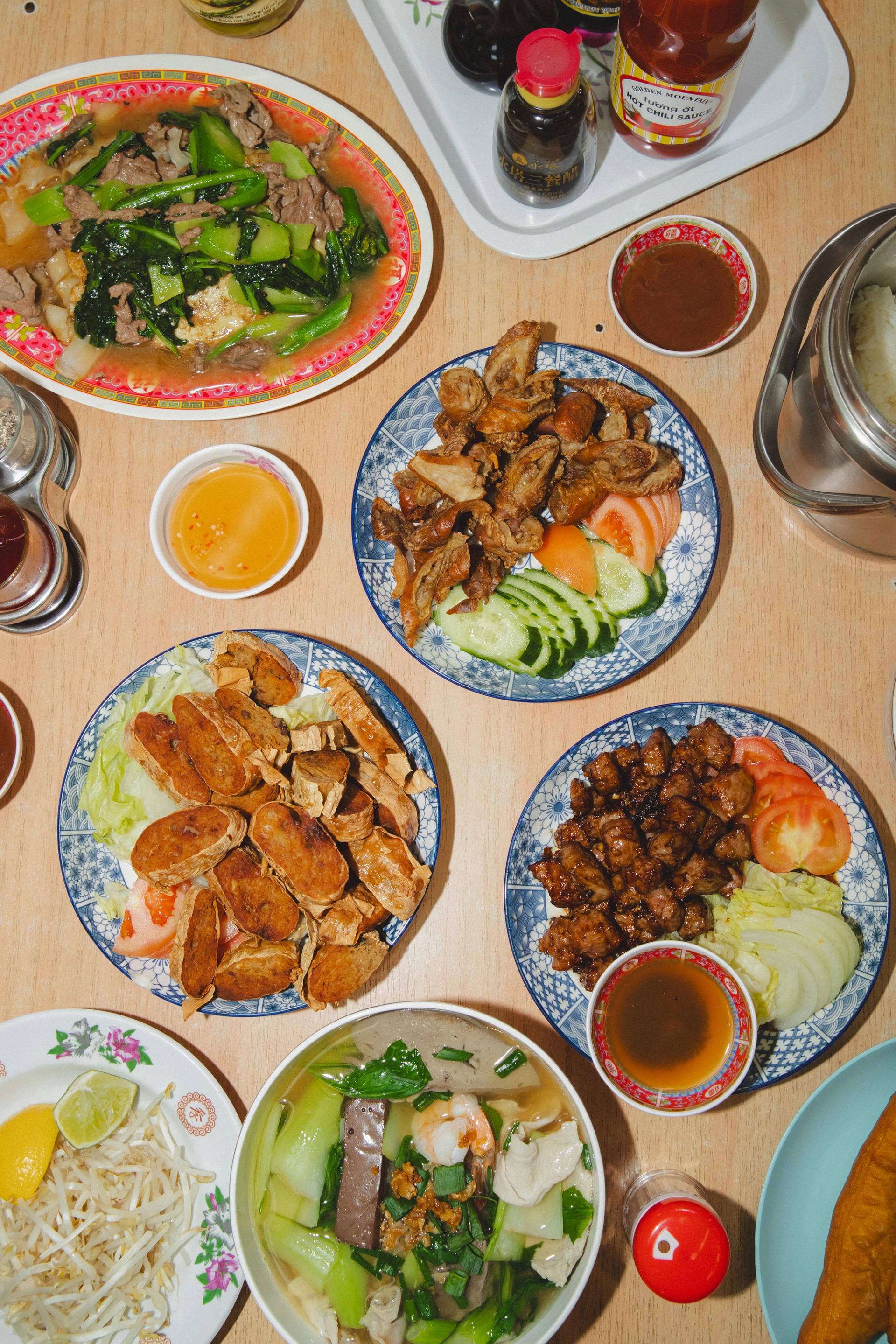
Tang especially loved a Teochew Chinese-Cambodian dish his father made: hae chor. It involves rolling prawn and pork mince into tofu sheets and running the bundles through the deep-fryer until the surface turns wafer-crisp.
‘It’s almost like folding a spring roll, but a lot harder than that,’ says La.
You can find a version on Tang Bou’s menu today.
‘When I taste it, it tastes exactly like how it is at home. Because my auntie makes it, too,’ says La. ‘It’s mostly a special occasion dish. It’s used as prayer food as well.’
It’s also a connection to Tang’s father, who was a victim of the Pol Pot regime in Cambodia. ‘He died from starvation,’ La says.
‘Cambodia was very hard,’ Tang adds. He doesn’t need to elaborate as the Khmer Rouge dictatorship was known for its brutality.
‘There was a lot of poverty, forced labour, violence. His family was just trying to escape that,’ La explains.
Tang had 17 siblings and the eldest also died during this era. The second oldest sibling helped everyone else flee – and the experience was not easy for Tang.
‘He was only quite young at the time, like under 10, and he was worried that people would catch him and then force him to be a soldier,’ La says.
Tang’s sister, who runs Dong Son, made it to Sydney first and helped Tang settle here. ‘Australia is number one,’ he says, with gratitude.
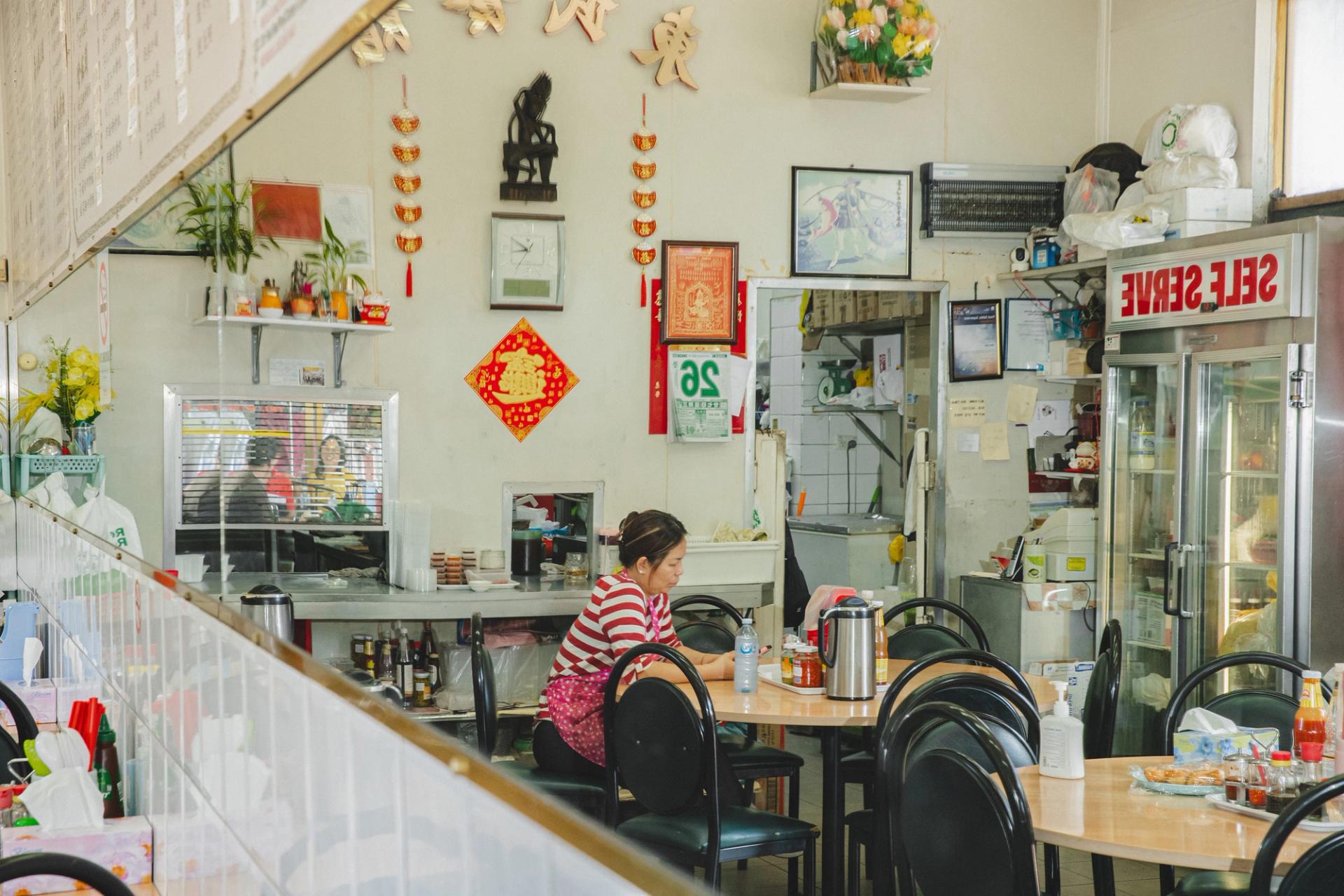
After working for his sister, Tang was able to open his own restaurant in Cabramatta’s Lucky Arcade after an acquaintance came across an available space.
‘You want to open a restaurant? I’ll do the fit out for you. I’ll organise that for you,’ he was told. It was a very good deal.
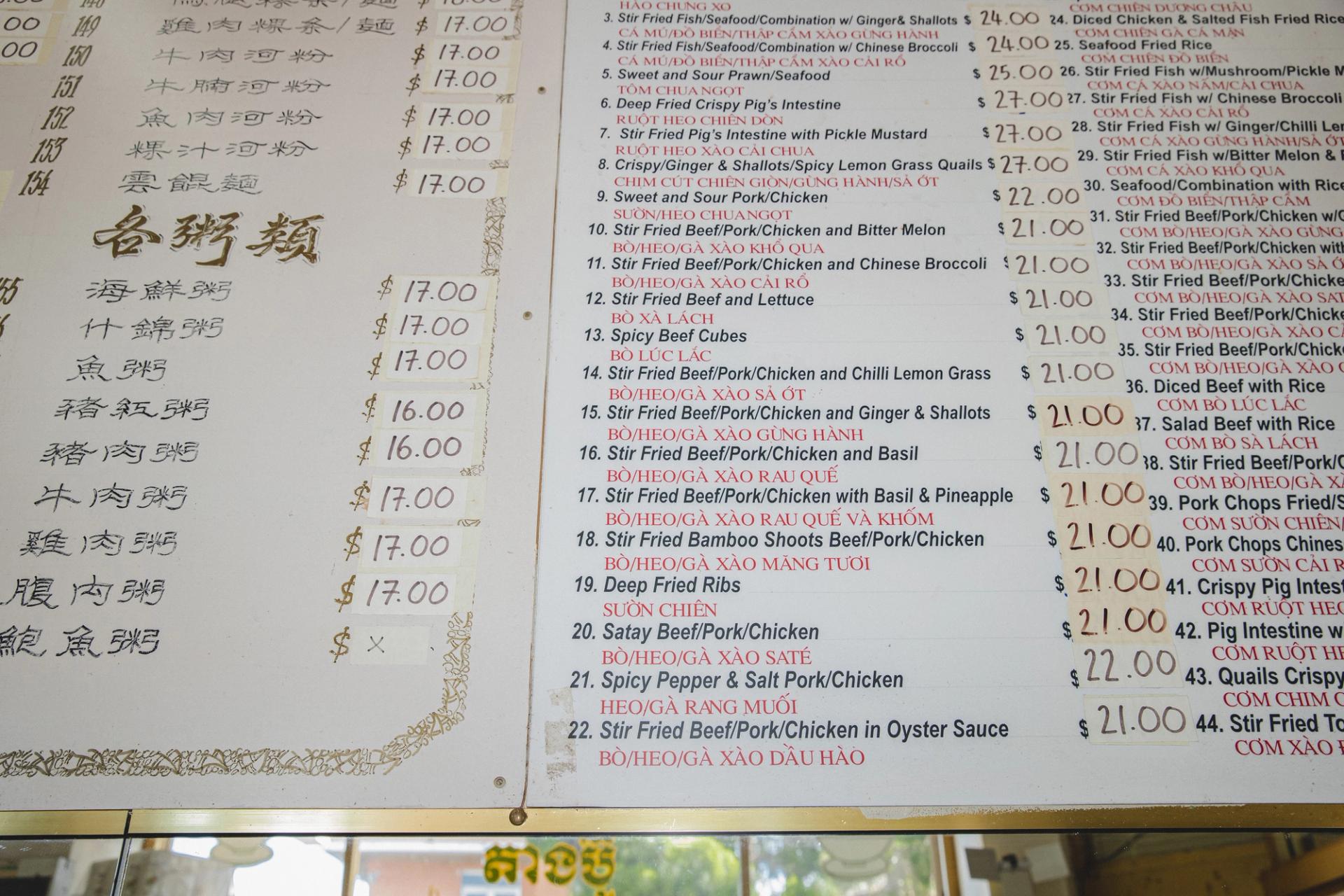
Since Tang Bou’s first serve of Cambodian noodle soup in 1997, his longest-standing employees have been family members: his twin brother who helped launch the restaurant, his wife and his 28-year-old daughter. And since the doors first opened, there are certain fixtures in the restaurant that have barely changed. He points to the Chinese menu on the wall as an example.
‘That’s handwritten,’ La says. The characters are detailed, meticulous and haven’t lost their sharpness over time.
‘My friend wrote it for me. He’s from Shanghai,’ says Bou. Except for certain patches where the prices have been updated, the menu has stayed exactly as the moment it was first fixed to the wall.
‘I first came to Tang Bou in 2025 and loved the old-style feel. All these beautiful old-fashioned menus that look like they’ve been there forever. I also asked Uncle Tang if I could peek in his kitchen, and I was pleasantly surprised to see how spacious it is. It’s the same size as the dining room, which goes to show how important food is. I had wok-stall envy because he has a 4-wok stall, whereas I’ve always had a single or double. As chefs, we look at each other’s equipment. It’s like when you’re an artist and you’re going into other people’s studios, checking out the equipment. He’s well set up.’
At Tang Bou you might be handed the photo-book menu featuring snapshots of 100 dishes or so, all taken by the restaurateur in the kitchen. The originals were photographed just before the plates and bowls were sent out to customers.
It took a while to complete because ‘a lot of the time everyone orders the same thing’, La explains. Tang had to keep track of what had remained unphotographed – and get his camera out when someone finally requested an elusive dish.
If you glance around the restaurant, you might spot things the owner is proud of (for instance, his home-made satay sauce) as well as the most popular customer orders: variations on the noodle soup, char kway teow or rice with a stir-fry.
‘He likes everything on his menu,’ La says. ‘Sometimes with the hard work he does here, rice is a bit hard for him to digest. So the noodles always go down easy for him.’
Ultimately, it all comes back to the Cambodian noodle soup that’s been a lifeline since his childhood; it’s also the dish that’s sustained this restaurant for 3 decades.
‘He can’t get sick of it,’ says La.
About Family Business
Family Business celebrates the Chinese, Southeast Asian and Korean communities of Western Sydney through the intergenerational food stories and culturally significant objects of long-established, family-run restaurants.
Selected by Powerhouse Culinary Ambassador and chef Kylie Kwong and food content creator Kevin La, 11 community-loved eateries open their doors, and their histories, to writer Lee Tran Lam and photographer Nikki To, offering an intimate window into one of Australia’s most richly diverse culinary scenes.
Powerhouse Food
Powerhouse Food encompasses programs, partnerships and initiatives that support and amplify the food industry and community.