Threading a Web

Even as a child, Maggie Hensel-Brown, never felt a craft was mastered until she’d managed to miniaturise it. Having worked out how to create origami characters, for instance, she’d then labour at making the pieces increasingly smaller – until such time as they could fit in a matchbox.
‘With every craft I learnt, I’d acquire the basic skills and then I’d make things smaller and more detailed and then smaller and more detailed again,’ she recalls. ‘When I found lace making it was like, well, this is it – this is the pinnacle of that particular impulse in me.’
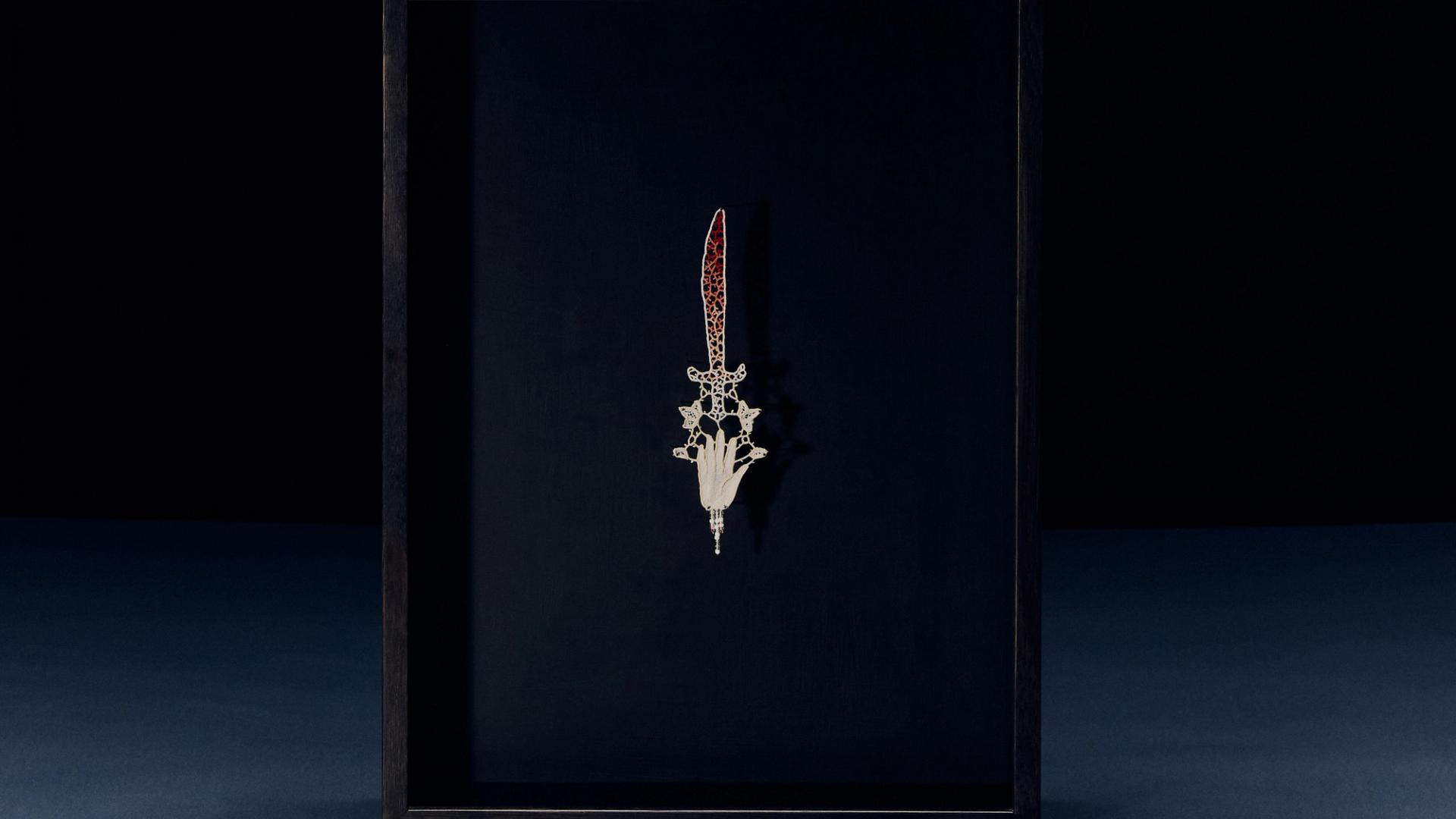
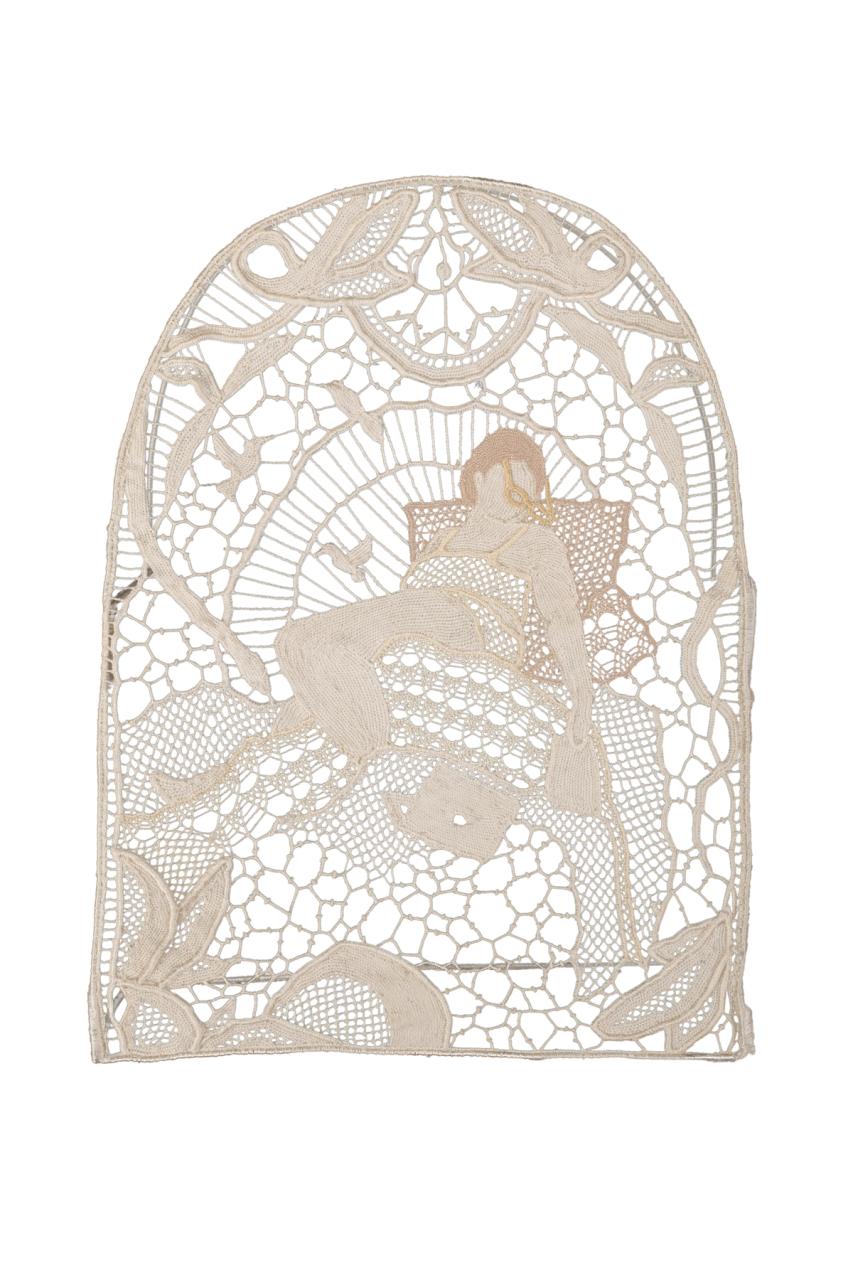
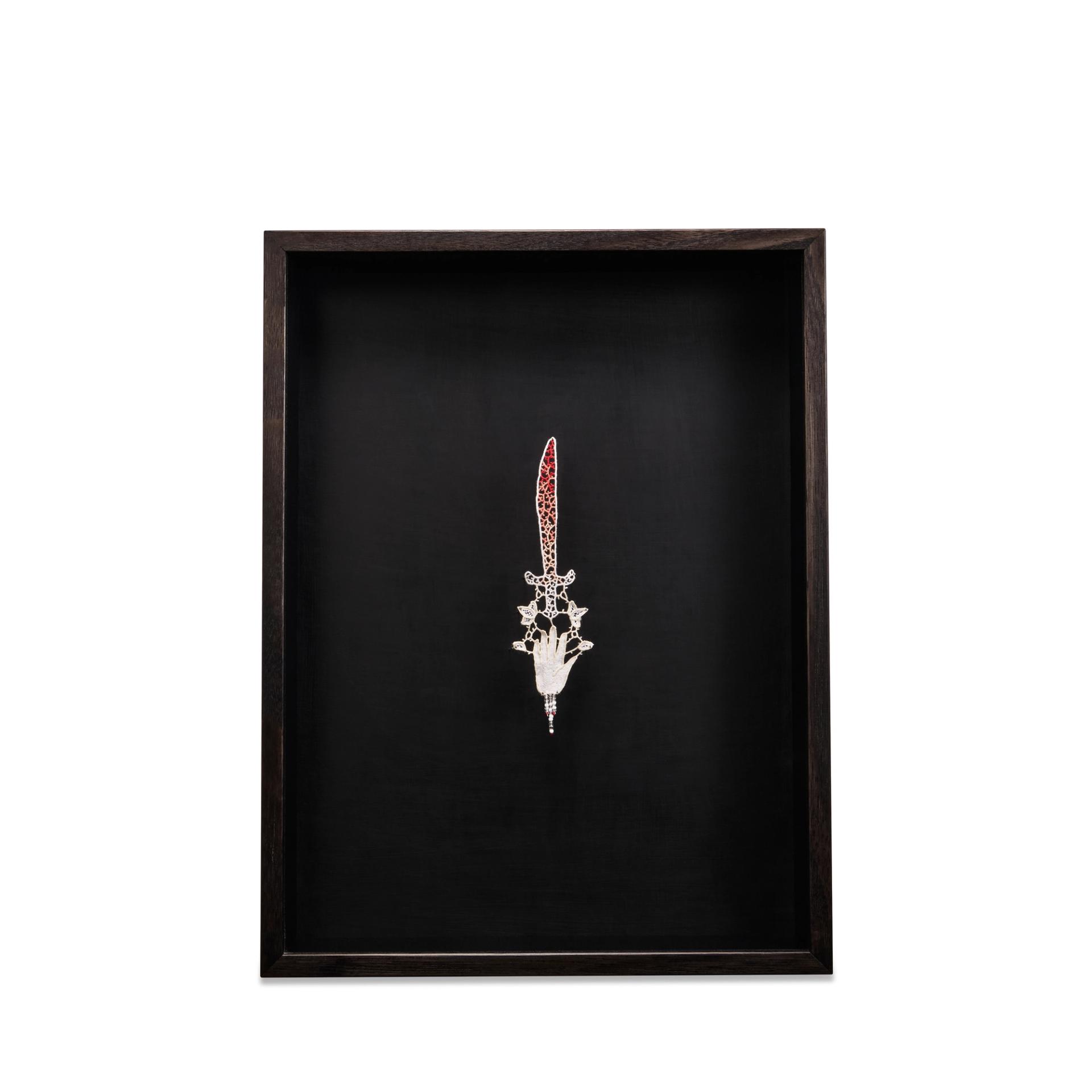
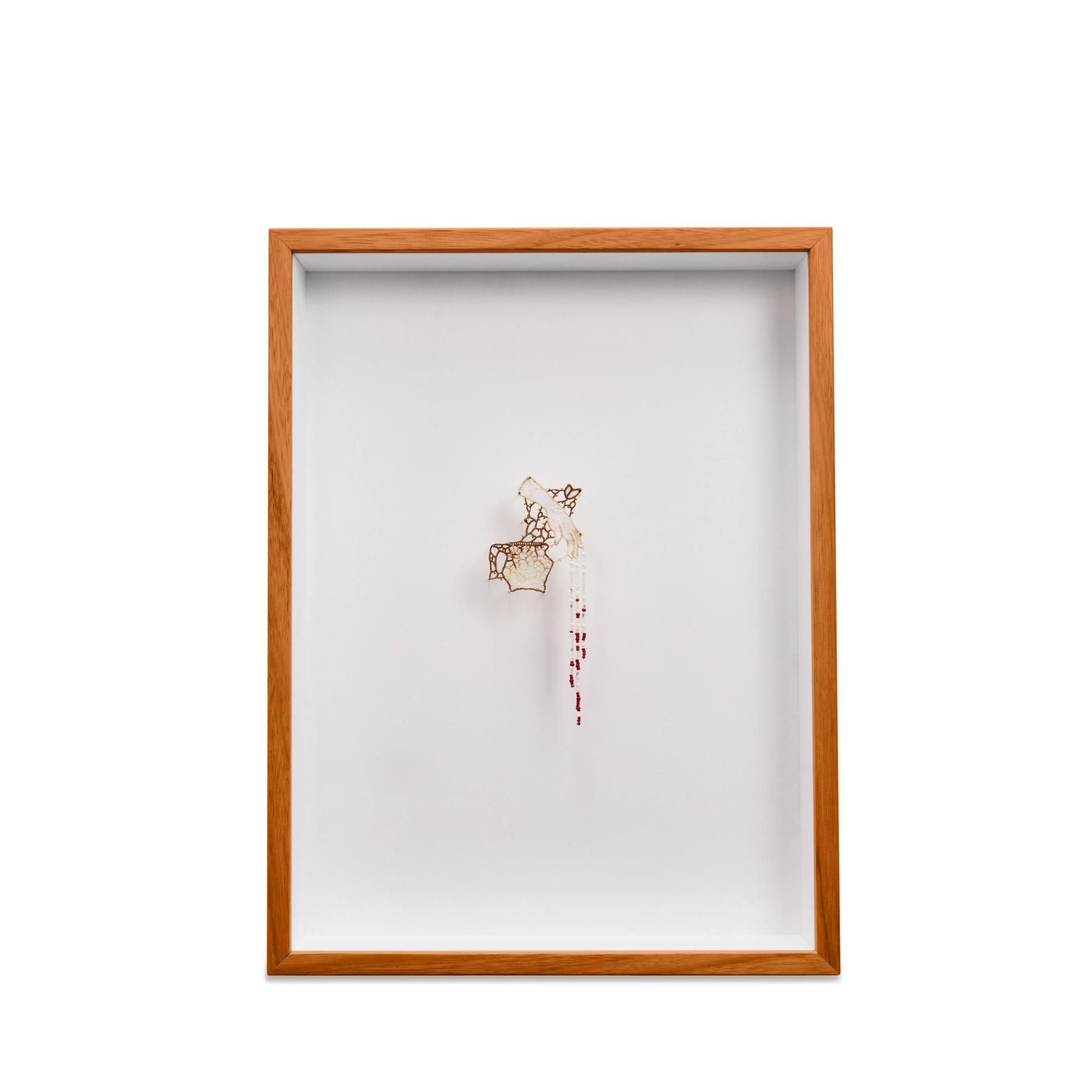
The Sword – Original Lace Artwork
Maggie Hensel-Brown’s original artworks are available through Powerhouse Store
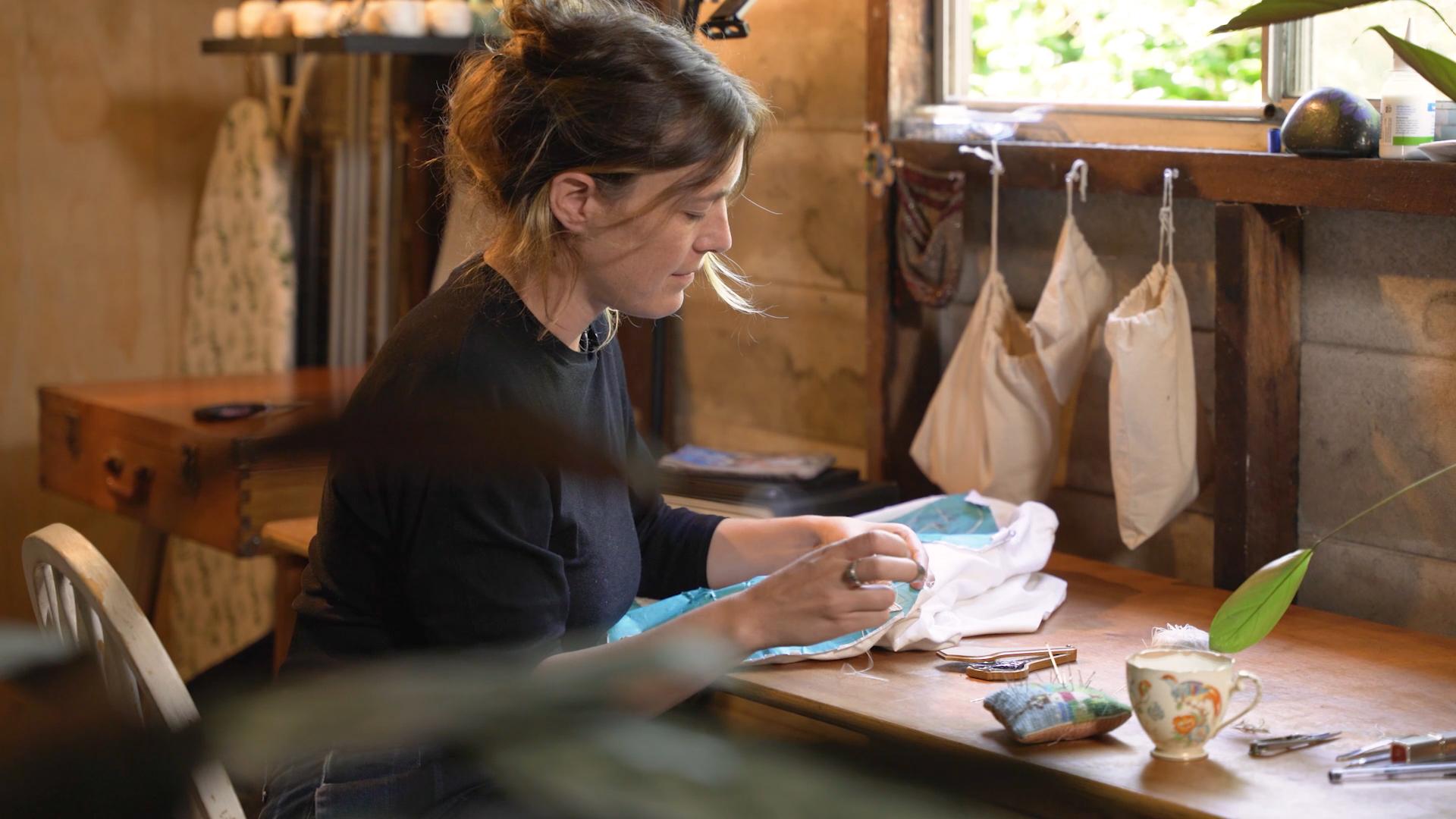
Maggie Hensel-Brown x Powerhouse Made™
Maggie Hensel-Brown is an artist and lacemaker from Mulubinba/Newcastle, now living and working in Naarm/Melbourne
It was an unlikely discovery. At the time Hensel-Brown was running a small community gallery in Newcastle and making finely crocheted, lace-adjacent pieces. A grant gave her the opportunity to take a class related to her practice. A quick Google search led her to a reticella needle lace class taught by the acclaimed lace maker Margaret Stephens in Berry.
She saw the work and signed up.
‘It felt like finding a calling like a nun,’ she says. ‘I’ve never had a louder bell ringing in my head than I did when I first found lace making.’
Eleven years later, that calling has taken her deep into one of the world’s oldest and most exacting textile traditions, as well as into the Powerhouse Collection (opens in new tab).
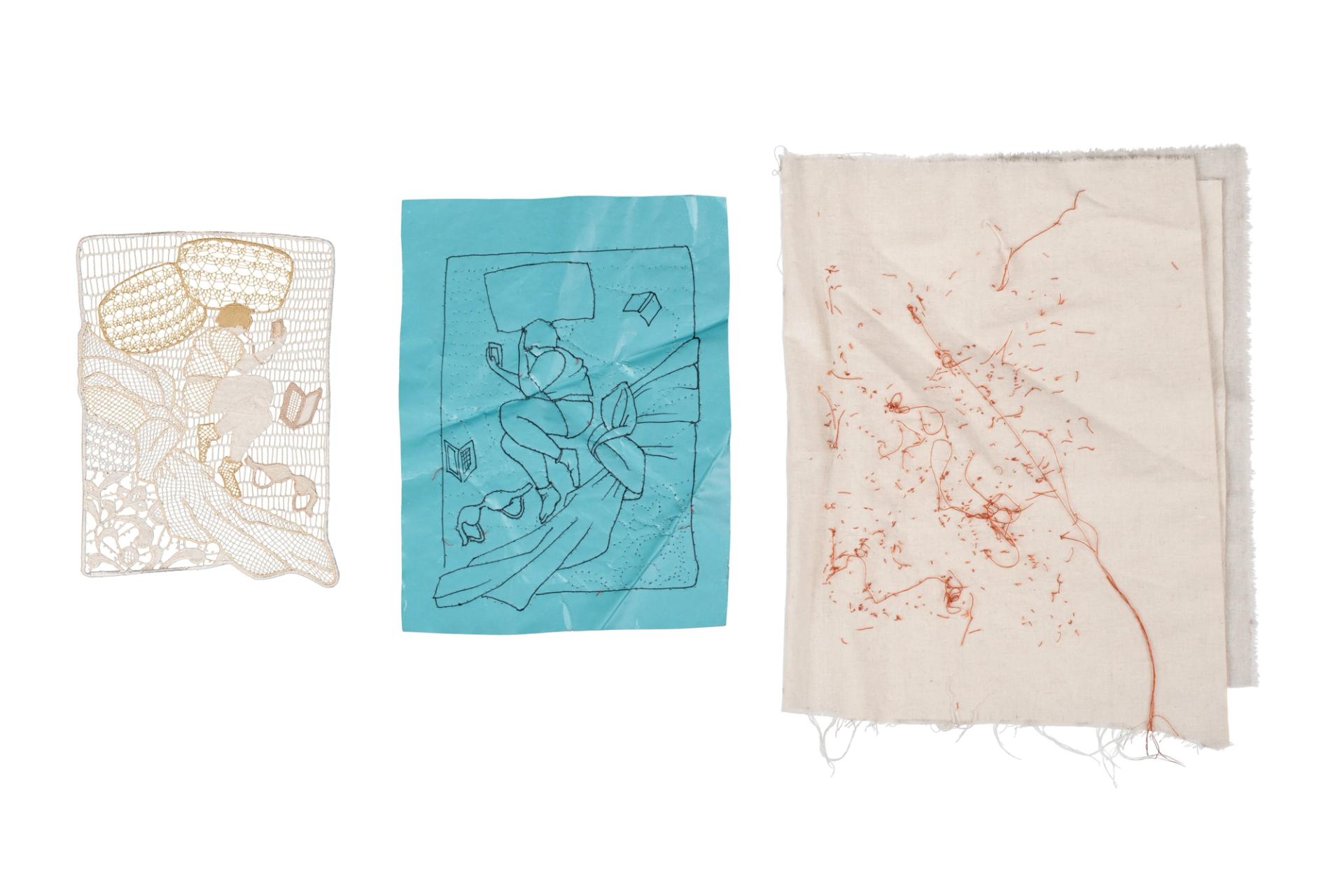
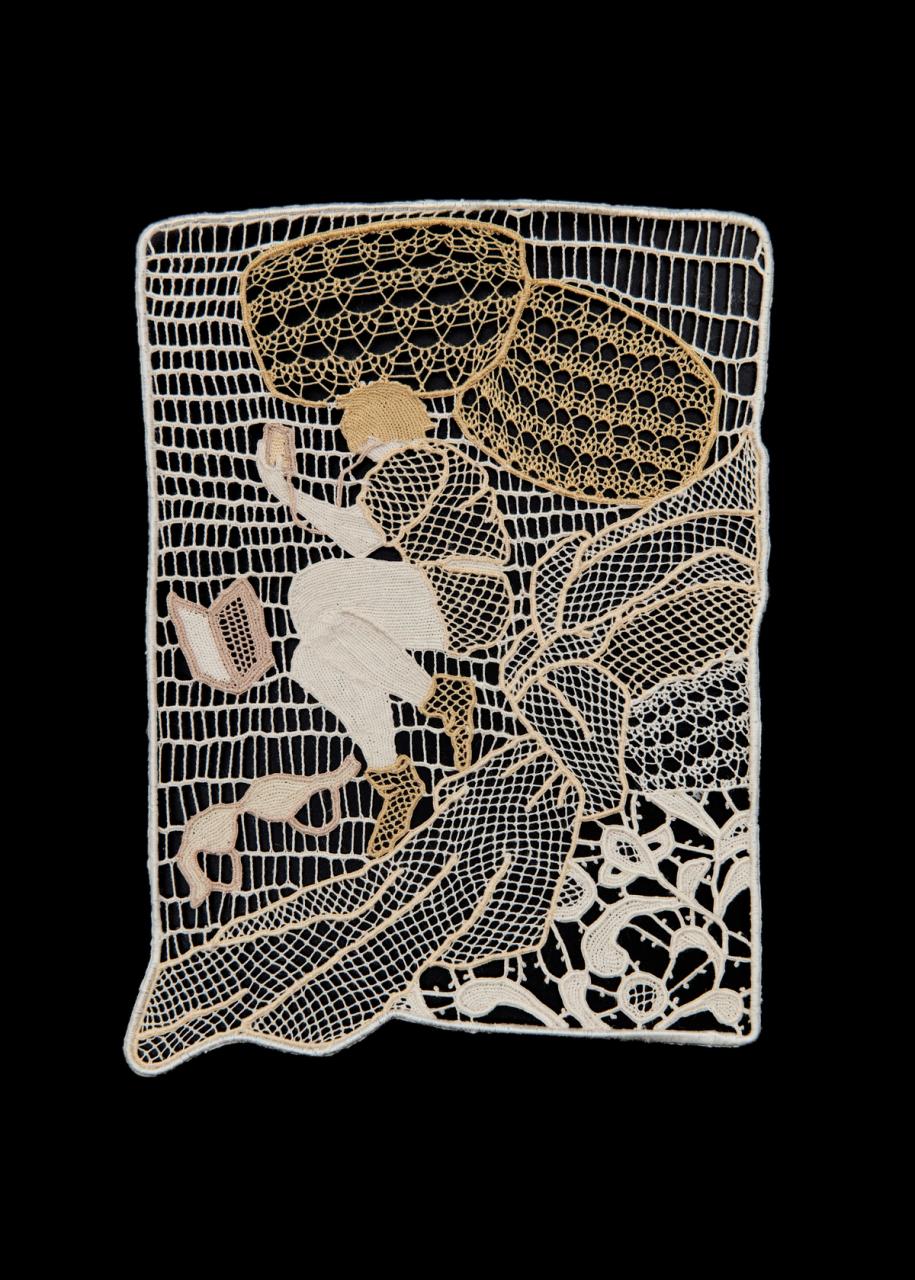
For Powerhouse Made, Hensel-Brown has created 3 small works inspired by one of the museum’s historic lace pieces, a depiction of Judith beheading Holofernes. The biblical story, in which Judith saves her people by killing an invading general, has been repeatedly depicted in art, including in lace.
Hensel-Brown first encountered the Powerhouse work shortly after discovering lace, when she visited the museum’s collection looking for inspiration. It stopped her in her tracks.
‘I saw that piece and it blew my mind,’ she says.
The encounter stayed with her. She has since seen 3 celebrated historical lace works depicting Judith and Holofernes in person, but the Powerhouse example, she says, is significant because it was the first.
‘The idea that now 2 of my pieces are in the same collection as that very first piece that inspired me so much, it's … one of the most mind-boggling and exciting things that has ever happened in my career.’
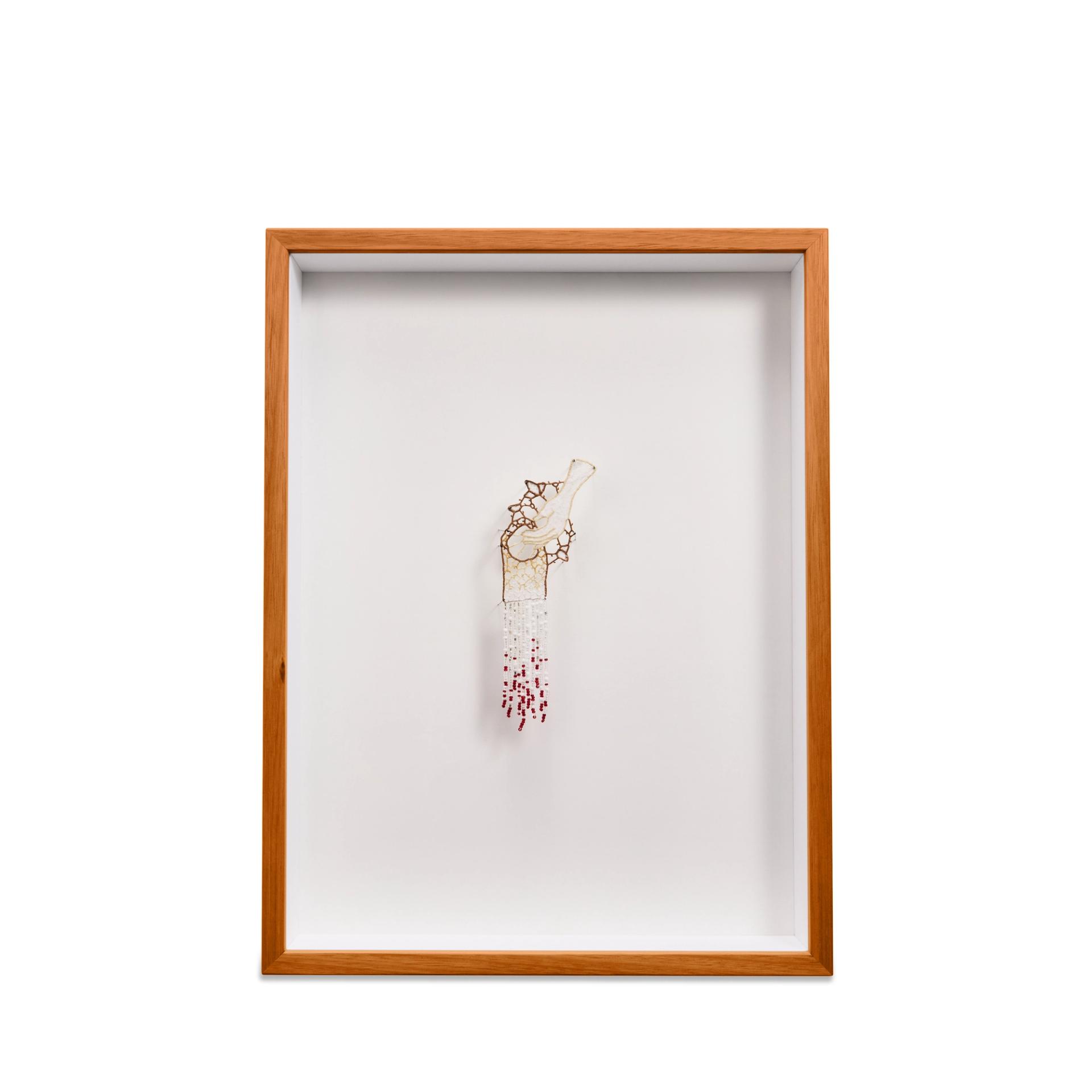
For Powerhouse Made, rather than recreate the violent centre of the scene, Hensel-Brown has gone looking for the details around it. Each work isolates the action of a hand and its relationship to an object: a sword, a bag and a pot.
The sword and reaching hand become an image of latent power. The bag is more prosaic, and, to Hensel-Brown, more amusing. In virtually every historical depiction of the story she has encountered, Judith’s servant carries one.
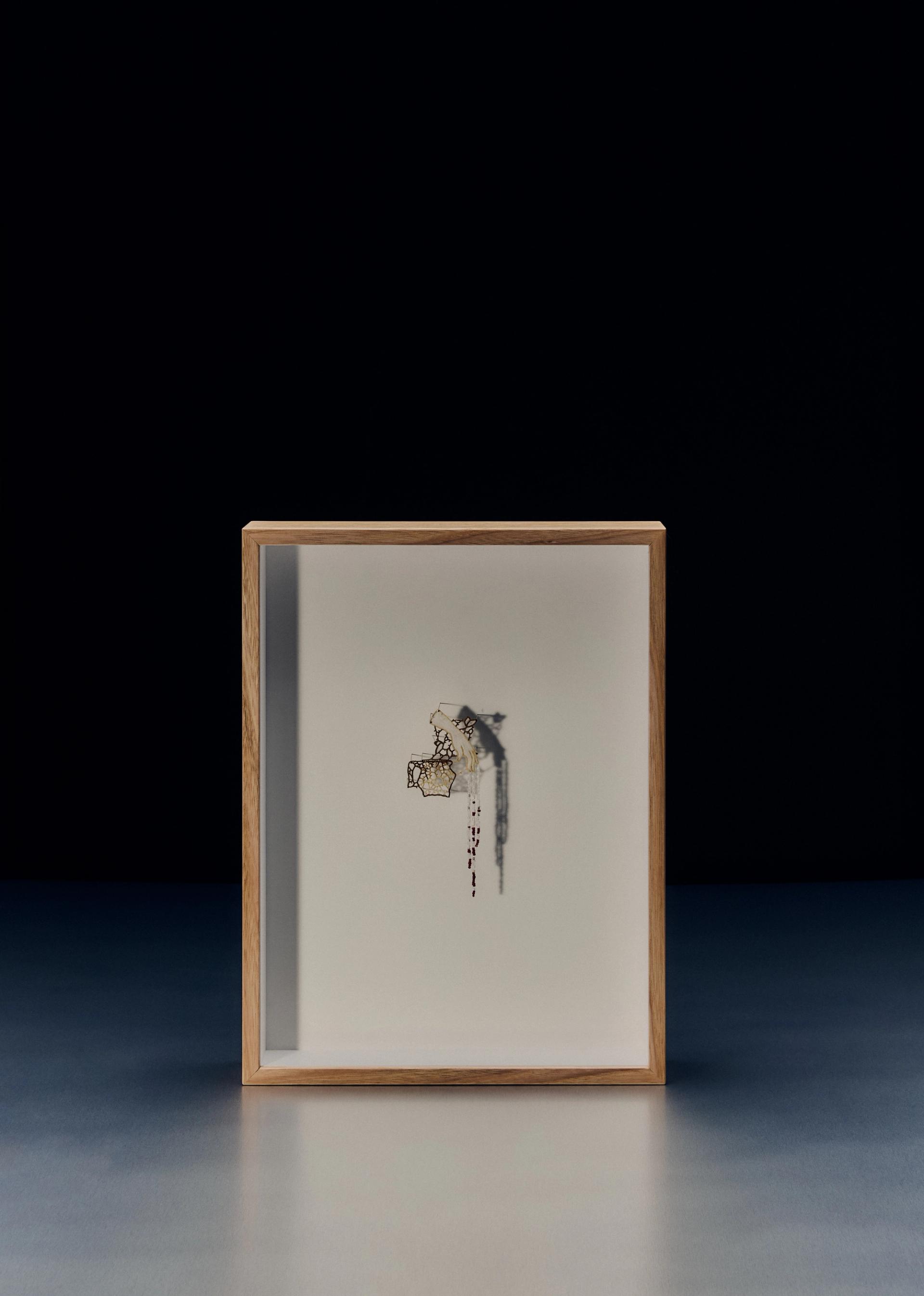
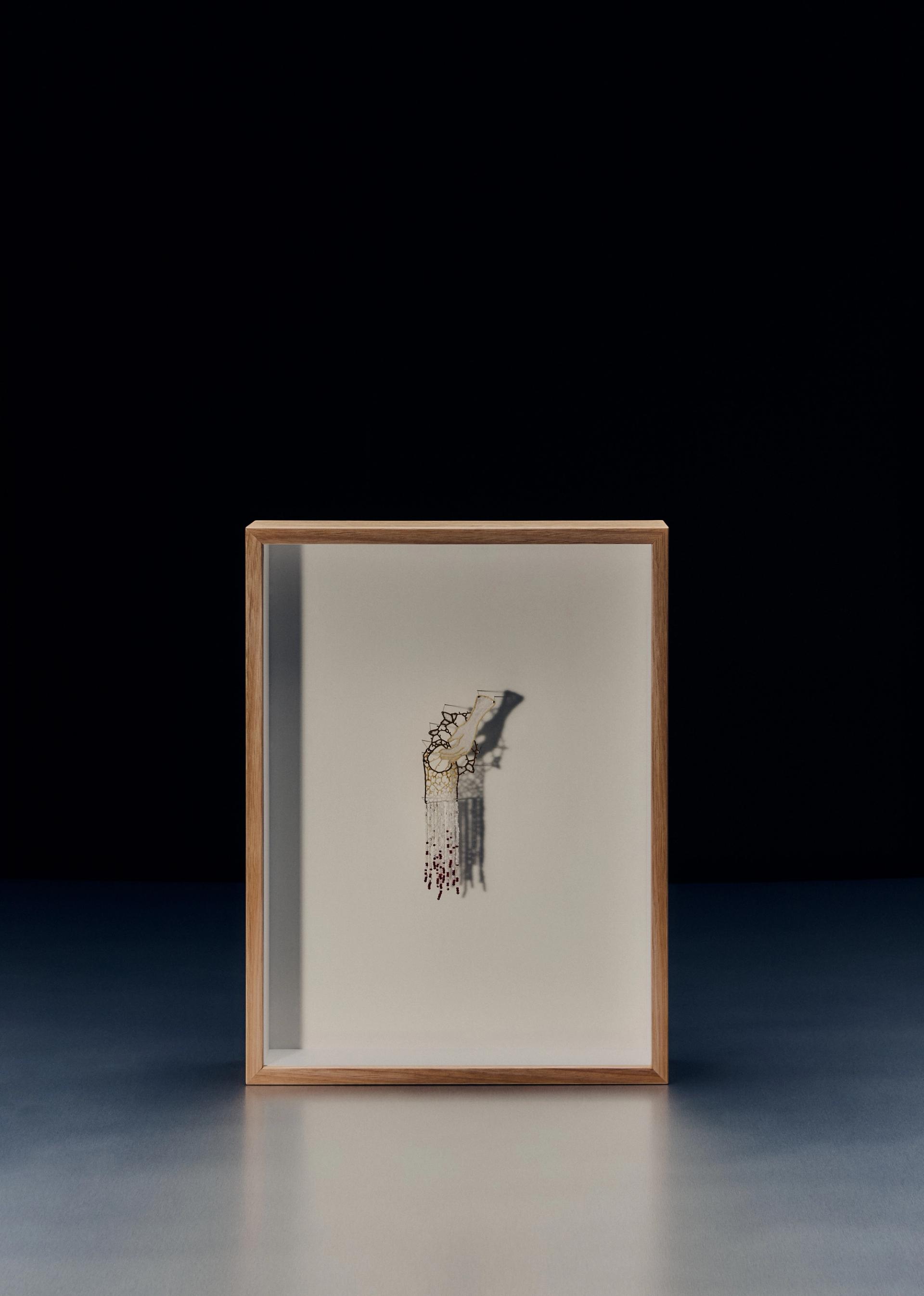
‘It’s like, well, where are we going to put the head? We’ve got to put the head somewhere. How else are we going to carry it?’
The pot is more mysterious. Is it a vessel for blood? Wine? Something entirely mundane? Hensel-Brown is less interested in resolving the question than in the specificity of the object itself.
‘The addition of detail sort of pins it in time and in a place and it gives people something to concentrate on,’ she says.
It’s a fitting description of her own practice. Hensel-Brown works in needle lace, using super-fine, 100-weight silk thread and a needle. Each pieces begin as drawings and patterns, constructed over a temporary backing. A scaffolding of threads holds the work in place until, when it is finished, the supporting threads can be cut and the lace peeled away.
The technique is painstaking but remarkably unchanged over the centuries.
‘It’s exactly the same technique as that piece was made in the 1600s,’ she says. ‘It’s the same stitch, it’s the same process, it’s the same impulse.’
The difference is that Hensel-Brown also likes to embellish her lace with hundreds of tiny glass beads, creating cascades of tassels and giving the work what she calls its ‘sumptuousness’ and ‘lushness’. In the Powerhouse works, red beads offer a discreet hint of the bloodiness beneath the delicacy.
That tension between fragility and force, ornament and violence, is part of what draws her to lace.
She is also fascinated by the stories embedded in the medium’s history. Lace was historically a female-dominated practice, even as the finished objects became symbols of wealth and status for churches and wealthy households. The makers themselves were often forgotten.
She has a theory that this may help explain why stories of powerful women recur so frequently in lace: Judith, Salome, Artemis and others.
‘It’s a female-dominated art form. And here are the stories we tell,’ she says. While readily acknowledging that the theory is hers rather than established scholarship. ‘I’ve got nothing to back it up except like strongly held belief.’
What is less speculative is her belief in the value of the craft itself. With practitioners of traditional lace making dwindling, she sees teaching as an important part of her role. She has taught many people and regards herself as part of a continuing chain of makers.
Her own artistic values, she says, are ‘curiosity and playfulness’– balanced by dedication. A single square centimetre can take hours; the works are composed of thousands of tiny stitches, each made by hand.
The pieces may be small, but they are mighty.
Powerhouse Store
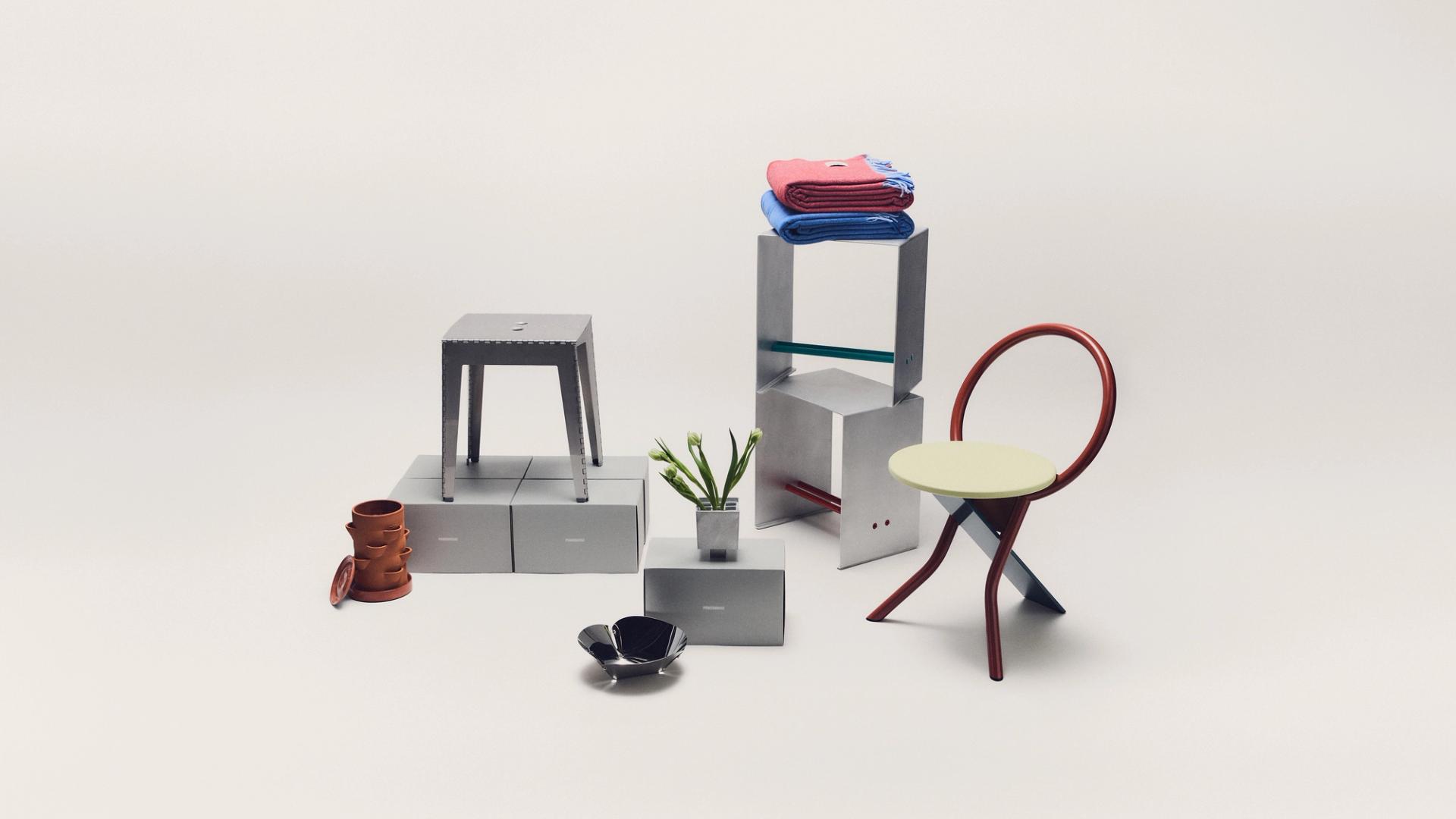
Powerhouse Made objects are available through Powerhouse Store, the museum’s retail platform. Every purchase supports Australian designers and makers and champions their creative practice.