Eating Singju and Kangsoi in Delhi’s Humayunpur

An old Caucasian man walks the streets of Humayunpur in the evening, a tote bag on his shoulder, selling incense sticks to the restaurant owners. It is not part of some cultural tradition. The restaurants — almost all of them run by migrants from the Northeastern states of India and serving food from their region — burn the incense not at an altar, but at the entrance or the periphery of the restaurant.
In the early 2000s, when the effects of India’s economic liberalisation a decade prior were experienced across the country, young people from the eight Northeastern states started migrating to Delhi to study or to work, mostly at the newly emerging call centres. Munirka and Humayunpur became the two neighbourhoods where these people found a sense of home, the former for its proximity to the Jawaharlal Nehru University (JNU) and the latter for its affordable rentals. Food cultures and flavours from these states also travelled to Delhi, as migrants began to cook dishes from their homelands in their new kitchens. These flavours were met with responses from mainlanders, to whom these foods were largely unfamiliar.
‘It is a sort of compromise,’ says Thangkhansuan, as an explanation for the incense. Thangkhansuan moved to Delhi from Arunachal Pradesh, a Northeastern state neighbouring Manipur, in 2016 to pursue his master’s degree in Sociology, and currently lives in Humayunpur. ‘I was once asked by a landlord to light an agarbatti if I was cooking “smelly food”.’
These negotiations and assumptions have frequently been a part of the living experience of students and young professionals who have moved to Delhi from the Northeast. ‘My Sociology professor asked me if I ate snakes,’ says a Delhi-based professor, who prefers to remain anonymous. She came to Delhi from Manipur in 2007 as a young professional to pursue a master’s degree in Sociology. As a woman, her experience was even more unpleasant.
‘What we ate and who we met, both were under scrutiny,’ she says.
A similar experience led Beauty Thounaojam, who also moved to Delhi from Manipur, to pursue a PhD intersecting food, migration and identity. ‘When you cook, we vomit,’ she was told by her landlady, who lived one floor below her and is from a dominant caste. This comment was followed by a week’s notice to vacate the flat. ‘The incident made me think, was our food really smelly? Was I crossing a line?’ Beauty says.
For many young people stepping out of their hometowns for the first time, eating familiar and familial food is perhaps the only way to stay connected to the comforts of home. At such a formative time, Beauty and her compatriots were internalising the stigma associated with their everyday food. And yet, cooking these very foods became little acts of reclaiming identity. ‘When I was living in a hostel in JNU, a bunch of students from the Northeast took over the canteen in one of the hostels and changed the menu to Naga and Manipuri food for a few weeks. That was exciting,’ says Thangkhansuan.
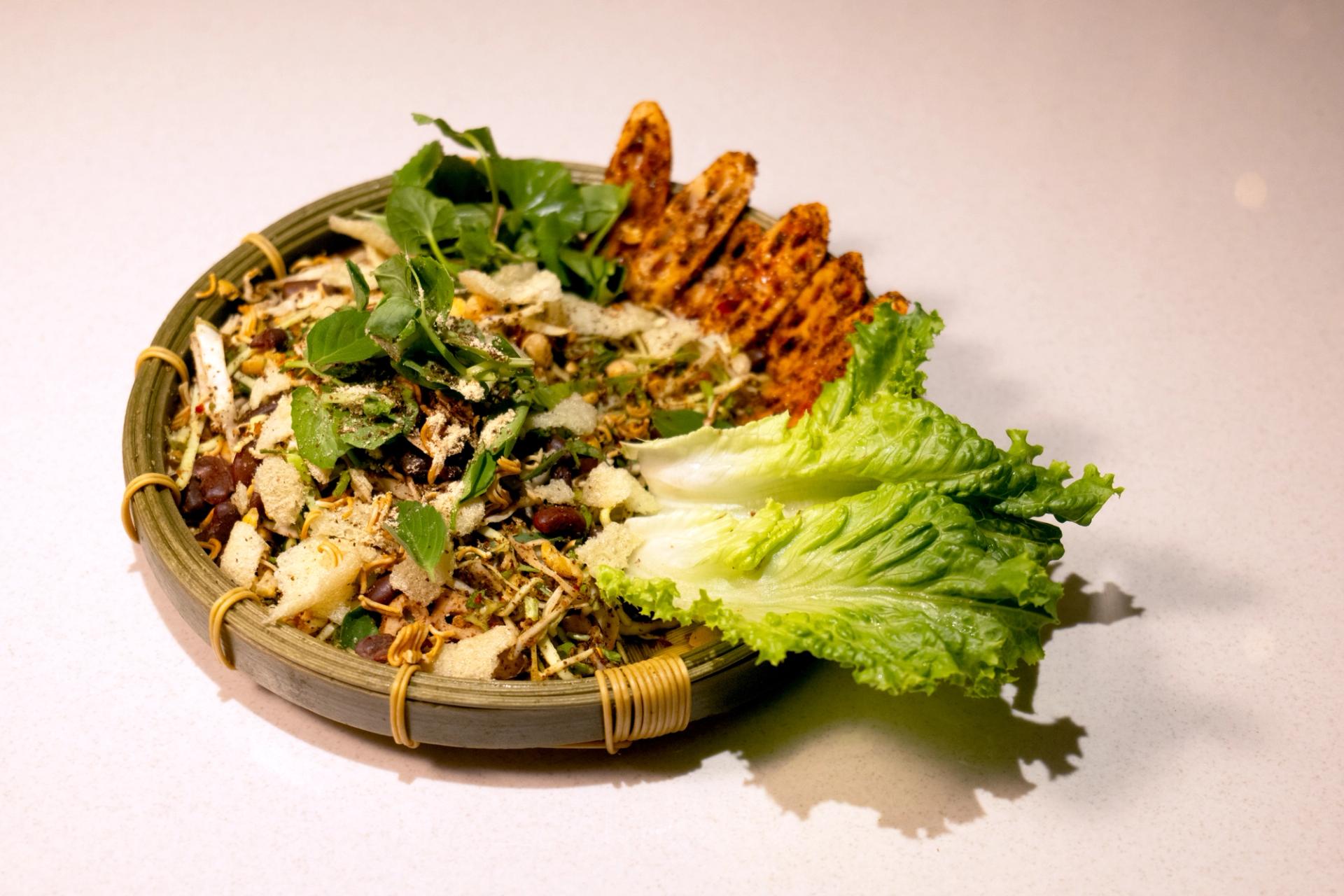
Certain dishes that form an integral part of a Manipuri diet and were easy to put together became an escape from the unfamiliar food in a new city. ‘In my early days living with my brothers in rented accommodation, we used to make a lot of singju because we always had access to ngari. If we have ngari in our pantry, everything is sorted,’ says Beauty. Ngari, or fermented fish, is an essential part of Manipuri cooking, especially in the Meitei community.
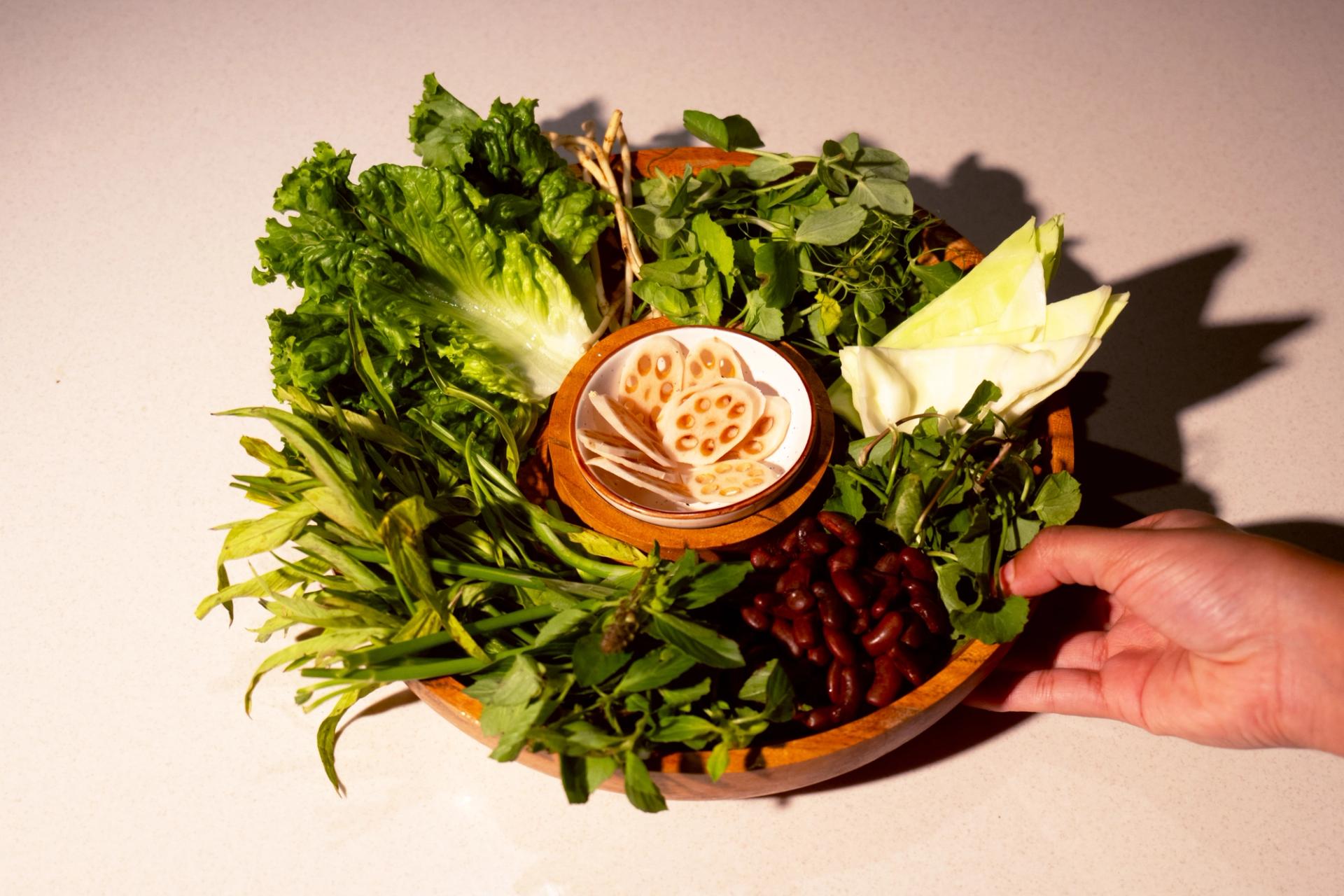
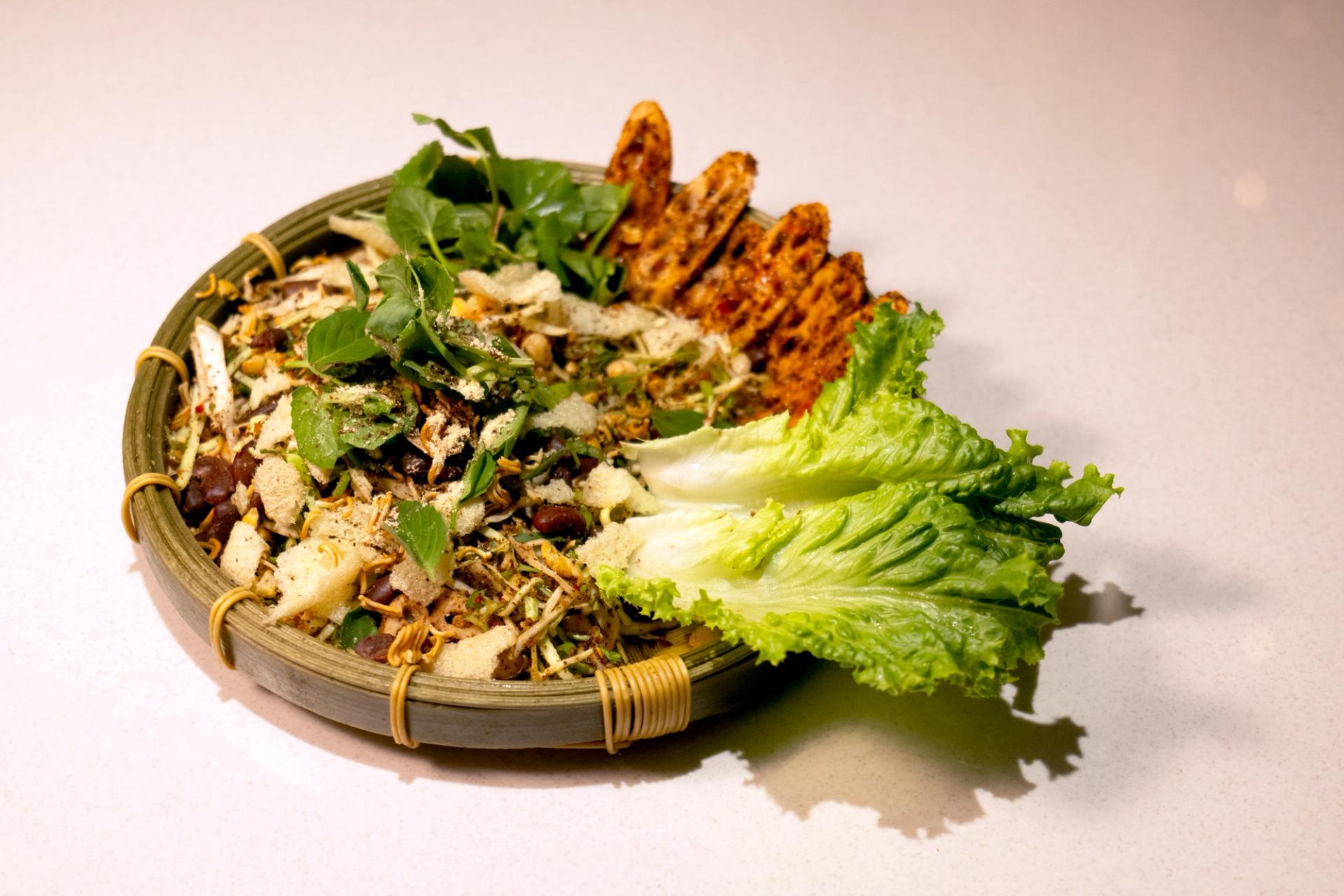
‘Ngari is to Meitei food what fish sauce is to Thai cooking,’ says Nikesh Asem, chef and co-owner of Hentak (opens in new tab), a progressive Manipuri restaurant in Humayunpur. It is added to singju, a side dish made with fresh greens and herbs along with roasted perilla seeds and gram flour. Ngari is also essential to eromba, a condiment that accompanies a Manipuri meal. Fermented fish is mixed with red chillies, boiled potatoes or green beans, boiled fish, and chopped coriander or spring onions.
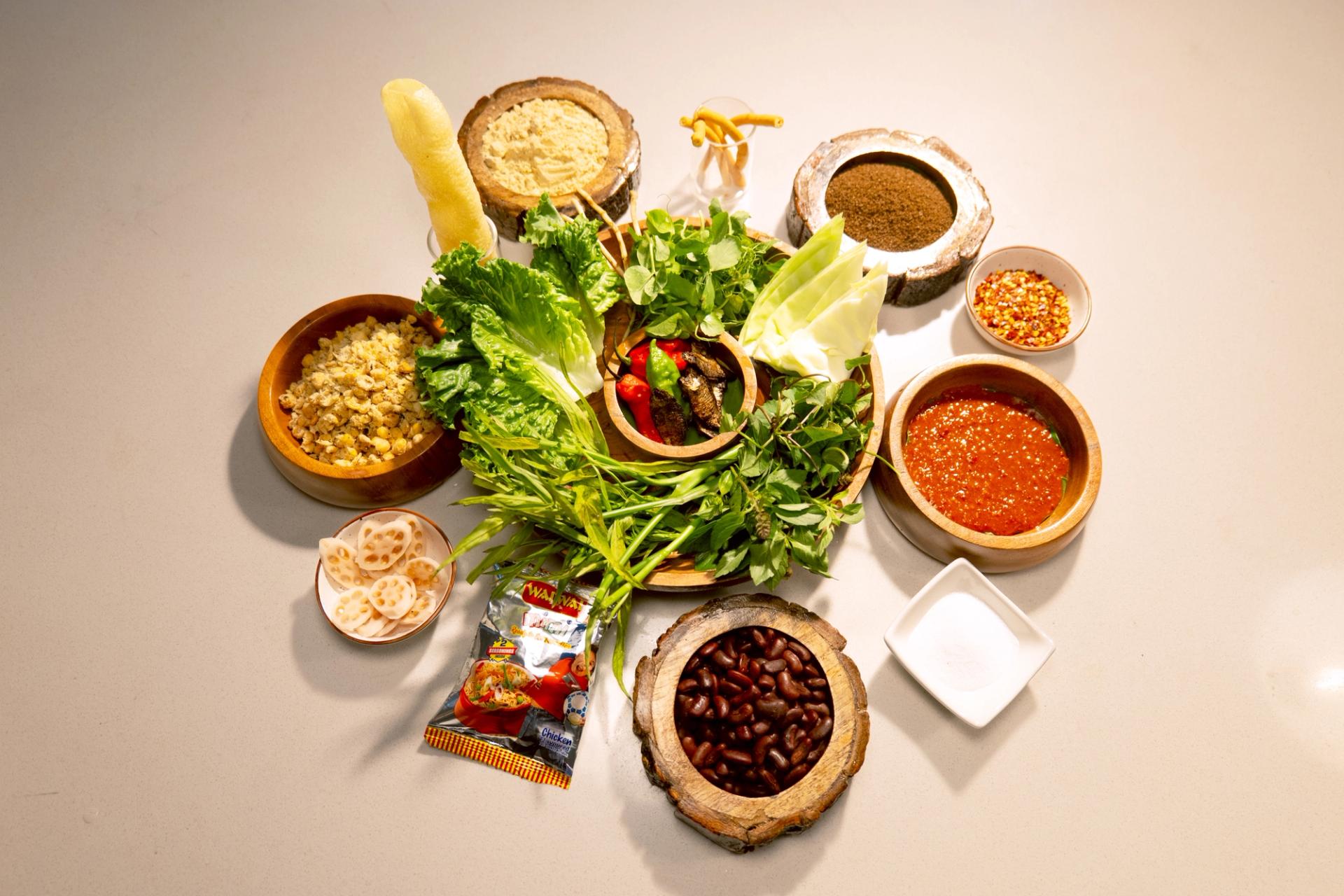
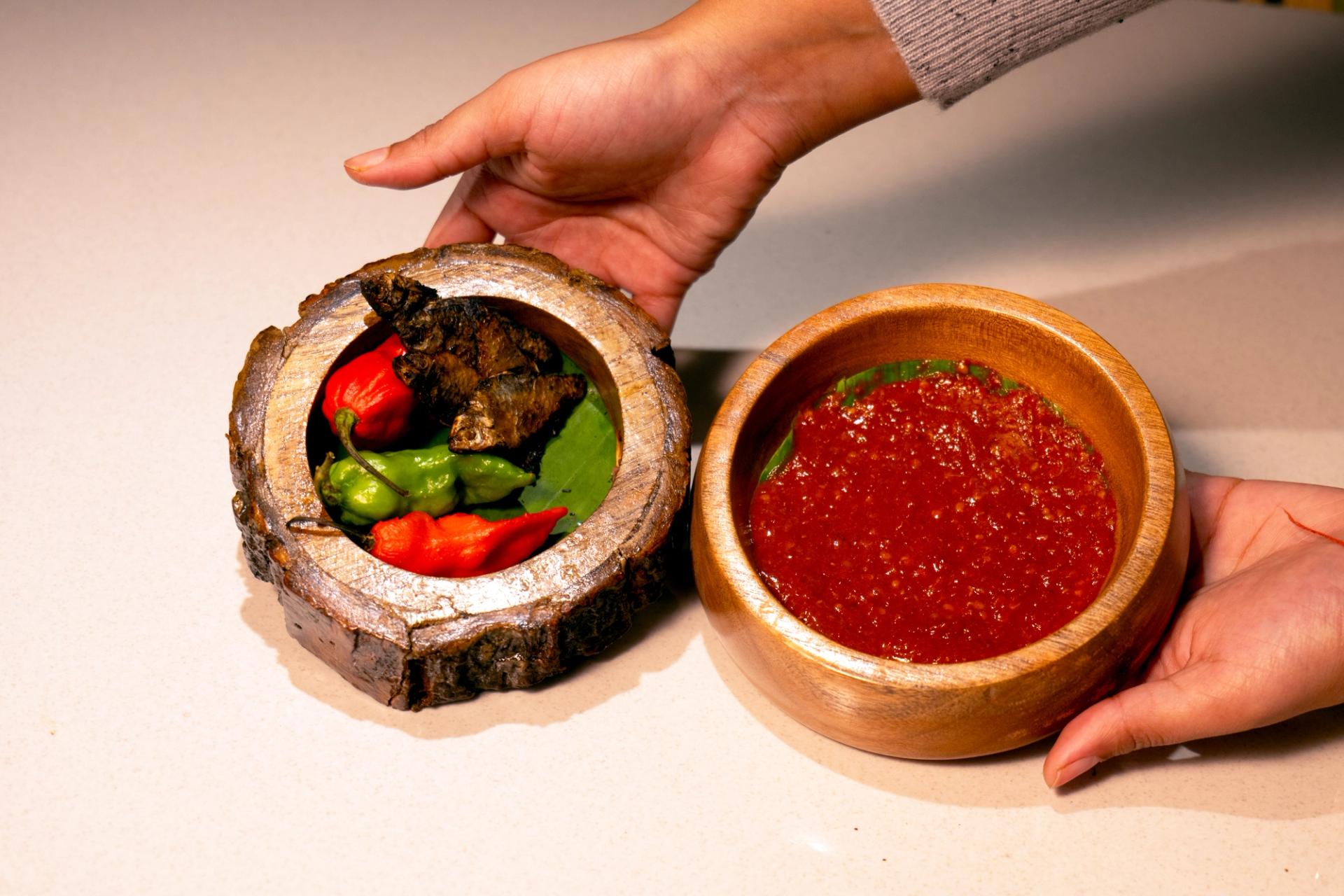
For most hostel dwellers, eromba elevated the basic and mostly flavourless food served in their mess, the designated dining area where students eat standard meals provided by the institution. Along with hawaijar/bethu (fermented soybean) and bamboo shoot, ngari forms the trinity of foods central to the politics of smell in neighbourhoods like Munirka and Humayunpur.
The Making of Humayunpur
‘Humayunpur was nothing like how it is today; I have seen cattle roaming around there,’ says Akoijam Sunita, who first moved to Delhi from Manipur as a student in 1995, and then again in 2010 as a working professional. The neighbourhood was once farmland owned by the Jat community (a typically agricultural ethnic group hailing from various northern states of India). In the 1960s, the Government of India acquired the farmlands and sold them to Delhi Land and Finance (DLF) — an Indian commercial real estate company responsible for developing some of the major residential colonies in Delhi-NCR and neighbouring Gurugram — for redevelopment. The area became the posh Safdarjung Enclave, but a small part of the urban village stayed. The residents constructed more floors to their houses and started renting them out, first to migrants from Uttar Pradesh, Bihar and Nepal, and then to those coming from the Northeastern states.
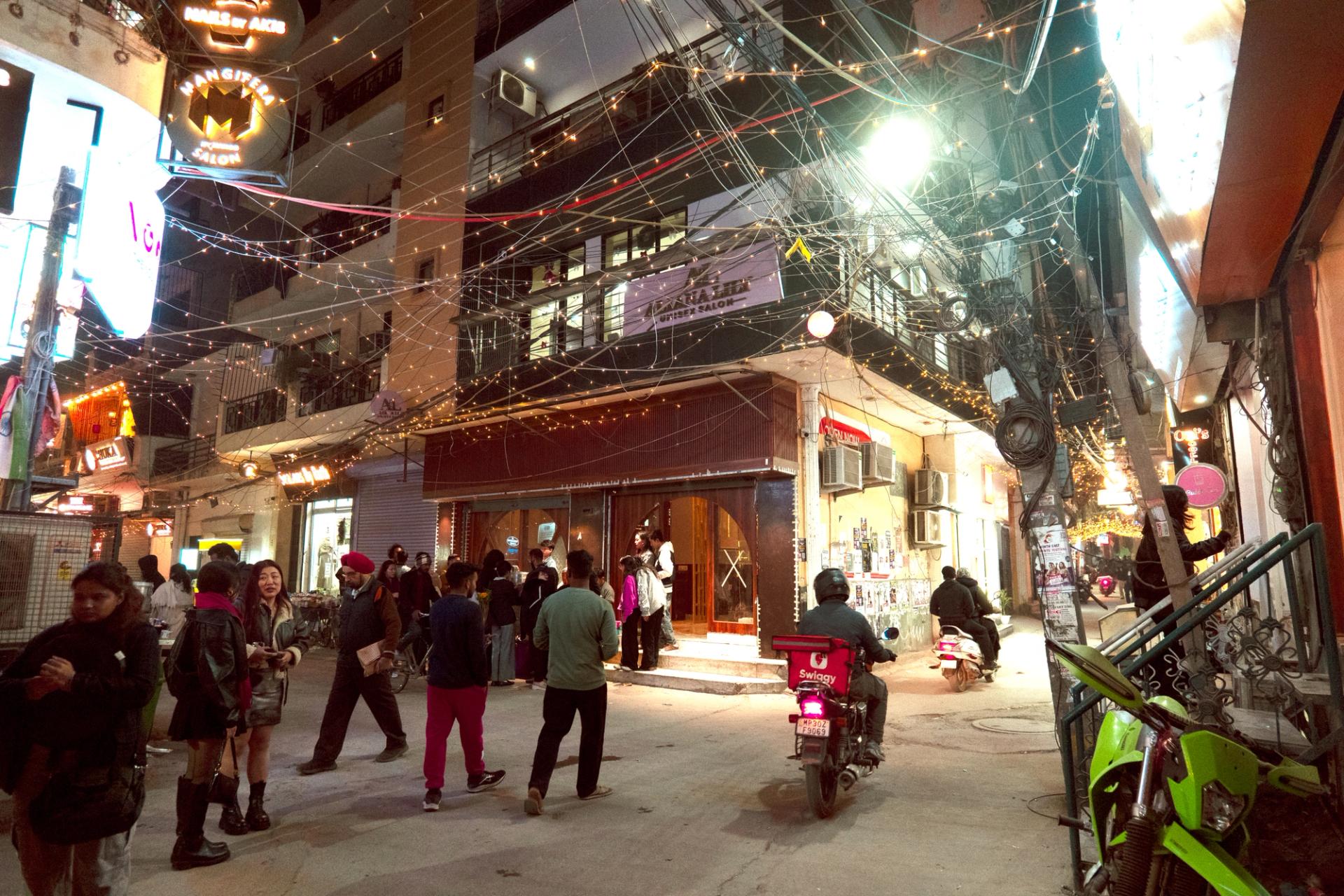
But Humayunpur was far from being the trendy hub it is now.
‘Back then, the closest we would get to home food was at the Nagaland stall in Dilli Haat,’ says the professor, referring to the open-air bazaar run by the Delhi Tourism and Transportation Development Corporation (DTTDC) that showcases diverse crafts and foods from states across India. ‘The thali [a complete meal comprising various components served on a flat plate] was expensive so we would save up to go eat there on special occasions,’ she says.
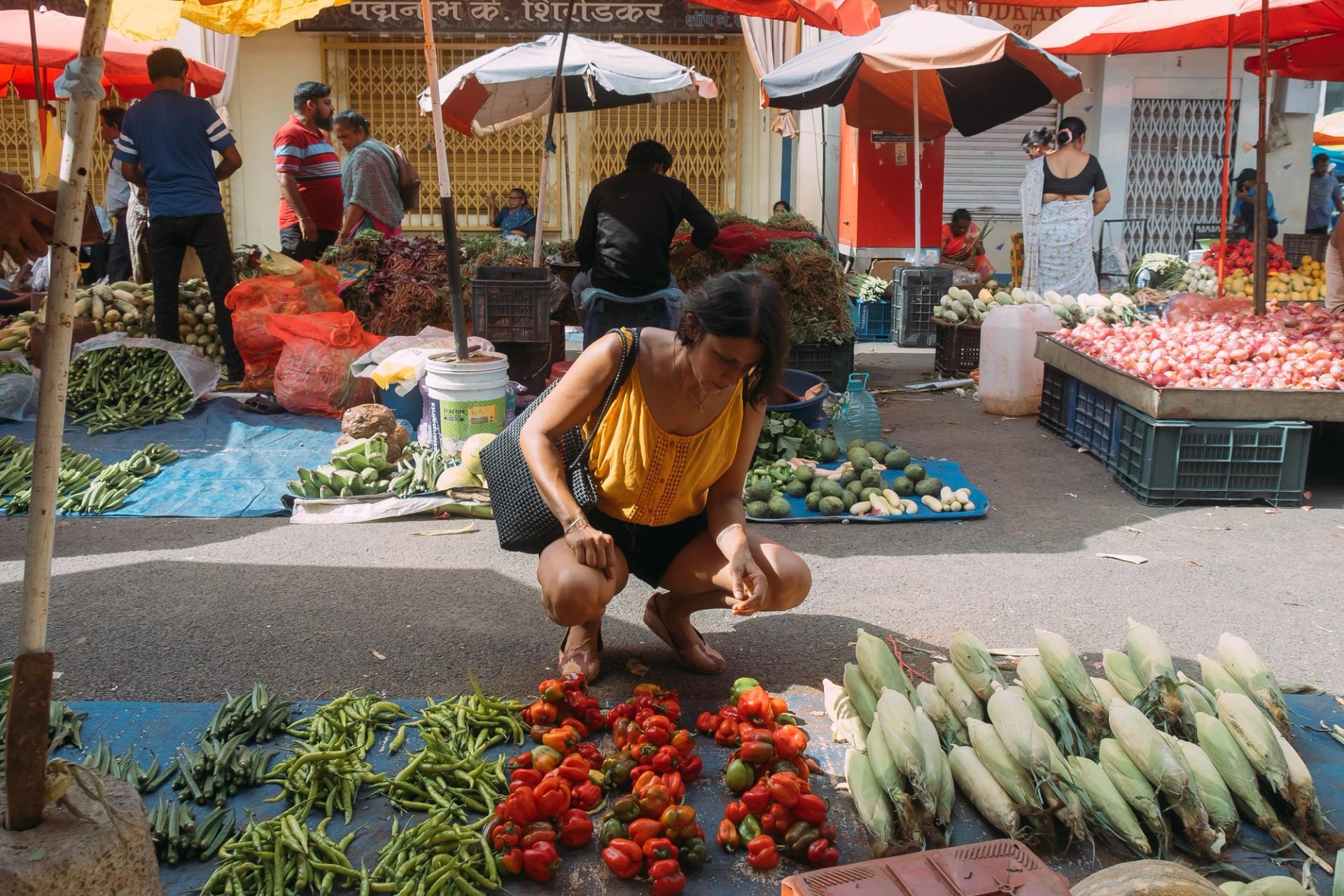
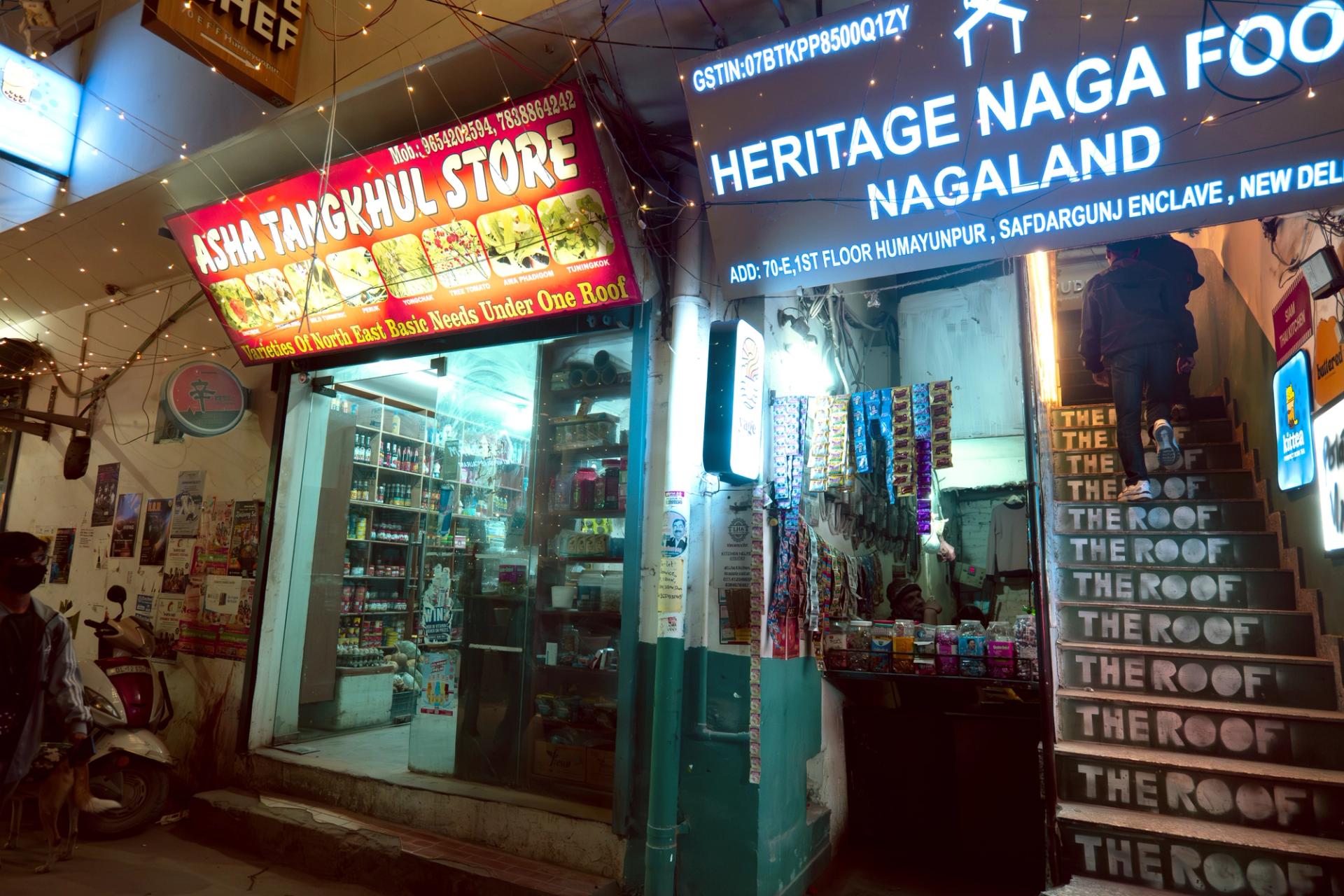
In Munirka, a shop named Eastern Delight stored Northeastern ingredients. In Humayunpur, flavours somewhat reminiscent of Northeast foods could be found at Yo Tibet, an eatery known for its momo (steamed dumpling filled with meat and vegetable mixtures), thukpa (a Tibetan broth-based noodle dish) and laphing (a spicy Tibetan street food comprising a starchy wrapper and filling, usually eaten cold). Asha Tangkhul Store, run by a Manipuri woman, Tangkhul, was one of the first stores in Humayunpur that sold cooked food as well as vegetables and other ingredients sourced from back home.
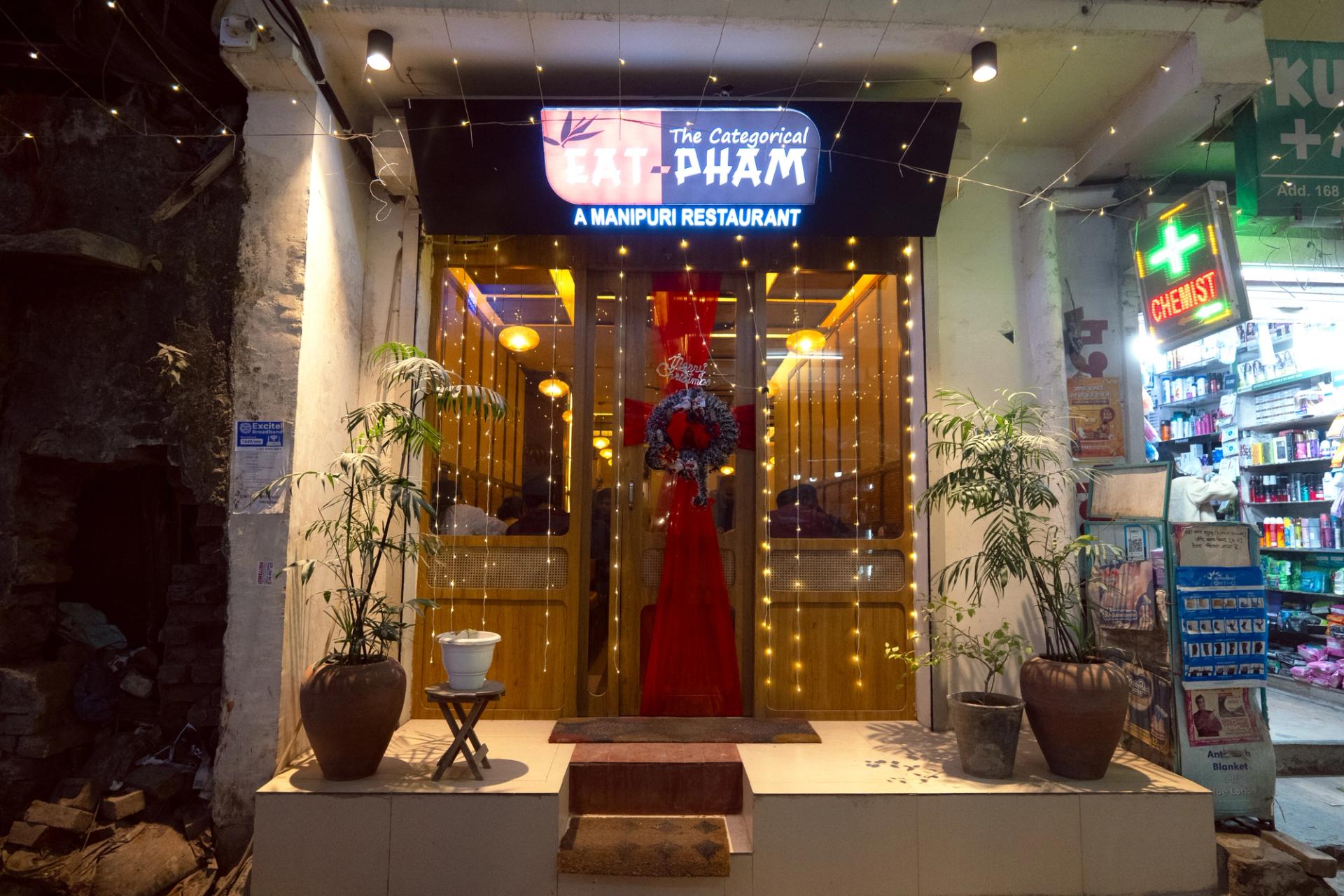
By 2016, there were a few more restaurants in the vicinity: Hornbill, serving food from the Northeastern state Nagaland; and The Categorical Eat-Pham (TCEP), serving Meitei food from Manipur. Starting as a small eatery with just three tables, TCEP is now three times its original size and is almost always packed. The restaurant is known for its thalis that come with a choice of meat — fish, chicken, buff (water buffalo meat) or pork — rice, ooti (a dal-like preparation made with white peas), eromba, ametpa (a side dish made with ngari, chillies and fresh herbs), kangsoi (a vegetable stew flavoured with ngari), pafor (papad) and boiled vegetables.
In the last few years, the number of Manipuri restaurants has increased with the newest entrant being Hentak, which opened in 2025. In an attempt to make Manipuri food more accessible to a larger audience, Chef Nikesh fuses the flavours of his home with Italian food, a cuisine he mastered during his time spent in Italy. He serves traditional dishes like singju and kangsoi along with a southern Italian-style pasta where he uses fermented fish instead of anchovies. He takes madhujan, a traditional Meitei sweet made of deep-fried gram flour fritters soaked in milk, and serves them like fried choux pastry with a cream filling.
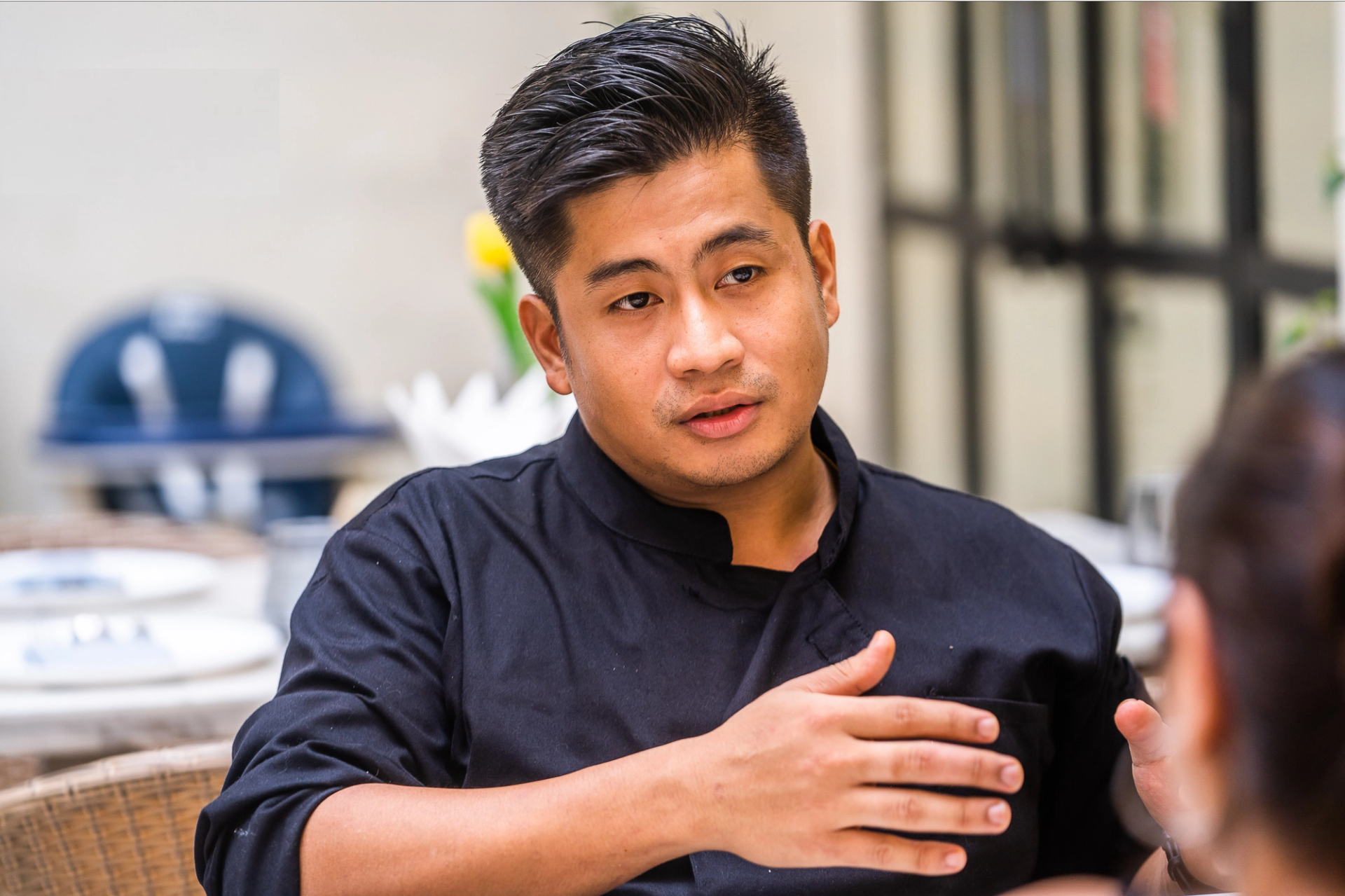
How much is Chef Nikesh willing to tweak Manipuri food to suit a larger audience’s palate? I ask him. ‘I would never compromise on fermented fish. I might tone it down a bit but won’t substitute it with [something like] fish sauce,’ he says.
Despite a growing number of Manipuri restaurants in Humayunpur, there is a certain amount of toning down that happens. ‘The Northeastern food that is available here is also very curated. What becomes a part of a Manipuri or Naga thali is very distinct from what we eat back at home,’ says the professor. There are still very few restaurants that serve fermented soybean called hawaijar by the Meitei community and bethu by the Kuki tribe. The ingredient with the strongest aroma is still a bone of contention in the neighbourhood.
With most restaurants run by Meitei people, there is not enough representation of the other various tribal cuisines from Manipur either. Being Vaishnavite Hindus, meat is prohibited from most Meitei kitchens and is often only cooked on special occasions outside of the house, while fish is an essential part of everyday cooking. This, however, is changing with the new generation relaxing the strict structures around purity and pollution.
‘We use the same ingredients as the Meitei community, but our cooking is more rustic. Boiled vegetables and a lot of meat of every kind — especially cooked and smoked pork — and a variety of fermented foods is eaten,’ says Thangkhansuan, who belongs to the Paite tribe, within the larger Kuki-zo tribe. Shilloi (opens in new tab), an eatery in Humayunpur, and Nek-leh-dawn (opens in new tab), a restaurant in Munirka, are his go-to places for Manipuri tribal food.
Now a Trendy Neighbourhood
In the last five years, Humayunpur’s status has been upgraded to a culinary hotspot. There are at least 50 big and small restaurants, grocery shops, roadside eateries and takeaway joints serving food from Manipur, Nagaland, Assam, Mizoram, Sikkim and Arunachal Pradesh, along with Tibetan, Nepali and Burmese cuisines. With the booming love for Korean music and television, there are shops selling Korean food and boba tea that attract a large number of college kids to the area. Social media influencers have also elevated the neighbourhood from an oft-overlooked locality to a cool hangout place. This has certainly opened up sources of income for the landlords in the form of rentals.
The access to food content from across the Northeast has turned the fearful assumptions into a kind of curiosity where people are open to exploring a cuisine that is so different from their own. ‘Ninety to 95 per cent of my clients are not from Manipur or even other Northeastern states. They are largely mainlanders, and most of them order the pork that I make,’ says Akoi who runs Lomba Kitchen, a Sunday-only delivery kitchen in New Delhi.
The racism and othering of the migrants from the Northeastern states is far from over in Delhi or other parts of India. However, Humayunpur does present itself as a place where people on extreme ends of food and cultural habits can co-exist, albeit with some negotiations and adjustments.
Make singju at home with this recipe by Chef Nikesh Asem.