Minutes and Millennia: The Maralinga Souvenir Clock

Zoë Sadokierski, a designer and writer, has been commissioned by Powerhouse to write about objects in the Powerhouse Collection (opens in new tab). In this work, a 1950s souvenir clock leads the author back to the toxic mushroom clouds of Maralinga and the more benign mushroom models of Louis Thomas Jérôme Auzoux.
A village appears in the desert
In the 1950s, a village materialised in the Great Victoria Desert. It boasted an Olympic-size swimming pool, tennis and basketball courts, workshops, a beer garden, hospital, church, cinema and a dining room with a grand piano. For a decade, tens of thousands of fit young men – and only men, primarily British military personnel, with smaller contingents from Australia, Canada, the United States and New Zealand – rotated through this improbable settlement, paid handsomely for their stints in the desert. The village of men existed for a single purpose: to service Britain’s military ambitions.
In September 1950, British Prime Minister Clement Attlee telephoned his Australian counterpart, Robert Menzies, requesting permission to test atomic weapons on Australian soil. Attlee’s preferred testing sites – the United States and Canada – had already been declined. Menzies, an unashamed Anglophile, agreed immediately, without consulting his cabinet or the Australian public. With this gentleman’s handshake, Australia became a willing pawn in Britain’s nuclear program.
Between 1952 and 1963, the British Government conducted 12 major nuclear weapons tests on Australian territory, along with hundreds of toxic ‘minor’ trials covertly piggybacked onto the larger tests. Britain walked away with a nuclear arsenal that secured its place as a major player in the Cold War era. Taranaki, a site in the Maralinga range where the minor trials were conducted, remains one of the most contaminated places on Earth.
The minor trials involved burning and exploding radioactive and other toxic substances to see what might happen in accidents such as vehicles carrying nuclear warheads crashing or being exploded by enemy fire. Experiments were also conducted to evaluate the impact of plutonium and uranium on human bodies. Pilots were ordered to fly through a nuclear cloud multiple times. Men, colloquially known as ‘Maralinga guinea pigs’, were positioned like toy soldiers at varying distances from the detonation site, wearing cotton shorts and shirts. These men were physically jolted by the force of the blasts and reported feeling heat on their bare skin akin to opening an oven.
Plutonium exposure can lead to cancer and other immunological, neurological, reproductive and developmental conditions. At the time of the tests, scientists knew that plutonium-239 has a half-life of 24,100 years; that it would remain harmful for roughly 1000 human generations. A 2021 study at Maralinga revealed that toxic substances were still present in the soil in the form of hot particles (opens in new tab) – radioactive grains miniscule enough to be transported in dust and water which can be absorbed by plants or inhaled by animals, including humans.
There have been severe and ongoing health impacts related to the test program, such as blindness, premature deaths and birth defects. Public outrage sparked a Royal Commission in 1984–85. Led by flamboyant but straight-shooting Justice James ‘Diamond Jim’ McClelland, it condemned the callous treatment of First Nations peoples and military personnel that occurred during the tests.

The commission also exposed the extent to which the British Government had deliberately withheld information, under-reported the type, quantity and toxicity of minor trials, acted with cavalier disregard for weather conditions which resulted in fallout travelling far beyond agreed exclusion zones, and misled the Australian authorities about the clean-up efforts.
The initial British-led clean-up of the Maralinga site included a weekly ‘emu parade’. On Tuesdays, servicemen on duty walked in lines collecting scraps of contaminated material by hand, like a schoolyard litter patrol. This detritus, along with larger debris including aircraft, trucks and metal bunkers, were dumped in pits and covered with cement. Smaller fragments of radioactive material were ploughed into shallow topsoil to reduce their concentration, a process that complicated later clean-up efforts. This cosmetic operation served to conceal rather than remove the threat in a place considered ‘out of sight, out of mind’ by those responsible for its rehabilitation.
Following recommendations in the McClelland Royal Commission, a $108 million clean-up initiated in the mid 1990s resulted in Maralinga being declared ‘safe’ in the year 2000, as the world celebrated the Sydney Olympics. However, many scientists involved disagreed with this assessment. According to nuclear engineer Alan Parkinson, whose criticism led to him being removed from overseeing the clean-up: ‘What was done at Maralinga was a cheap and nasty solution that wouldn’t be adopted on white-fellas land.’ (opens in new tab)
A souvenir
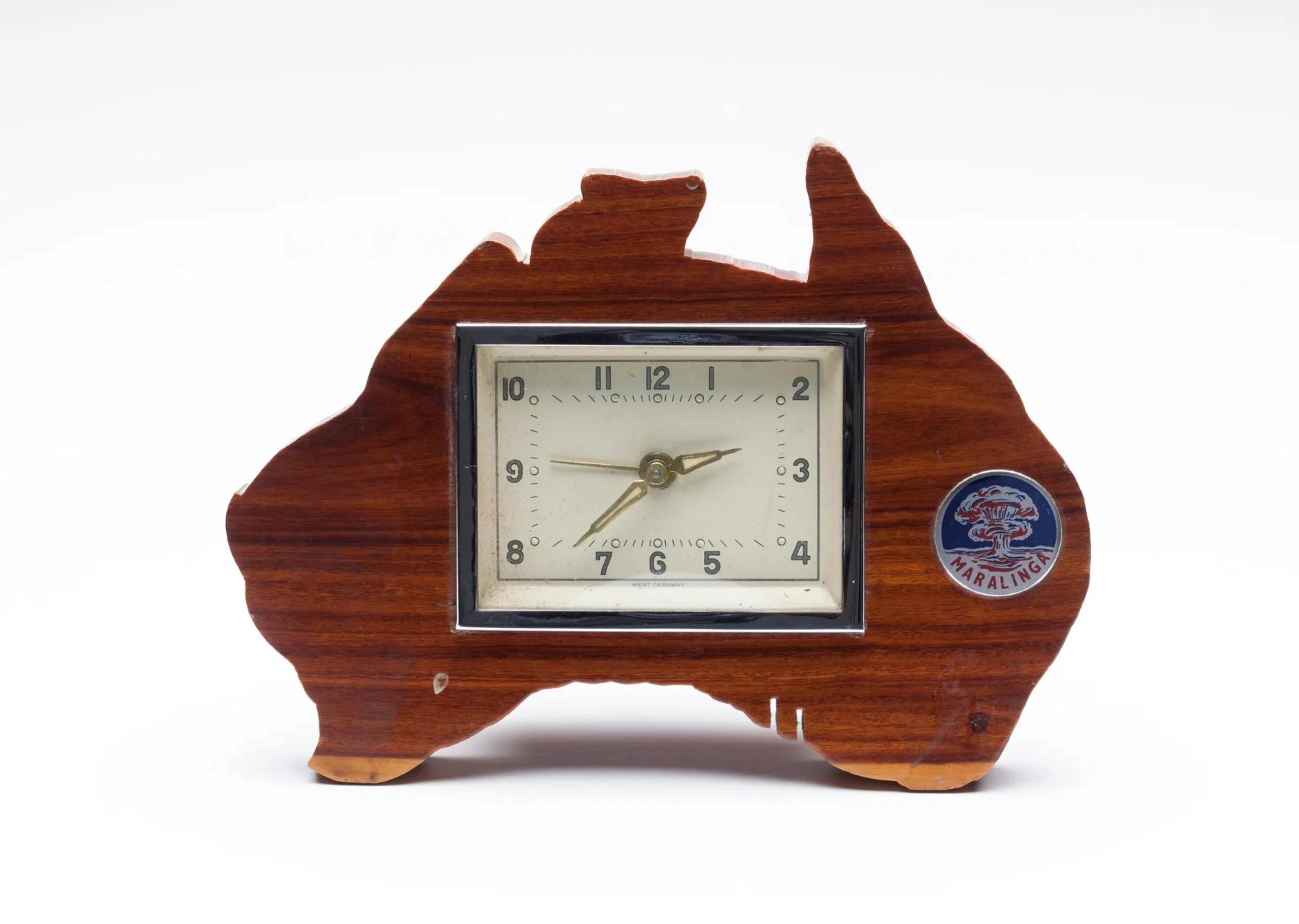
In 1985, a Powerhouse curator acquired a strange object from the Old Ark, a Sydney antiques market. It is composed of disparate parts – a mulga wood block in the shape of Australia, a clock mechanism labelled ‘West Germany’ and a metal disc with the word ‘Maralinga’ under a picture of a nuclear mushroom cloud. The provenance remains a mystery.
The juxtaposition between this kitsch timepiece and the history it represents is unsettling. Who cobbled together this souvenir? Did one of the men of Maralinga keep track of hours with this memento?
The way the Maralinga clock renders tragedy mundane mirrors the deceptive language shrouding the British tests. The term ‘minor trials’ sounds more like a high school science project than what actually occurred: nearly 700 tests involving radioactive materials, many conducted without approval of the Australian Government, let alone the traditional custodians of the land. Each test series bears a whimsical code name, including ‘Tims’, ‘Rats’, ‘Vixens’ and ‘Kittens’. In Atomic Thunder (UNSW Press, 2016), Elizabeth Tynan describes a history of the British strategically assigning banal names to deflect interest from nuclear programs, including naming the world’s first atomic weapons development program ‘Tube Alloys’: ‘it buried a world-changing scientific research project under an obfuscating and boring bureaucratic name.’ (opens in new tab)
The British played other word games too. Maralinga means ‘place of thunder’ in Garig (or Garik), a dialect once spoken by Aboriginal custodians near Port Essington in Northern Australia. Travelling directly south from Port Essington for about 2700 kilometres, you reach what is now called Maralinga, on the lands of the Pitjantjatjara. This name wasn’t carried south by its original speakers but transplanted by British authorities in anticipation of the explosions to come as they began building the village in the desert.
Maralinga is not the only South Australian military test site to misappropriate Indigenous words. Nearby, Woomera borrowed its name from the Dharug language, spoken by the Eora from the Sydney Basin about 1500 kilometres away. In Dharug, woomera describes a tool used to throw spears with greater range and accuracy, carrying a symbolism the military found fitting for a rocket launch range. Yet the local Pitjantjatjara have their own word for a spear thrower: miru. Naming their test playgrounds with terms from unrelated Aboriginal languages, the Australian and British authorities also performed linguistic colonisation, disregarding the tens of thousands of years of First Nations connection to these lands.
At the Powerhouse Castle Hill storage facility, principal curator Matthew Connell leads me through a maze of institutional-grey shelves. Beneath a huddle of Buddha statues, the Maralinga souvenir clock is the sole object on its shelf.
With gloved hands, Matthew carefully turns the clock so I can observe it from every angle. Hard angled cuts mark the inlets that lead to Adelaide and Whyalla from the Great Australian Bight. Was the clock crafted in the Maralinga village workshop, hewn from a mulga tree native to the area? Do these exaggerated geographical features mark cities where the men spent their leave? I lean in to inspect the back. Matthew points to a faded peeling sticker with a barely discernible map of Australia. We speculate what the numbers scratched into the clock unit, and scrawled on the wood beneath it, might mean.
The Maralinga disc is also roughly cut and appears glued on rather than inlaid. An earlier online search uncovered a chrome and enamel car badge (at the time, commonly attached to licence plates to advertise products such as motor oil and soda), featuring a visually similar but not identical mushroom cloud and Maralinga typography.
Perhaps the clock is a back-shed project. I imagine a veteran repurposing a car badge or similar ornament taken from the village for the inlay, crafting this object in remembrance of his under-recognised service: unlike other postings, men stationed at Maralinga were not awarded official medals or ribbons to mark this chapter of their military service. Eventually in 2007, the Australian Department of Veterans’ Affairs issued a Nuclear Tests Program Commemorative Medallion to mark the 50th anniversary of the end of the major atomic tests – more a requiem than a badge of honour. Alongside the anniversary medallion, which was sent out by post, any Australian personnel or civilians involved in the British nuclear tests, as well as police or protective service officers who patrolled the Maralinga test area up to 1988, became eligible for a Veteran Gold Card that provides access to treatment for any medical condition, no questions asked.
In the United Kingdom, it took until 2023 for the government to issue a commemorative Nuclear Test Medal. Then-Minister for Veterans’ Affairs Johnny Mercer declared: ‘As thousands flock to the cinemas to watch Oppenheimer, it’s important to remember the contributions of the veterans, scientists and staff who worked on Britain’s nuclear programme.’ (opens in new tab) However, British veterans still do not have access to medical compensation for illness and injury sustained after radiation exposure, or for impacts on their children.
Parents produce offspring; bodies are born from other bodies. Physical features and character traits and genetic nuclear mutations are passed from one to another, vectors piercing generation on generation.
Keeping time
‘Deep time’ is a concept that helps us imagine the vastness of Earth’s geological history, a timescale so beyond human experience it’s impossible to grasp. A common analogy compresses Earth’s 4.5-billion-year existence into a 24-hour scale, with humans appearing around 2 seconds before midnight. Measured against the formation of mountain ranges, continental drifts and evolution of billions of unique species from single-cell organisms, the scale of a single human life is too insignificant to quantify.
As a timepiece, the Maralinga clock highlights the chasm between human and geological timescales. The clock’s hands measure the minutes and hours of a human life, while the radioactive particles peppered across the Maralinga test site will remain lethal for thousands of generations.
Anthropologist Maggie Brady and Maralinga Tjarutja woman Alice Cox were filmed digging for witchetty grubs and other bush tucker in the red desert sand of the Maralinga range in the late 1980s (opens in new tab), with radiation detection monitors pinned to their clothes. Dust stirred up by their foraging was 50 times greater than accepted safe levels.
Following the tests at Maralinga (and nearby Emu Field), Aboriginal people who weren’t forcibly relocated have endured a legacy of stillbirths, cancer, blindness, heart disease and other intergenerational health issues. Maralinga Tjarutja, a 2020 documentary directed by Euahleyai/Gamillaroi polymath Larissa Behrendt, tells the story of the devastation wreaked on the traditional custodians and landscape, but also their resilience and leadership in rebuilding the cultural communities that will ‘ensure Maralinga custodianship of their lands for the next 60,000 years’. (opens in new tab)
A tree records time through growth rings, part of an annual cycle of developing thinner and lighter wood in spring and summer, and thicker and darker wood in autumn. When growth stops in winter, a visible boundary, or ring, indicates a single year. In addition to time, the rings also record the tree’s lived experience – reflecting variation in temperature, rain, drought, fire, as well as changes in atmospheric carbon and isotopes that indicate nuclear testing or accidents nearby.
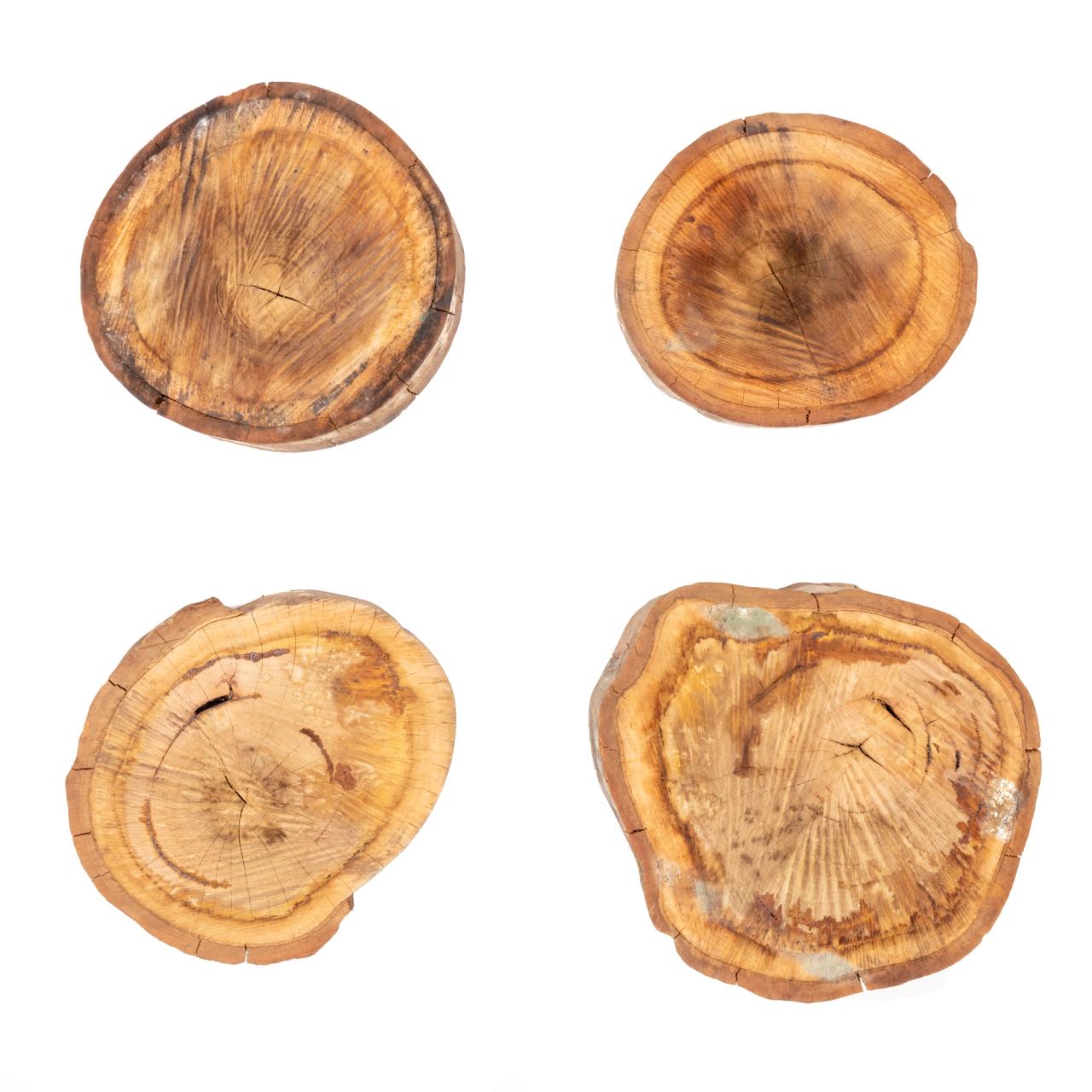
The Powerhouse Collection includes 4 tree cross-sections, slabs taken from the museum’s own eucalyptus plantation. Established in 1948 to grow and harvest trees for experimental research, the plantation was removed to make space for the Castle Hill facility in 2021. These specific eucalypt sections were sent to the Australian Nuclear Science and Technology Organisation to test carbon and atomic signatures that might relate to nuclear testing in Australia. While the results are unknown (opens in new tab), fallout from the test series was detected as far north and east as Newcastle, Townsville and Darwin.
Venturing further into the Castle Hill storage facility, Matthew and I arrive in the deep storage area. A wall-mounted thermometer reads -19.3°C and 57.9% humidity. The timber samples are wrapped in thick translucent plastic, sealed with hi-vis orange tape. Matthew explains that when these samples were last checked there was evidence of mould, hence the need for extreme cold storage.
We can see the mould in some of the collection website photographs. Down here in deep storage, we can’t see much through the wrapping, let alone the individual rings, but these objects affect me in a way the online images do not. For me, the surprising size and heft of these samples conjure the ghost of the former tree. In optimal conditions, a eucalypt could live for 400 years. It could bear witness to 16 human generations. Although this one may have only been around 70 years old, it possibly recorded some of the most destructive things humans have inflicted on our planet.
Hope beneath our feet
The mushroom cloud is an enduring symbol of nuclear warfare – a visual shorthand for humanity’s destructive capability. Though similar flammagenitus clouds can form during volcanic eruptions or fierce forest fires, the association of this distinctive billowing formation with atomic weapons has been reinforced through decades of protest graphics and propaganda.
A nuclear explosion creates a vacuum, drawing upwards a mixture of smoke, soil, water droplets and debris from the detonated device and surrounding environment. One cloud from Operation Buffalo, the first set of major tests at Maralinga, rose 11 kilometres into the sky. It is after the cloud disperses that the most lethal aspect of a nuclear explosion occurs, when radioactive particles continue an invisible dance, carried by winds through the atmosphere, silently dispersing fallout far and wide.
A nuclear mushroom cloud blooms temporarily, an above-ground indicator of an invisible network of toxicity. Similarly, a mushroom is merely the fruiting body of a vast underground mycelium network, a brief above-ground signal of a complex system below. Yet rather than destruction, mycelium is a network for regeneration.
Mycelium slowly decomposes dead plants and animals, releasing nutrients for other organisms to absorb. In addition to nutrient cycles, mycelial networks also create symbiotic relationships with plant roots which allow them to communicate with each other; in Finding the Mother Tree (Penguin Books Australia, 2022), Suzanne Simard describes this multispecies collaboration as ‘the wood wide web’ (opens in new tab). Through this network, plants in an ecosystem share nutrients, water and carbon as well as transmitting chemical signals to warn neighbouring plants about threats like insect attacks or disease.
In addition to providing the infrastructure for forests to thrive, some mushrooms can absorb radioactive isotopes from contaminated soil. It is thought that these ‘radiotrophic’ species use melanin – the substance that also gives humans skin and hair colour – to convert radiation into a source of energy, a process comparable to the way plants use sunlight for photosynthesis. Scientists have monitored Cladosporium sphaerospermum blooming on the walls of the Chernobyl Nuclear Power Plant following its 1986 reactor explosion. This black fungus seems to thrive where the radiation is highest, presenting a haunting possibility: if humankind engineers its own nuclear extinction, the planet might eventually heal itself through other organisms.
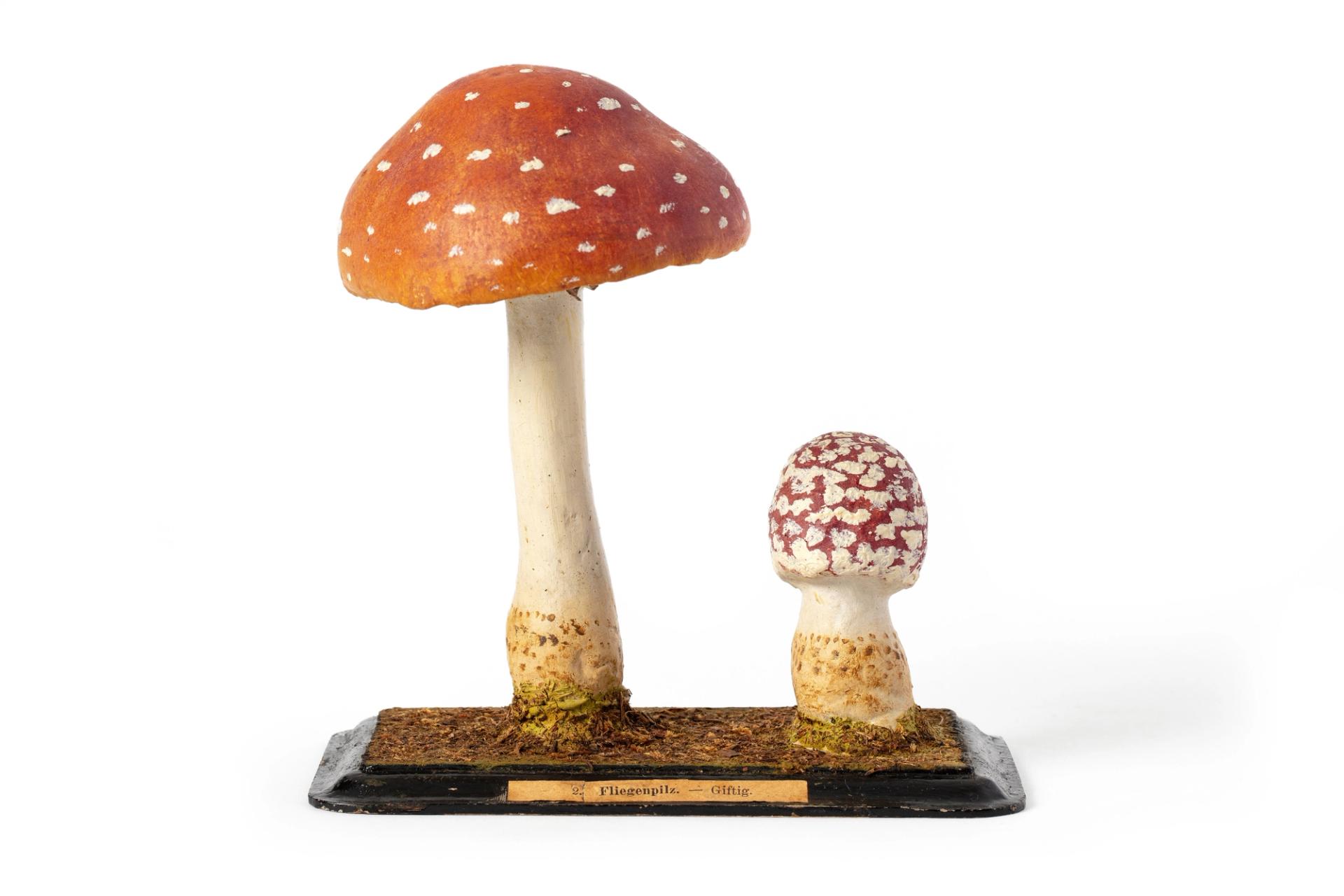
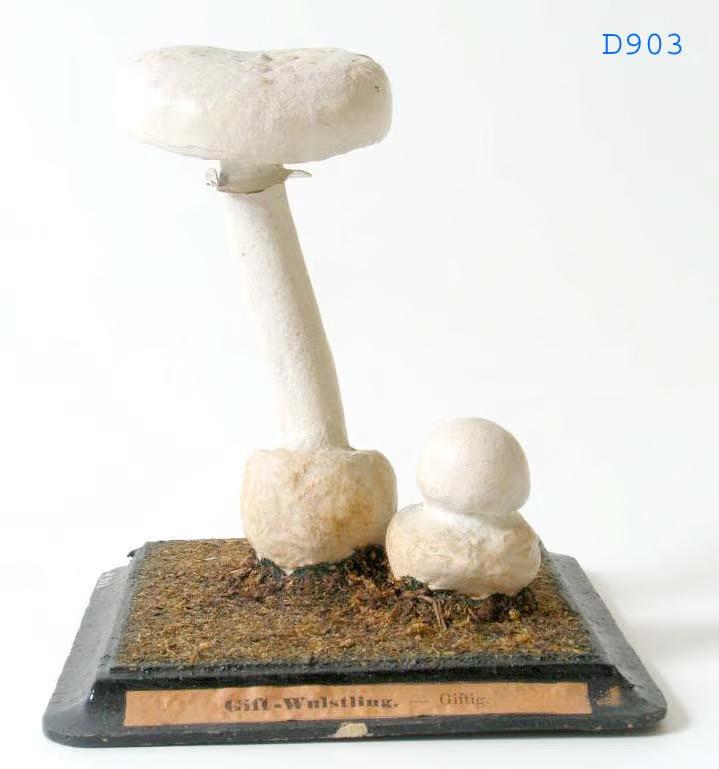
Yet some mushrooms are toxic. Many bear common names that provide fair warning: death cap, ghost fungus, poison pie. Others are more covert. Trawling the Powerhouse Collection online, I am enchanted by a collection of mushroom teaching models, including one displaying edible and inedible fungi.
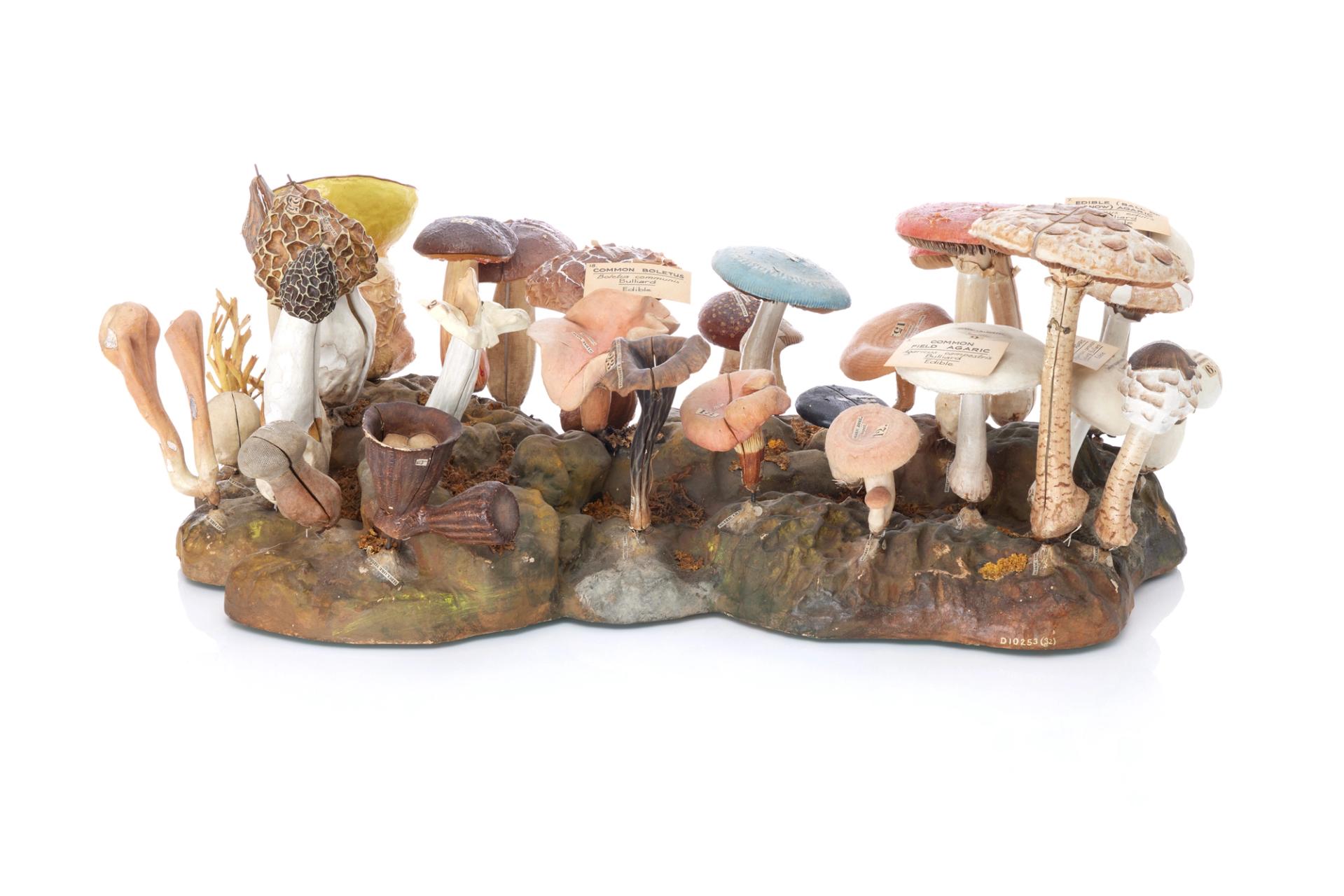
Months later, unexpectedly encountering the same mushroom model, on loan at the Chau Chak Wing Museum, I experience a rush of delight, like recognising an old friend in an unfamiliar setting. The model is much larger than I expected.
The objects in this exhibition are teaching models, crafted rather than taken from living, or recently dead, organisms. Many are the work of French physician and model maker Louis Thomas Jérôme Auzoux, including my mushrooms. As a medical student, Auzoux (1797–1880) was frustrated by the lack of cadavers to dissect for anatomy lessons. The wax model alternatives of the time were expensive and lost shape with repeated handling. Born to an agricultural family, Auzoux’s father taught him wood and metalwork as a child. Auzoux invented a papier-mâché mixture containing cork and clay as well as paper and glue, which allowed him to craft sturdy and accurate models with detailed parts that could be taken apart to ‘dissect’. After mastering human and animal anatomy, Auzoux branched into plant and fungal models.
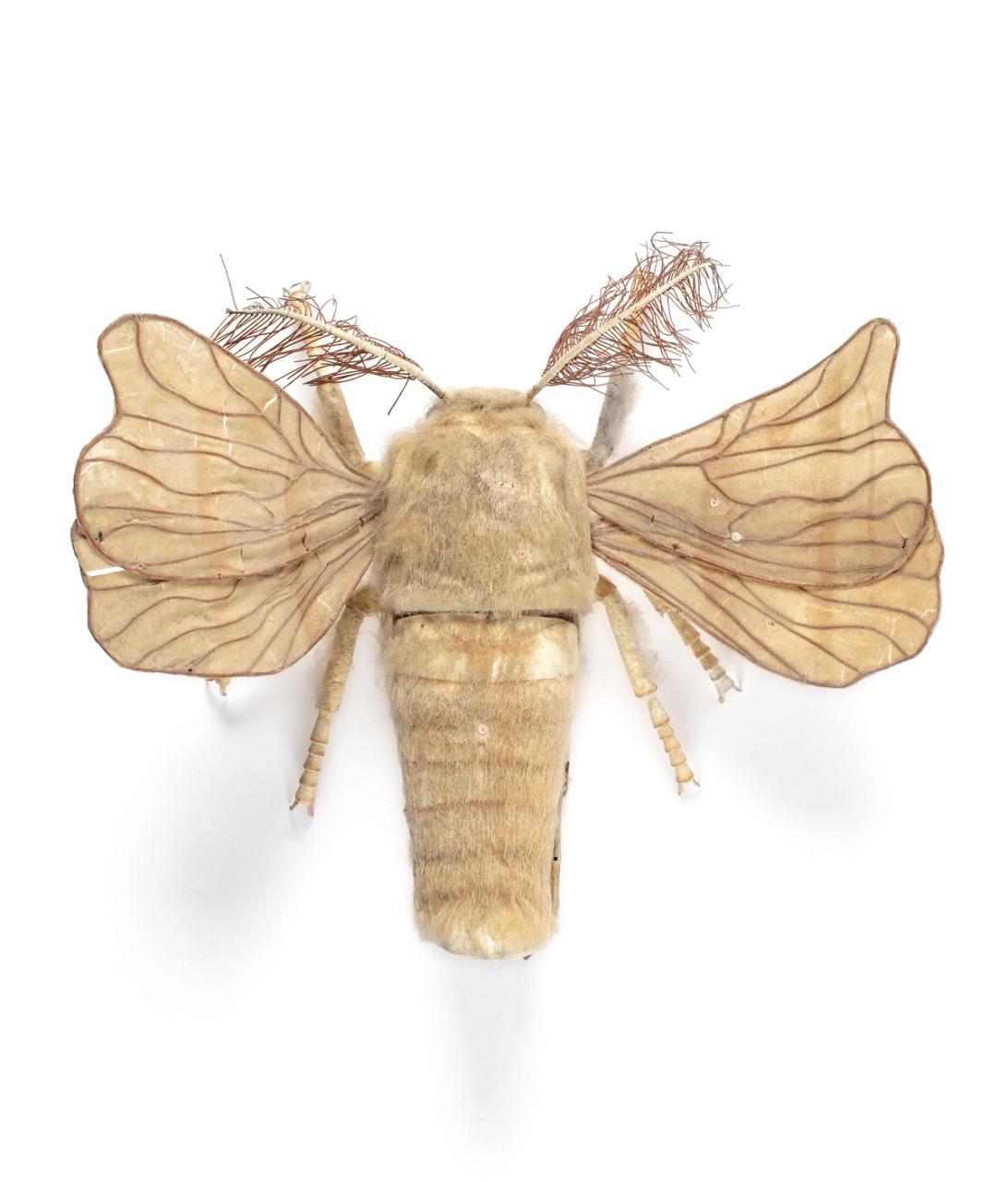
Auzoux’s intricately crafted models proved so successful that he established a factory in his hometown of Saint-Aubin-d’Écrosville, known as Maison Auzoux. This workshop trained dozens of local artisans who became skilled in creating more than 600 different anatomical models. Although personal information on Auzoux is scant (at least in English), he was elected mayor of his town and dubbed a Knight of the Order of the Rose by a Brazilian Emperor. The legacy of Auzoux’s community stands in contrast to Maralinga’s village – rather than developing weapons of destruction, his village crafted educational tools that advanced scientific knowledge for generations to come, without the need for testing on human or other organic specimens.
Poison and cure
Mushrooms embody contradiction – the Greek word pharmakon describes something that is both poison and cure. This paradox parallels the contradictions of nuclear technology itself – capable of both destruction and repair.
If we look past nuclear weapons, designed only to destroy, nuclear medicine offers rehabilitation. Doctors use nuclear imaging, such as PET and SPECT scans, to reveal how organs are functioning and diagnose diseases. Cancer and other diseases can be treated by delivering controlled amounts of radioactive material to kill targeted tumour cells. Marie Curie’s work with therapeutic radiation contributed to cancer treatments, but it also claimed her life.
Nuclear power is touted as a green energy due to its low carbon emissions, small land footprint and reliability as an energy source. Yet malfunctions can be catastrophic, as we saw at Chernobyl; its use in war can be devastating, as experienced in Hiroshima and Nagasaki; and its waste remains deadly for millennia, outlasting any human institution designed to contain it.
And so, we return to the paradox of time.
The bones of Maralinga village remain in the desert. The handful of buildings that were not dismantled and sold have been repurposed as residences for the live-in caretaker and site manager, alongside a museum and accommodation for tourists who arrive in a small but steady stream during the cooler months between April and October. Robin Matthews, a charismatic outback identity whose encyclopedic knowledge of the site comes from more than 5 decades spent in and around the area, serves as both manager and tour guide. He and the caretaker are employed by Maralinga Tjarutja Inc, the Aboriginal corporation governed by a council of traditional owners who now hold rightful ownership of the Maralinga village and surrounding Maralinga Tjarutja lands. Tourism not only supports economic development on these lands, but offers visitors the chance to confront and absorb the dark history of this place, in situ.
And as you read this, the Maralinga clock continues its quiet work in the museum’s collection.
Author

Zoë Sadokierski is a designer, writer and Associate Professor at UTS School of Design. She has won multiple design awards, and her artist’s books and works on paper have been exhibited and collected in galleries and libraries around the world. Her illustrated short story collection Father, Son and Other Animals (Cordite, 2024) explores climate change and species extinction through the lenses of parenting and creative practice.
Writing Objects
Writing Objects is a new series of writing engaging with the Powerhouse Collection, opening it up to new audiences and communities. Writers from Australia and around the world share their response to objects.
Bringing scientific, historic and personal perspectives, these stories highlight the museum’s newly digitised collection of close to 500,000 objects and offer new ways to navigate the applied arts and sciences.
The Powerhouse digitisation project is one of the largest being undertaken internationally and will result in new levels of community access to the museum’s extraordinary collections for local, national and international audiences.