Being Time
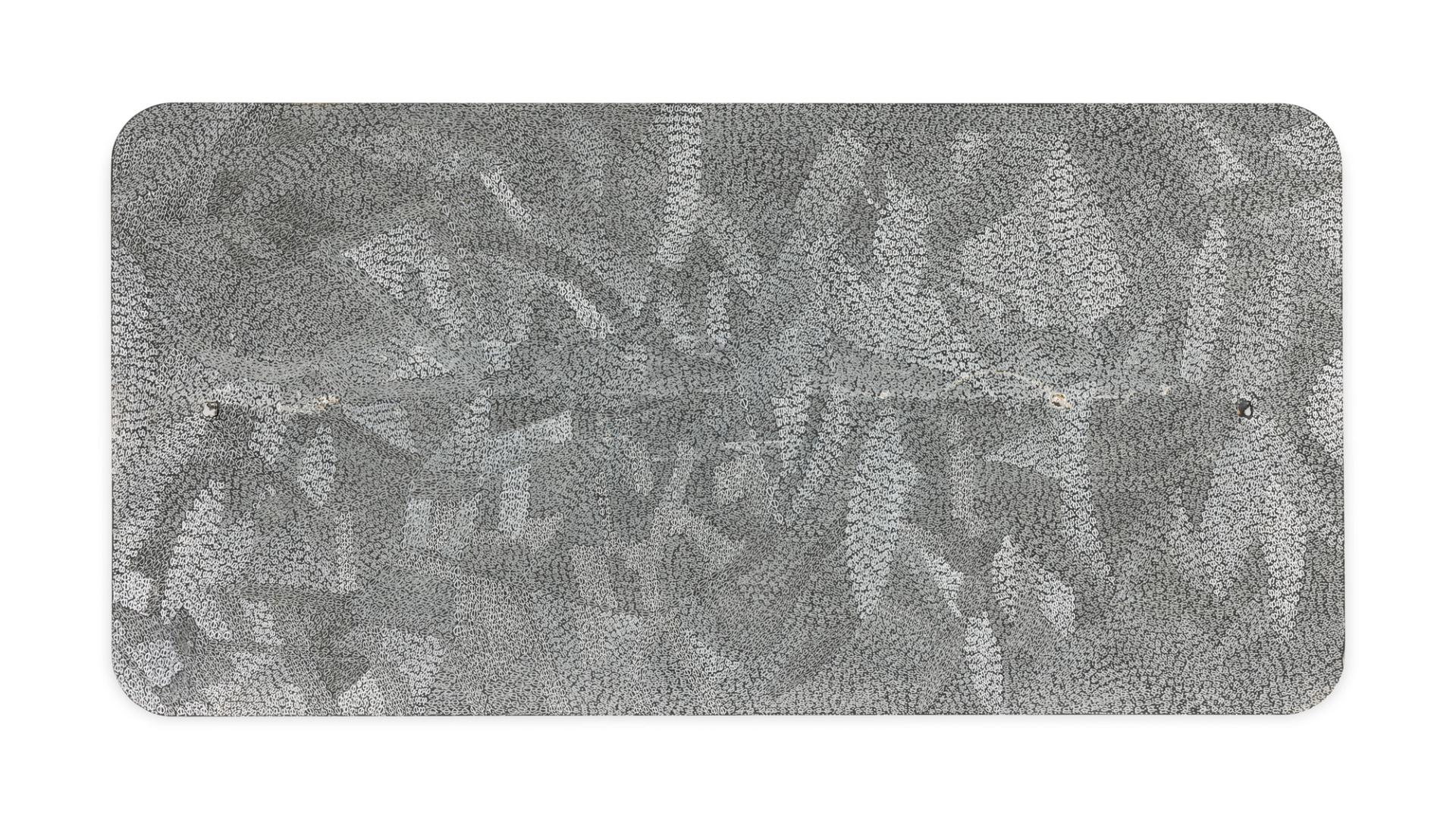
Time is interwoven into dance and movement; how we move is formed by time and invokes memory. In Being Time, choreographers and dancers Tammi Gissell, Julia Mageʼau and Beau Dean Riley Smith discuss movement as timefull and timeless.
‘I think time is marking the present and when you mark the present, whether it’s through movement or whether it’s skin marking or whether it’s vocal, it’s always through the body.’
Tammi Gissell My name is Tammi. I’m from Bourke; Muruwarri and Wiradjuri woman. I’m a dancer by trade. I’m very fortunate to work under the fabulous Nathan Mudyi Sentance in collection care at Powerhouse Museum.
Julia Mage’au Gray Julia Magae’au Gray. I am Mekeo, Central Province, Papua New Guinea and Australian. I live in Tāmaki Makaurau, Auckland, Aotearoa New Zealand. I’m a cultural practitioner. I communicate with skin marking, movement, sound; whatever form we need to tell our stories. I’m also currently working at the University of Auckland, Pacific Studies, teaching Pacific embodied practices and topics of Pacific art.
Beau Dean Riley Smith My name is Beau Dean Riley Smith. I’m a proud Wiradjuri and Gamillaraay man from Dubbo. My nan’s Country is from up Moree, Toomelah and I was also raised on Yuin Country on Culburra Beach/Nowra and then I’ve been living in Sydney for the past 12 years. I got into the arts quite late. I went to WAAPA (opens in new tab) [Western Australian Academy of Performing Arts], studied acting and I found my way at NAISDA (opens in new tab) [National Aboriginal and Islander Skills Development Association] dance college where you [Tammi Gissell] were my teacher.
My trade is a professional dancer. I danced with Bangarra Dance Theatre (opens in new tab) for 10 years and then I also went back to my roots and did a bit of theatre, worked with STC (opens in new tab) [Sydney Theatre Company] with Wesley Enoch and Queensland Theatre (opens in new tab). I’m just a storyteller. I like to move across all forms of storytelling as it’s something that is quite innate in our culture.
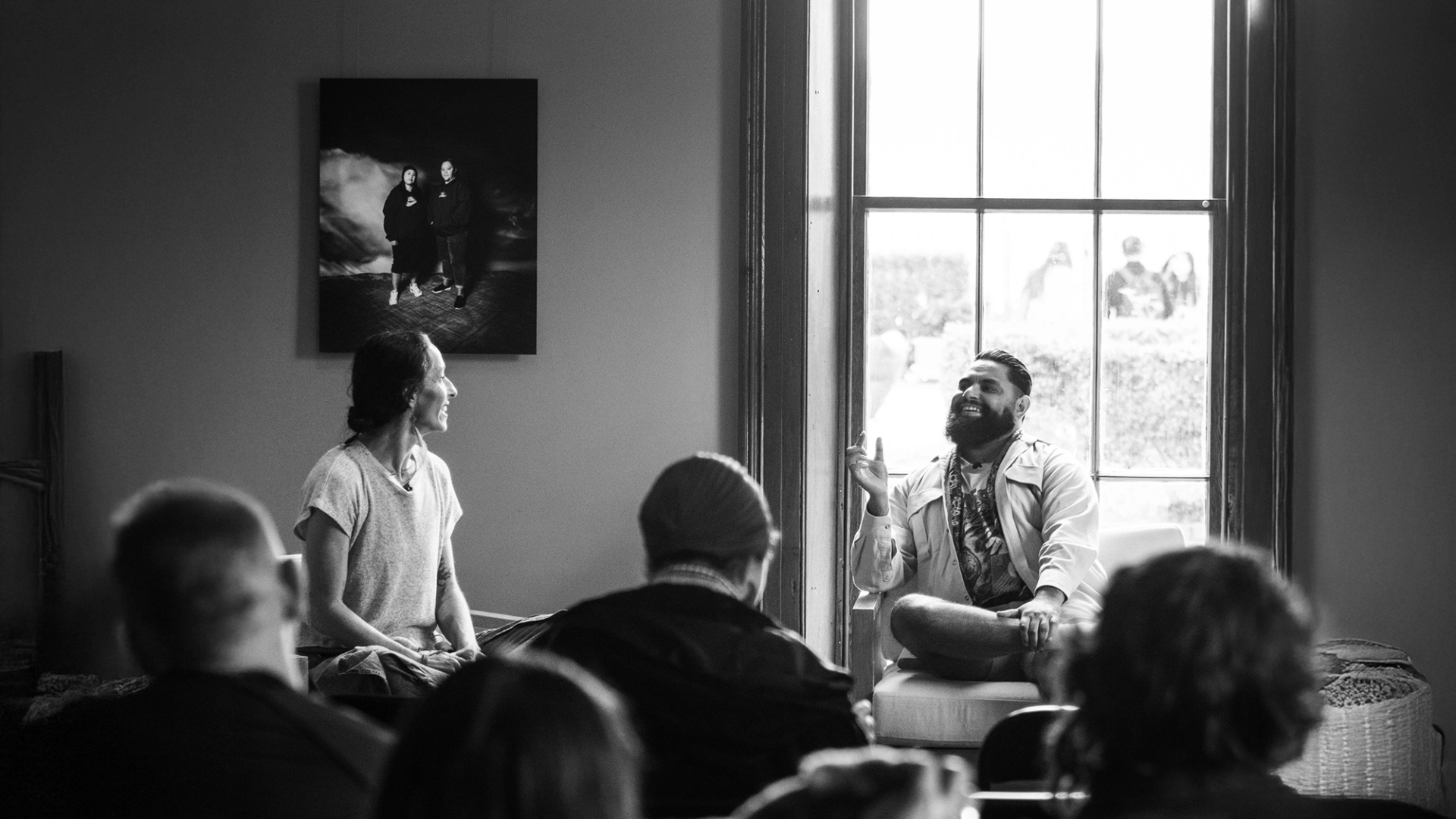
TG I’m a dancer by trade but I’m really interested in how we hold stories in our body. I think that was a bit of a penny drop moment when I was working at the museum and working in registration and record keeping and all of this kind of thing that I suddenly realised, ‘Hang on’ — forest for the trees moment — ‘that’s what I’ve been doing my whole life is holding stories that are maybe not always my own, but it’s my responsibility to hold and keep it in a safe spot, to be able to carry forward and carry back’. Keeping the story straight is something I’m really passionate about as well.
If I was to say to you both the word ‘time’, what does that evoke for you as a human and as an artist as well?
BDRS It’s an interesting concept, time. We’re such an old culture, so time, it’s quite vast and spirited and rich. The word holds a lot of weight. It depends also too, for me what role I’m playing as an artist. Am I the choreographer or am I the dancer? Am I the actor? It constantly shifts what I think time is. What kind of work am I creating? Is it a period work or is it a story about songlines? Time holds a lot of DNA.
TG Is that something that’s part of your practice? That you need to have that clear timeline? Like you were saying, ‘I’m doing a period piece, so I’m having to invoke the paces and tones and colours and sensations of that particular timeline’. Is that a conscious thing?
BDRS It really depends on the work. I love telling stories from the 1700s, 1800s. People don’t want to tackle those stories. I love telling stories about the Frontier Wars (opens in new tab). I created a work called Gubba, which means ‘white person’. That’s what it means now, this derogatory term, but the actual meaning is ‘white clay’, because there was no other word for a white person. I love telling those period works that have a time stamp and also works that are still current in today’s society.
There was a work called Grinding Groove, which is about the grinding grooves in Dubbo and it was about what life could have been like to speak my mother’s tongue. It’s like a fossil. You know that there were these conversations that were had and these relationships that I would have loved to see or to awaken or tell stories that haven’t been shared yet. It really, really does depend on the work.
‘Everything in me is my ancestors. My short Achilles comes from here, the shape of my forehead comes from over there and all of these parts of my body, all of my DNA, everything is connected to my ancestors.’
JMG Time has never really been something that has any weight in the work that I do. I say ‘I’, but ‘I’ is ‘we’ because I’m never alone in the work that I do. I think time is marking the present and when you mark the present, whether it’s through movement or whether it’s skin marking or whether it’s vocal, it’s always through the body and the practices of the past from your old people. Everything in me is my ancestors. My short Achilles comes from here, the shape of my forehead comes from over there and all of these parts of my body, all of my DNA, everything is connected to my ancestors. So when you start to practice, when you start to move, when you talk, when you think without questioning identity, being stuck in the trauma and trying to heal — if you just accept that your body is everything already you connect to what was, what is, all the time because the future is now, the past is now, because it’s in our bodies. And if you live and practice you find ways to communicate to each other.
I think time is relational too, right? You’re in space with people, with your environment; so were your ancestors, so will the future you, your future ancestors. It’s ongoing. You have this time in your body and when you don’t have your body you still have this time. So, while you’re in your body, this body that allows you to connect physically to all sorts of space, use it or you lose it. You have to use it. I think colonisation has been a massive disruptor, but we need to shift that away. I think the best way to do that is one on one, especially with the skin marking work. When we make the marks and you read the body in that time, at that moment, all those words, all that knowledge comes through. It’s remembered.
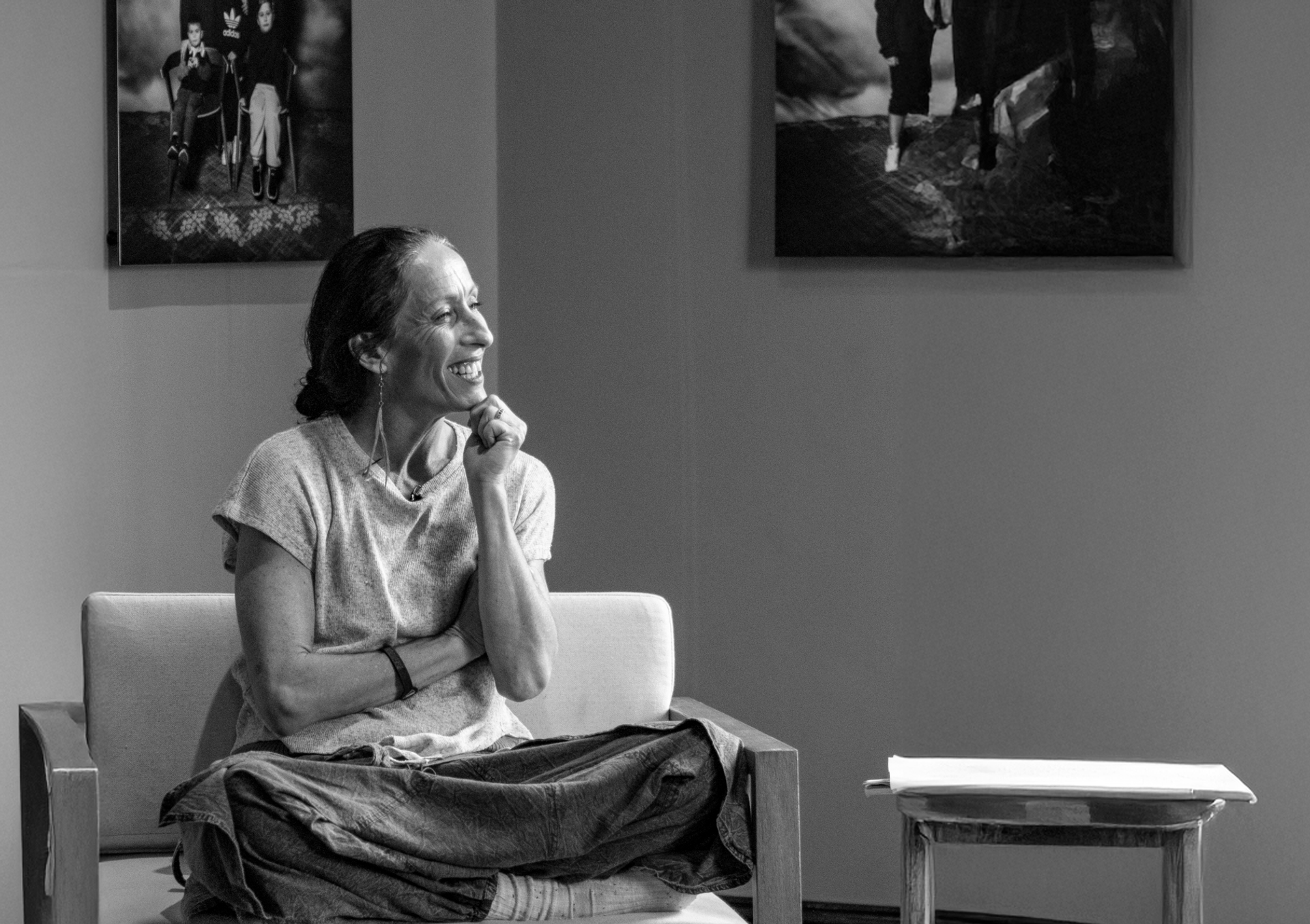
TG I remember the very first paper I ever gave and it was 15 years ago: and it was a contemporary dance conference. The theme of the conference was In Time Together: Temporality and Contemporary Dance. I was teaching at NAISDA, which is our national training organisation for developing performing artists and young cultural provocateurs. The paper was called Dancing the Dreaming and it was really about Blakfulla time: what it is for mob to be coming from community suddenly up to the big smoke and having to suddenly work on that 9–5 and the corrosion points that arose out of that.
I found that paper again just recently and it was amazing to me how the things that I was thinking about 15 years ago; I’m only just actually realising myself now in a real way. Even then I was talking about, ‘If you really want to experience the Dreaming, you have to go back to Country’. Or I would say, ‘Well, how does the Dreaming inform your movement choices?’ One of the students was young Anthony Mayo, an amazing young cultural man from Thursday Island and he said, ‘I really don’t like this idea that people say our dancing is raw, that we’re so raw, we’re just so organic’. He said, ‘Mate, we’re well cooked.’ He said, ‘We’ve been cooking for ages’, and it was the most profound thing he said, because things are given the time that they need to get where they’re supposed to be.
And so, for me, I’ve started working, probably the last five years, a lot more with durational works because I grew up trained in Western styles of dancing … the only real traditional dancing, if you could even call it that, would be when my nana in a trauma moment remembering things. You wouldn’t be dared to ask, ‘What’s that step mean?’ or ‘What’s that for?’ And so, coming through the Western ways and then reclaiming my Indigeneity in my early 20s, it really made me start to think about how much I had been marching to the beat of a Western drum in the movement choices I was making, for like that sense of downbeat that you march on the count and that’s it; there’s nothing in between.
BDRS Like counting in 8s — a lot of our songs are not like that. I used to struggle counting and being consistent with an 8 count, for example, where I would hear the music and so I’d be counting — it wouldn’t even be an 8. I’ll just be singing my own rhythm while I’m creating or dancing in whatever project that I’m in. It’s this fight, the struggle between the two.
TG The body remembers all of these things about the circadian rhythms and the natural time and all that; you know, the sun goes down, you’re probably going to start getting a bit tired. The system’s already here; we tried to come in and do something different with it. I’m really interested in how that plays when we choreograph and when we’re playing with the different rhythms that we’ll pick up on in our music.
I’m just wondering if your connection to Ancient Time, which we have as First Peoples, obviously it informs the philosophy and the anchoring, but does it actually translate in terms of choreography? Is that a different sense of rhythmic time born out of a relationship to Country or is it just we’re hearing different things? I used to say, when we were talking about songlines, ‘Each of us is just one string in a strum of a chord of a song’ and all of them strings coming up against each other, they all affect each other. It’s always that knock on effect, those hula hoops: you can jump from one onto their little songline for a bit and then catch another one and it’s the spirals. How does it inform your choreographic practice?
‘Often when I’m in the dance, it’s almost this true sense of God: this is the most now, now that I’ve ever felt, but yet, by god, am I connected to something else.’
JMG It’s funny, you know, I’m trained in dance also, but I struggle with saying, ‘I’m a dancer, I’m a musician’, because these are not our categories. And when I actually look at my own practices at home in Mekeo, you don’t separate. ‘I’m a dancer’ means that I’m only going to talk about this but I’m not going to talk about this, when you can’t actually separate them. If I was to actually think about creating work, I like to use chance or I like to throw directives and then people in that moment, true to themselves in that space, hearing what that directive is and then physically embodying that and presenting. That’s how I like to choreograph or create work. But it’s the same concept with everything: writing, how you cook dinner.
TG I love what you’ve said there though about providing a directive and allowing those people to follow their own timeline or their own truth within that moment. I love what you said about dance marking the present. Finally, you’ve nailed what I’ve been doing for my whole life. Because for me, often when I’m in the dance, it’s almost this true sense of God: this is the most now, now that I’ve ever felt, but yet, by god, am I connected to something else. That marking the present, that anchored-ness, that level when you hit, even if you’re jogging, it’s the physical thing when the body starts moving in the non-empty space and shifting all of those atoms and you’re charging the space, like it’s quantum physics. We do have the capacity to shift or create atmospheres — this is magic.
We’ve spoken today about language and the power of language and that old saying about ‘words have power and they’re magic and that’s why we call it spelling’. You know, we cast spells. Those words have power. That’s what I just kept saying today: that the sound, that travels on the same thing that we’re doing when we’re moving.
JMG I really struggle with the idea that language is the only way to connect to culture or to our old ways, because people think that language is only verbal. But as movers this is the language, visually. Everything that we do is language and so the way to connect is to reconnect with your body.
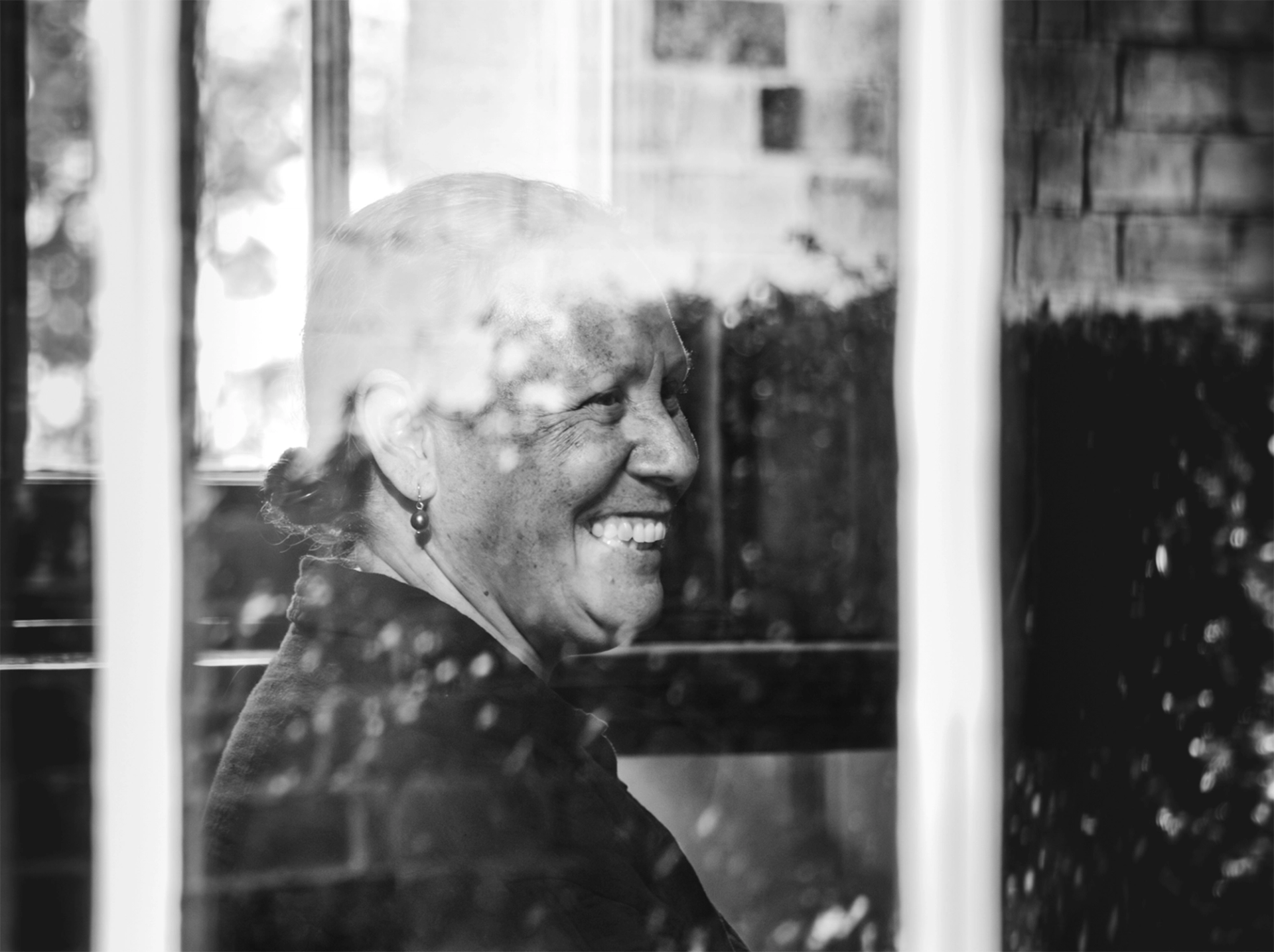
TG I’m really fascinated with your marking. It’s choreography, it’s dancing, it’s movement. I wondered what would be appropriate for you to share about how your dance training has informed your marking practice and how much your marking practice informs your dance?
JMG It’s physical; it’s the body. It’s in the doing; it’s in the practice. I think if you’re someone that moves or is connected, you can look at other people’s bodies and know instantly what is happening. Why is your shoulder lifted? Understanding how that’s connected to that individual’s trauma or the locks that are in their body. That’s how it’s influenced the way that I work with marking. On a visual level, it’s what you are marked with. The designs speak; the fact that you’re wearing them speaks; the way our aesthetic speaks to who our family is, who we’re connected to; our influence within our own families, cultures, villages. It’s all language and we’re all the same. Every single culture has the same language whether it’s skin marking or movement or whatever the categories are, how we express ourselves, how we connect.
TG It’s like making your mark, literally on space. It’s that thing about dance. On the one hand I’m, ‘It’s intangible and you can’t hold it’, and then on the very flip side, I’ll go, ‘It can’t exist without my body’, and it’s this constant tension point for me, I think, endlessly fascinating that the dance exists well beyond me but yet it can’t exist without me or without us. It’s a real tension point between the responsibility to hold it but then the yearning as a contemporary artist to actually just go hunting for a different horizon that I haven’t found before or didn’t think that I would have permission to do for whatever number of different reasons, which is why I’m really excited about the work that you’re doing. It’s a real sucker punch. I really love it. What do you reckon dancing’s taught you about time, Beau?
BDRS When I was younger and I was first starting out dancing, before I was a choreographer, I really struggled with the idea of time. For example, you’ve been asked to create a work and this is your chunk of time and I’m just not feeling it; I’m not creative. I’d go into a rehearsal space and some days you can create two seconds, that’s it. Then one day I’m there creating two minutes. It’s just the nature of my flow and letting it happen naturally. It is quite hard when you’re given two weeks to create a full work, but what I’ve learnt is to do all my research. I’ll make sure I have everything prepared. I know exactly what I want minute by minute with the feeling that I want.
What we create in the space can change, but to have a good, solid foundation, because we’re not fortunate enough in this country ... I feel like when it comes to creating works it’s a little bit disrespectful to be only given a certain amount of chunk to create something. I’ve learnt how to prepare, knowing that I’m not going to get a lot of time and so I can make an impactful work and bring justice to a story that I’m trying to create.
You take on the role as the caretaker for a story and that becomes your responsibility as a dancer too; you become the vessel that carries that story. It’s cultural responsibility. How do you caretake that before you even step into that practice so you don’t carry this cultural overload? As Blak artists, we can really get affected by that: you can walk into a space, when you’re not the director or the choreographer, and you can just be smacked in the face with a story and you’re not even from that Country, you’re just the vessel to carry somebody else’s community.
‘You take on the role as the caretaker for a story and that becomes your responsibility as a dancer too; you become the vessel that carries that story. It’s cultural responsibility.’
TG From what I’m hearing, it’s taught you some patience, but it’s also taught you that you have to divide up your time before the time starts. You’re already compartmentalising your preparation time so that you know that, okay, this two-week work is actually-
BDRS Oh, no, it’s like a year in advance or it’s 8 months. I really like to start early, way early. Therefore, I can be a little bit more chilled in going, ‘Oh my god, I just thought of something for that work, quick, let’s write it down, let’s go, let’s go, let’s go, let’s go, let’s go. Okay, that’s enough.’ And then I might not touch it for two, three weeks. That’s how I use time in this Western ideology of what time means.
TG It’s so beautiful to hear you speak like that. I’m very similar as well. You’ll have ideas that are brewing for 10, 20 years, but the time’s just not right to harvest or to plant the seed. When the time’s right, you’ll know it, you’ll feel it. I wonder if we’re just more open to that because we have inherited some kind of sense of reality from our ancestors that you just can’t push the river. You just can’t. No matter how much you push against it, you can’t. It’s so similar to the basket in the stream: the time passes through us and we’re the vessel. But how you shift yourself, that’s going to affect how that time passes through. We’re actually affecting time. I love that as an analogy as well. When does time matter?
JMG I don’t know, I don’t ever think about when it matters. Because time is not the important thing. It’s relationship. When the relationship or when the happening is happening is when it’s happening. But it’s funny, you were talking about time and you create work within two weeks but in reality, it’s not really a year, it’s like your whole lifetime.
BDRS It’s my whole experience because I used the score from Jeff Wayne’s War of the Worlds, to use this analogy, in the parallel between aliens invading to first contact, Frontier Wars. That has been my whole life because my dad used to play that soundtrack as a kid and it used to freak me the fuck out.
JMG I love that soundtrack.
BDRS It used to scare me, that soundtrack.
JMG Yeah, me too.
BDRS But then I’ve always known that I’ve wanted to use that in a work. That work has been in the back of my mind my whole existence.
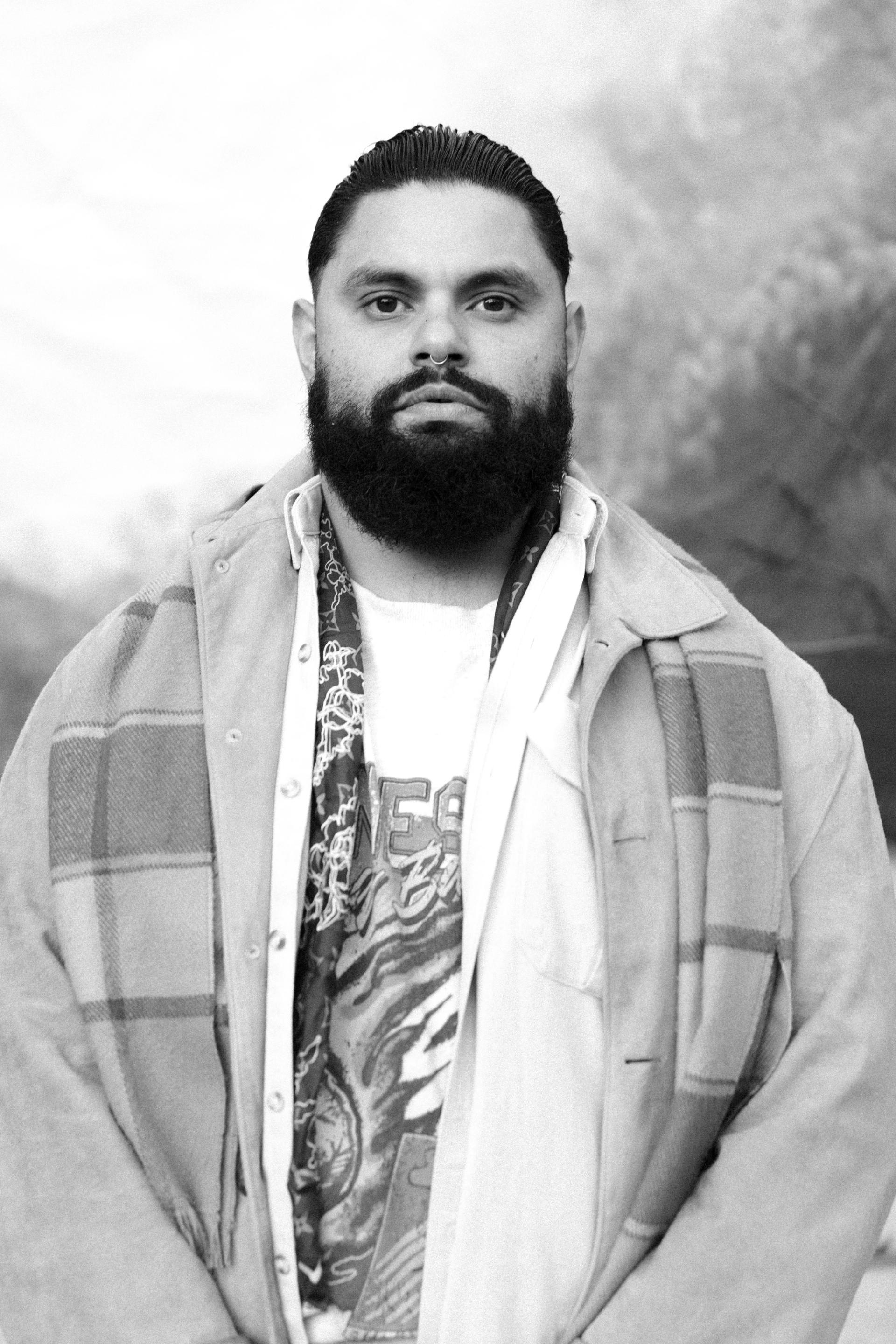
‘Every relationship that I’ve built or crossed paths with has affected how I move and how I dance, the works that I create, the works that I want to be involved in or the ideas that really tickle me.’
TG I love what you said about, ‘Time’s not the thing; it’s the relationship’. My dad said to me when I was doing that paper years ago and I sat down and I went, ‘Talk to me about time, what do you know about time, dad? Can you give me some black magic nugget gold to drop for these New Yorkers?’ And he just looked at me and he said, ‘Well, bub, time’s like the wind. You’ll never see it, you’ll never notice it, except for the effect that it has on everything around you, including you. Time’s invisible, you’ll see it from its effect on things.’
When I think back to this now, and even just you and I having this conversation however many years ago when I first met you as a young man, I’m so reminded of what a blessing it is to be able to exist in this time with all of you fullas and to be able to remember each other again and to come back and to go, ‘Goodness me it’s only, what, 20 years in earth years?’ But it’s probably thousands. We’re all the same, dinosaur poop and stardust. It seems quite ludicrous that we wouldn’t be connected to an eternal memory when we’re all made of the same thing.
Are there any closing things that you’d like to leave us with as far as the idea of being timefull or timeless?
BDRS Well, dancing can be timeless, but it can also invoke a time. Like the Tiwi plane dance, when the planes came over Tiwi Islands. This idea that once those white fullas stood on this Country that the culture and the dance just stopped. No, it still evolves and it grows and it becomes richer. We still got to keep going and survive and move through it.
JMG We’re in our bodies, that’s timeless and timefull, in a way. Recognising that we are our ancestors, number one. What’s important is to remember our old people’s ways of thinking and it’s through the body. When you’re moving with your cousins and you’re singing together and you recognise the visual patterns that were on your grandmothers and then they’re now on your daughters and I think in that way, it’s both timeless and full. But I think being present is also being in the future and being in the past. And I think the future is measured by those repeated patterns, the cycles that we’ve been talking about. I think just being present is all of those things. You have to be connected with your body, otherwise, what are you doing?
TG I couldn’t agree more. Mandaang guwu for having this yarn today. It’s been so special.
Knowledge Holders
About the Series
No Space is Empty is a First Nations knowledge symposium exploring time beyond the clock. The digital series encourages us to consider how different temporal frameworks shape our worldviews, relationships and practices.
The live symposium was held on Gadigal Country at Sydney Observatory in June 2025.