Respecting Time
In Respecting Time knowledge holders Courtney Marsh, Dr Chels Marshall and Master Simeone Sevudredre discuss the inextricable link between human and environmental health and First Nations time knowledge.
‘Time is imaginary, in my understanding of it. Instead, it’s place.’
Courtney Marsh I want to acknowledge that we meet on Gadigal Country and ask for guidance, protection and the best way to walk on this Country in respect of cultural laws that have existed for thousands upon thousands of years.
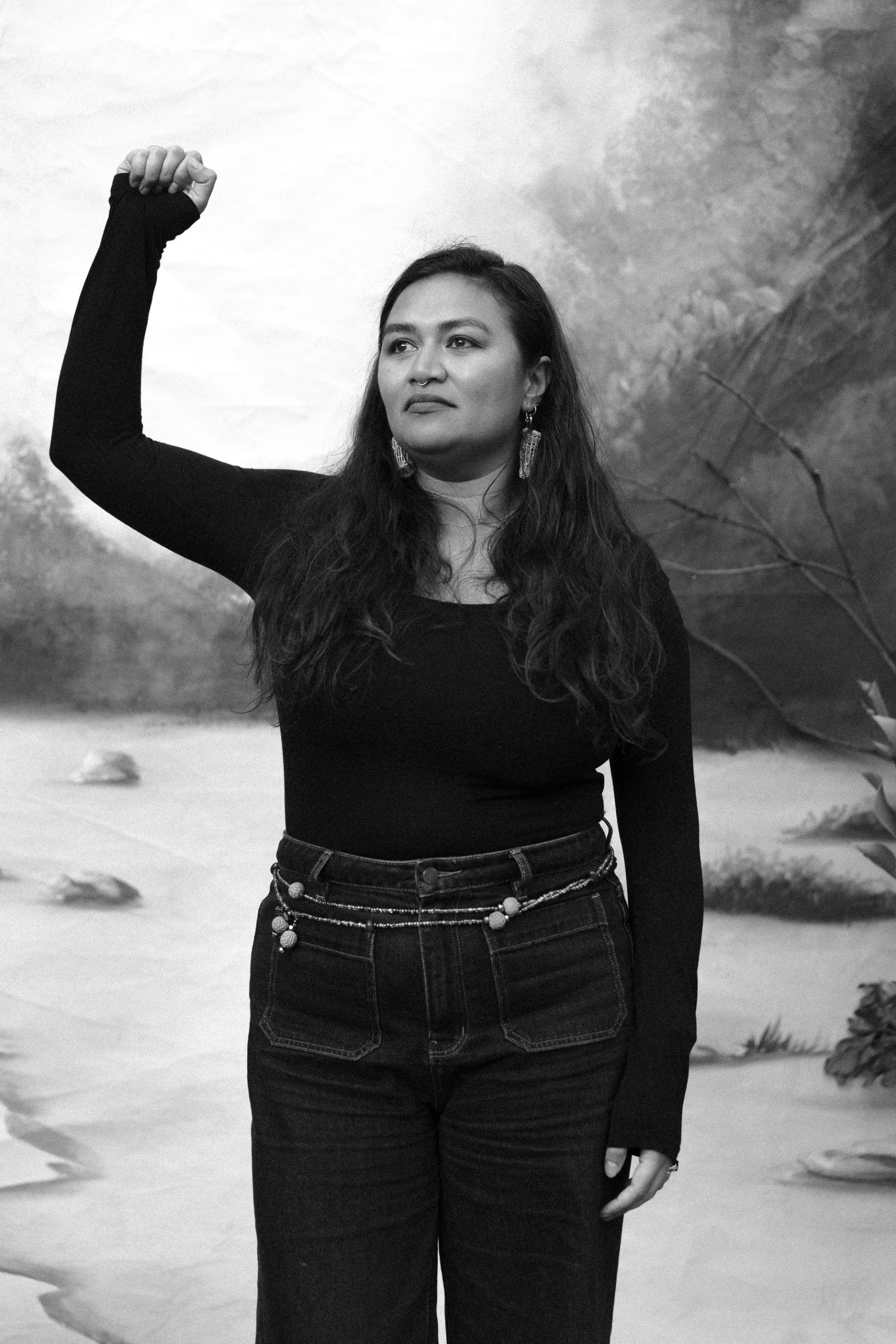
Jinnghiwhalu whalu, my name is Courtney Marsh and I’m a Minyungbal woman from Tweed Heads, so I’m a Currie from up there and I’m also a South Sea Islander. I had two great grandparents that came over as a part of the Australian slave trade, they were black birded over from Tanna, Vanuatu and from the Solomon Islands.
I currently work at the Australian Museum as the Manager of Strategic Projects in the First Nations Division. My background’s in curatorial and programming and how working within colonial spaces, like the one that we’re in, how can we interact in ways that respect our understandings of time and breaking down other concepts of time that can be really inhibiting to the way that we understand the way that we should walk through the world.
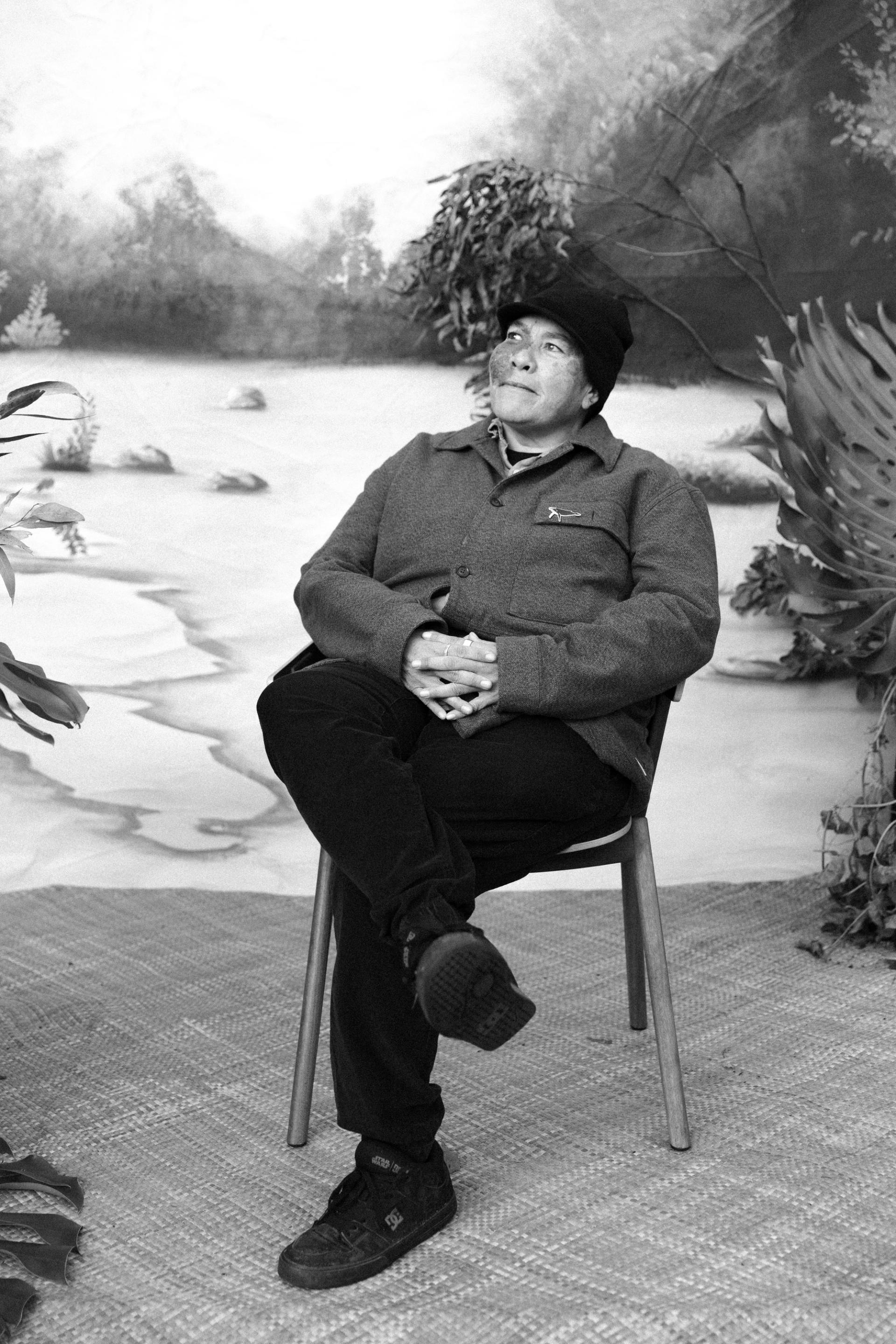
Dr Chels Marshall I’m Chels Marshall. I’m from Gumbaynggirr Country, North Coast New South Wales. I derive from a family of fish. In Gumbaynggirr Country our totem is gaagal, the ocean. I’ve got cousins that are dolphins and sharks and whales and that’s the realm I exist in. I’ve grown up on Country and through that I had an understanding that there were other ways to be situated in the world. I went and purposely learnt about Western science and got to understand the notions, the paradigms, the processes around that.
I now walk that very fine line between my cultural knowledge systems and Western science in the space of ecology, animal behaviour, marine science and climate science. I basically use those systems to show non-Indigenous scientists that their science has still got a lot to learn and a long way to catch up to our knowledge systems that have been around for 80,000 years – 120,000 years and close to 7000 generations. That’s a lot of knowledge to be passing through time and space, or space-time, which is that continuum that joins both together. It’s the metaphysics that are also attached to that that I try to get people that don’t really understand Indigenous knowledge systems to open their mind to other ways of seeing and experiencing things.
Master Simeone Sevudredre I pay respect to the Elders of this land, this hallowed sacred land, to the Elders or the Matua of Oceania. I am Simeone Sevudredre. I am from Fiji. I come from a family who is a hereditary role. We are speakers, advisers from an old dynasty of chiefs. We speak to chiefs, we speak on customs and custodianship. We speak only at leadership level and that speaker role is what I do as the lone culture consultant in the whole of Fiji and that, to me, is a continuity of time. Once upon a time, we spoke face to face to Elders; we spoke to the wind; we spoke to the trees; now I am speaking in Australia. Same thing, different time, different context. Bula vinaka, thank you.
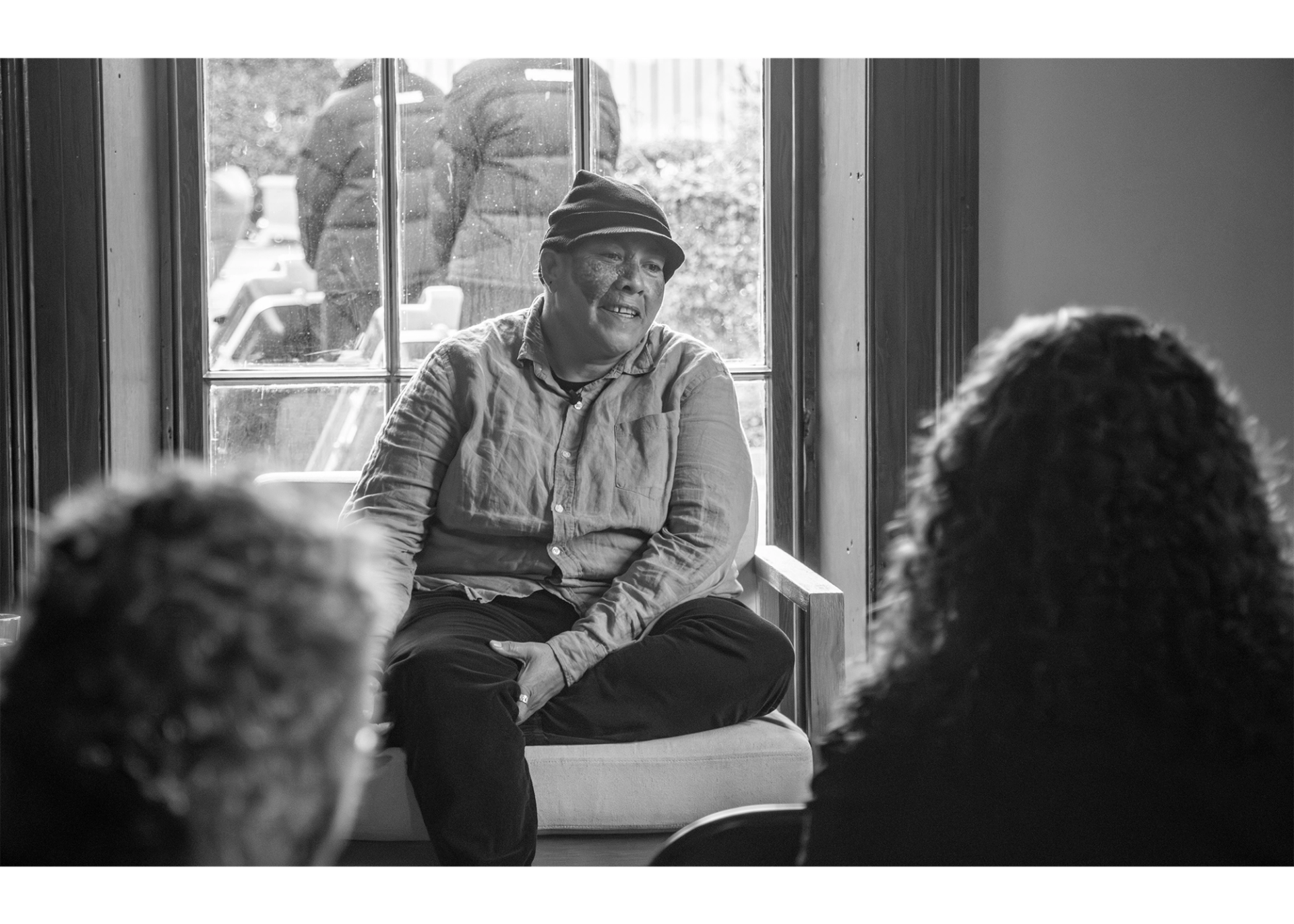
CM I grew up in Sydney. I went home a lot but I acknowledge that I don’t know as much as I’d like to know, culturally. And a lot of where I see my role is having cultural grounding, having people that I can speak to and be an advocate in these spaces. Particularly in a space like the Australian Museum (all thoughts and opinions are my own, I don’t represent the Australian Museum in this panel). The place that I sit is difficult because Australian public, and I guess the Western world, sees museums as places where you take in knowledge in a certain way but all of that knowledge is shaped by the perceptions of science but also of time.
One of the more recent exhibitions (opens in new tab) that I did was on the Barka, on the Murray-Darling River. Something that came up in that space, and especially I see it when we talk about climate change, is the timeline. It’s always the same and it’s often phrased as, ‘This is what was happening before and this is when’, say, ‘the river is healthy; now it’s polluted and in the future, hopefully, we’ll be able to make it what it is’. I really dislike linear storytelling in that way. I don’t think it is the best way to communicate story. It also removes the identity of Country and the river and individual people’s roles in it.
When things are framed in that way of like, ‘We are on this climate change train’, it allows people to sit back and go, ‘We’re on the train’, rather than thinking that every step that we take is an individual and micro action with Country and it’s about that relationship back and forth. In that space, instead of doing, ‘the river as it was’ and ‘the river as it is’ and ‘the river as it hopefully will be’, it was around, ‘here are the different ways that river can be and every step that you take changes how that outcome happens’. I think that works with time generally because it’s all based in Country and in place.
Time is imaginary, in my understanding of it. Instead, it’s place. So yes, obviously we look to the sun and we look to the stars, we look to these indicators of time, but those are just other physical components that are moving in Country and time is the wind that moves between it.
‘I think that is one of the issues with why we have so many psychological, mental and emotional problems today, because we’re not fitting back into the earth and ecological cycles that we’re meant to be in.’
Dr CM I spend a lot of my time thinking about time around three components, being time in a day and how our day was constructed. That included waking up with the sunrise, going to the beach, getting pipis, getting water.
And then time in a month. The month when I knew that my sister was going to be a bitch, the time when my mum would get a bit angry, or different phases of the moon and the full moon and working around the tides.
But then what happened in a year? The different migrations that came through when different things were flowering or when different fish tasted better because it was the right time to eat them. Like mullet season, the migration of the Tailor, Trevally after that; when the humpback whales were coming through.
It was very much that period of 3-dimensional space where lots of things are happening in that one cyclic system. That was my perception of time and I still carry that through today. That’s why I’m always late for meetings. Some people call it ‘Koori time’, but it’s time that has to do with ecological and celestial time and space.
I also questioned different places in time, knowing that our culture goes back thousands and thousands of years and others talk about this fantastic guy that had long blonde hair and blue eyes and woke up and all of a sudden he rules how we operate. I couldn’t understand that that’s how it is; I do now. I do now know that it started with this thing called the Julian calendar that then got ratified during the 1600s to the Gregorian calendar, which primarily is based around the death and the rise of Jesus Christ. And the way we operate is based on that religious and spiritual component of the dominant paradigm.
I did my PhD on traditional, ecological knowledge and climate change. Knowing that we’re moving now into seasonal and climate shift, the intelligent thing to do would be to understand our ecological and our celestial timeframes — in the position we’re in. We’re close to the equator and the radiant heat factor from the sun and the seasons that we work on, the four seasons, they’re for the Northern hemisphere. They get these distinct ecological cycles and patterns, whereas we don’t. That’s why a lot of our Aboriginal languages, cultural areas, places have 5, 6, 7, 8 different seasons. When it’s in those seasons that time lives and it’s those things that are moving around us that tell us what’s going on in our world and the world around us, what’s going on for our kin.
It’s difficult coming out of that knowledge system to then try and fit into something that is constantly rushed, like a full 9–5: you’ve got to be here at this time; your kids have got to be in school by 9 o’clock; they’ve got to be on the bus by this time. It doesn’t flow into how we’re supposed to be existing. I think that is one of the issues with why we have so many psychological, mental and emotional problems today, because we’re not fitting back into the earth and ecological cycles that we’re meant to be in.
CM I also feel like the inflexibility of Western understandings of time is a huge contributor of climate denial, because instead of basing your season on what you’re seeing, you’re prescribing your seasons and your times of the day and you’re not in a conversation with the rest of the things in your world. You know, ‘the world is as it is and I’m going to put a table on top of it’, and it really shoots yourself in the foot because you can’t react in the ways that you need to.
SS I wish to share some stories from Fiji. June is known as the Vula I Werewere. It’s a month of clearing according to the phase of the moon, of the lunar calendar. It is also like our spring, our new year. July is the month of Vula I Cukicuki. That’s when they till the earth and what is planted are yams. There are yams that are planted for consumption and there are yams that are consecrated. They are planted separately on new virgin land and then dug up a month before December. December is the month of the rabbit foot fish; and long, long ago before Christianity, December was the month of silence. It was also the month where the God of Harvest visited the land. He didn’t come in physical form. There was an oracle priest who was the conduit and he would inform the High Chief and proclaim, ‘Now is the month of peace. Let there be no noise and conflict’. If there have been wars, inter-tribal wars, if there have been conflicts, intra conflicts between family and relatives, this is the time where they begin to reconcile. On the ground, all the males dig up their sacred yams, but there is a reconciliation process that is initiated by the youngest male. At an appointed time, place and space the youngest male approaches his older sibling and presents the yam and asks forgiveness for all the wrongs through commission and omission.
Most of those words have now transferred into modern day Christianity, but they are very rich and deep in theology. Then it begins to snowball from the youngest to the one next and then on until the entire clan has reconciled. Why? Because when the God of Harvest visits the land, he, or in other parts of Fiji it is a she, a Goddess, they abhor two things: disharmony and pollution. So yam plantations, the rivers must always be kept conspicuously clean.
After the month is over there will be a huge mountain of yams, all piled up at a particular spot to signify, ‘We have reconciled’. The proclamation comes again from the priest whether they have passed the test or not and if they have passed the test there is a lot of celebration. The following month is a month of merrymaking-noise and splashing water on everybody. This tradition you can still find in Fiji when it comes to January and people think it’s only because New Year. No, it is a carry on from that time of silence. Once that has died down, the next month, which usually coincides with February, is Vula I Sevu. It’s the month of first fruit offering and this is where the yams are then taken to the old temples where the oracle priest, on behalf of the God of Harvest, sits and awaits to receive the collective token of reconciliation and harmony from the sacred yams. The chief actually is holding the yam.
Once it passes into the hands of the oracle priest the name changes from uvi to sigana, ‘offering’. The priest then walks into the inner sanctum of the temple and very carefully places the yam in front of a white tapa cloth that hangs from the ceiling down to the floor, the conduit for the spirit deity. The name from yam changes again and becomes known as yabaki, the word for ‘year’ and when that is done, there is immense relief and satisfaction and anticipation in the entire tribe. Because we respected the silences, because we respected the need to reconcile as kinship, we are now going to await the bounty and the blessings of the land from the sky, from the sea, from the ground.
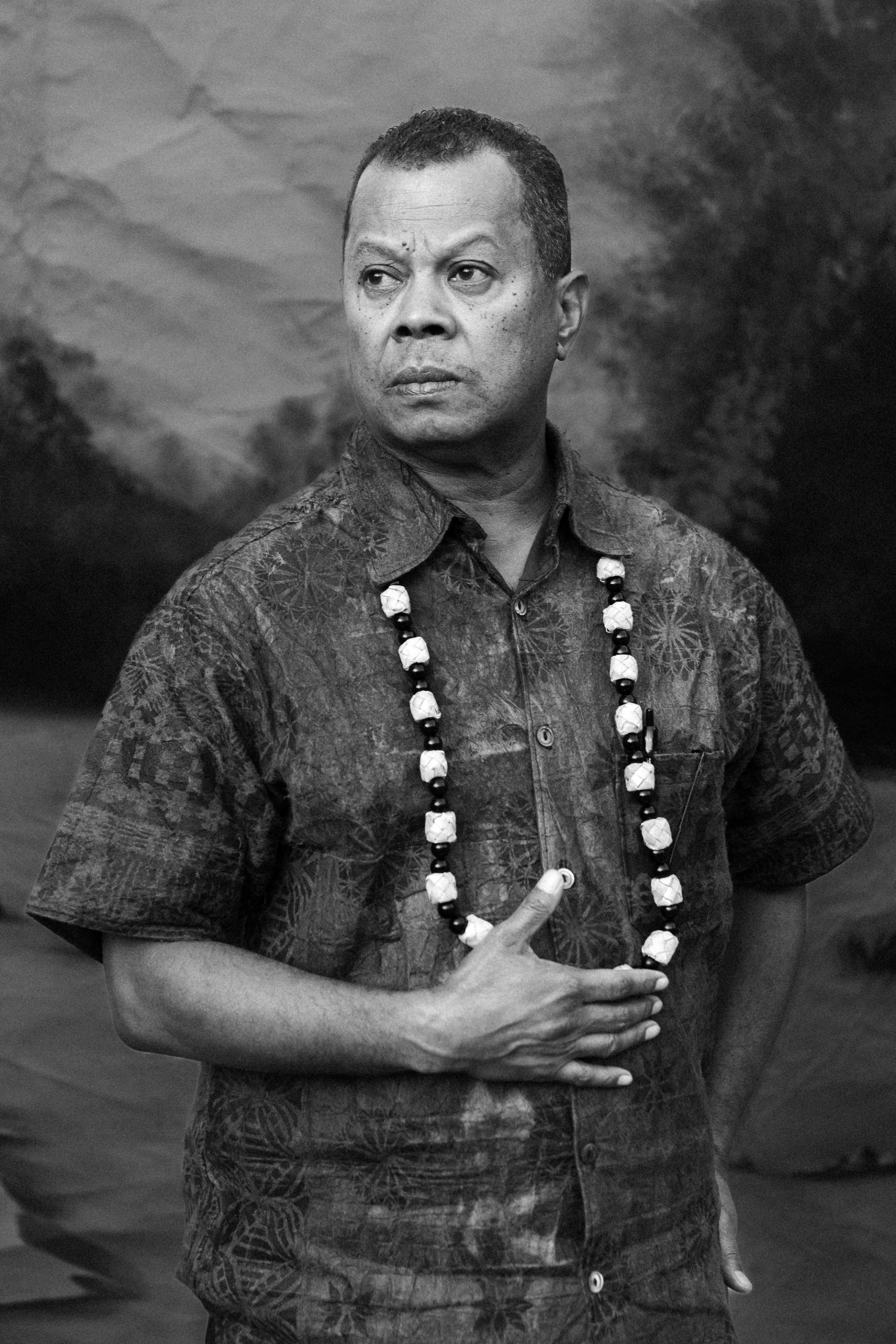
‘Our ancestors knew that when we are united emotionally, spiritually, at kinship level and many other levels, we can command the elements. We are one with nature and with our collective oneness we are in abundance.’
SS This was the Indigenous way of resilience, of food security, that whatever we do in this temporal world must be first aligned and attuned to the spiritual world. This is where the words of ritual and the ceremonies were sacred and respecting these important notions: the right time, the right place, the right bloodline and the right space. When these are aligned, mana happens, magic happens, the metaphysical happens Our ancestors knew that when we are united emotionally, spiritually, at kinship level and many other levels, we can command the elements. We are one with nature. And with our collective oneness we are in abundance. We are all happy.
This memory is cluttered today with the colonisation that we are very familiar with, that things are now linear; you have to see in order to verify it. These paradigms are new and they have affected and cluttered and diminished this mana and this mana is all spiritual. The spirituality had nothing to do with bowing or going to a structure to worship. The spirituality ran on bloodlines. So, when a person is respected, he is not only respected because of him. In the Fijian custom, as with all Indigenous customs, we speak high words of respect and wisdom to an individual because at that particular time, during ceremony, we are not only talking to that individual. Through the spiritual where the words are directed, we speak to the current person and to his history, to his ancestors and to his future.
Dr CM In the science space I’m always having to constantly try and prompt everyone to have another scientific revolution. The revolution is about going back to the first science and then bringing that forward into this space and then into the continuum. As a National Parks ranger I spent lots and lots of time in the bush by myself and had the privilege of hearing past and sitting in the present and then helping to move that into the future.
CM I loved hearing about talking to all of your future ancestors and all of your past ancestors when you’re speaking to someone in the present. When we greet with ‘jinnghiwhalu whalu’, this is one of the teachings that my Uncle Magpie gave before he passed and it’s a double greeting because you’re not just greeting someone’s physical heart. The second ‘whalu’ is to someone’s spirit and that is everything that is them in that other spiritual realm and acknowledging all the parts that make up the physical person that you’re talking to. I definitely see a lot of correlation.
‘The revolution is about going back to the first science and then bringing that forward into this space and then into the continuum.’
SS Too often we are so into today’s science that it has to be ‘seeing is believing’ and then we miss out on the unseen and hence we become diminished.
CM There’s very much the feeling that if it’s not seen or recorded or understood by certain people, then it ceases to exist as well. It’s often that other space. And also just being comfortable with unknowing and that there are spaces that we can’t comprehend, we can’t see, that aren’t for us. When we’re talking about things like women’s business or men’s business or knowledges that pass through certain people, a lot of First Nations cultures are built in with the idea that you’re never meant to understand everything, because the weight of it and the responsibility that you take on from that is too much; it’s completely unhealthy. There is a real break between Western knowledge, which is also impacted by society and class and all of those things, that theoretically, everyone has knowledge of everything and so if you aren’t able to access your knowledge, then it doesn’t actually exist in a lot of ways.
Dr CM I always say that our peoples invented the Cloud. Where the knowledge is shared and each one of us hold a piece of it and there’s a reason for that. And it’s not only held amongst us, but it’s held with our kin and it’s held within the landscape, in the sky, in the clouds, in the rain. And so all that comes together in space and time and shows us those messages and those voices from the past and the messages into the future, which is really beautiful. I love that about our cultures.
SS In addition to our ancestors creating Cloud, they also created Wi-Fi. Did you know that? In Fiji, we have traditional choreographers and there’s a dance by women and the descendant of the composer said, ‘The dance is about Marconi’. This is the Italian inventor and engineer (opens in new tab) who created the first transatlantic wireless radio communication from England across to Newfoundland, Canada, and Fiji caught that and translated it into an art, a dance. 1901 was when the transmission happened. Before the transmission carried around the world it was already danced in Fiji by the traditional composers. So yes, long before today’s Wi-Fi came our ancestors were already telling stories drawing from the Indigenous Wi-Fi.
Dr CM Absolutely true. The same thing in Australia where messages come through fire, they come through the different star movement in the sky and the time where different things are positioned. Time when flowers flower, the time when different insects come out to be indicators of what’s coming into the future. I think it’s really important for us to retain and to transfer this sort of knowledge–resilience that makes our younger people more adaptable, because we live in this world now where everyone’s challenging each other’s paradigms of how to exist. We know that we have that as Indigenous people because we’re still here and we’re still holding it in this time, this location, in this space. That continuum needs to continue to flow. It’s so, so important to let those spiritual processes take their place and for us to have the time and the location — like in this space — to be able to share these knowledges, which has been fantastic.
SS There’s an island in Fiji called Beqa Island. It’s renowned to be the island of those who walk over hot fire and hot stones. There is a story about that being gifted. The phrase that was gifted from the elf to the prince was ‘You and your generations will have power over heat, fire and to walk on hot stones’. And this was a story that is still resonated on the island. But fast forward to a few years ago in a boys’ boarding school just a few miles away from the capital in Suva. One of the teachers’ children at home was burnt by hot water. The toddler just crawled up and just yanked the teapot. And the teacher was at his wits end and he looked next door and immediately thought, ‘Hey, that house has a woman, the son lives there, he’s from Beqa, but the mother is back in the island’. He calls his little boy and said, ‘Your mum is from the island of Beqa?’ He said ‘Yes’. This kid is in like, year 4, year 5. And he tells him, ‘I’d like you to place your hands on my son’. ‘What for?’ ‘In you is the blood of healers, of those who have power over heat.’ This child does not know from living memory what the hell is being mentioned, but he just does so: he places his hand and immediately the burnt child falls asleep and the redness begin to diminish. The next day, the little boy was called upon to do a double. By the time it came to the third day, there was no scar.
And the teacher said, ‘I heard stories of how abilities can pass through time, through bloodlines, through hereditary, and I tried it just wishing it would manifest and it did.’ I bring the story here again to show that when we allow the flow, it transcends time. It just needs the ‘Yes, I will do. I will be obedient, I believe and it will work through me.’ Another dimension of a story of our time from the ancestor’s spiritual place is still a reality but guided by those notions: right time, right place, right space, right bloodline. For now.
CM At this moment.
Knowledge Holders
About the Series
No Space is Empty is a First Nations knowledge symposium exploring time beyond the clock. The digital series encourages us to consider how different temporal frameworks shape our worldviews, relationships and practices.
The live symposium was held on Gadigal Country at Sydney Observatory in June 2025.