Deep Time

How do we as creative people form and story tell new worlds? In Deep Time, writers and creatives Dr Mykaela Saunders, Gina Cole and Scott Wilson discuss how they create new dimensions formed with Indigenous worldviews and cultures.
‘You have a cultural right as Aboriginal people to learn your stories, to strive, to preserve, to protect, to listen to your stories, your language.’
Dr Mykaela Saunders Jingiwalla. My name is Mykaela Saunders. I’m a Koori Goori and Lebanese writer, critic, editor and I am going to be hosting this lovely yarn today.
Through my mum’s side we are Dharug from Western Sydney, Glossodia, Freeman’s Reach, Windsor. My dad’s people are from Bann in Lebanon up in the mountains. Through my stepdad, who also helped bring me up, I belong to the Tweed Goori community; I was brought up in Bundjalung, South Sea Islander culture and that’s who my people are. That’s where I call home.
I’m talking with these two lovely people about how we as creative people form new worlds. I’m going to hand over to Gina to introduce herself.
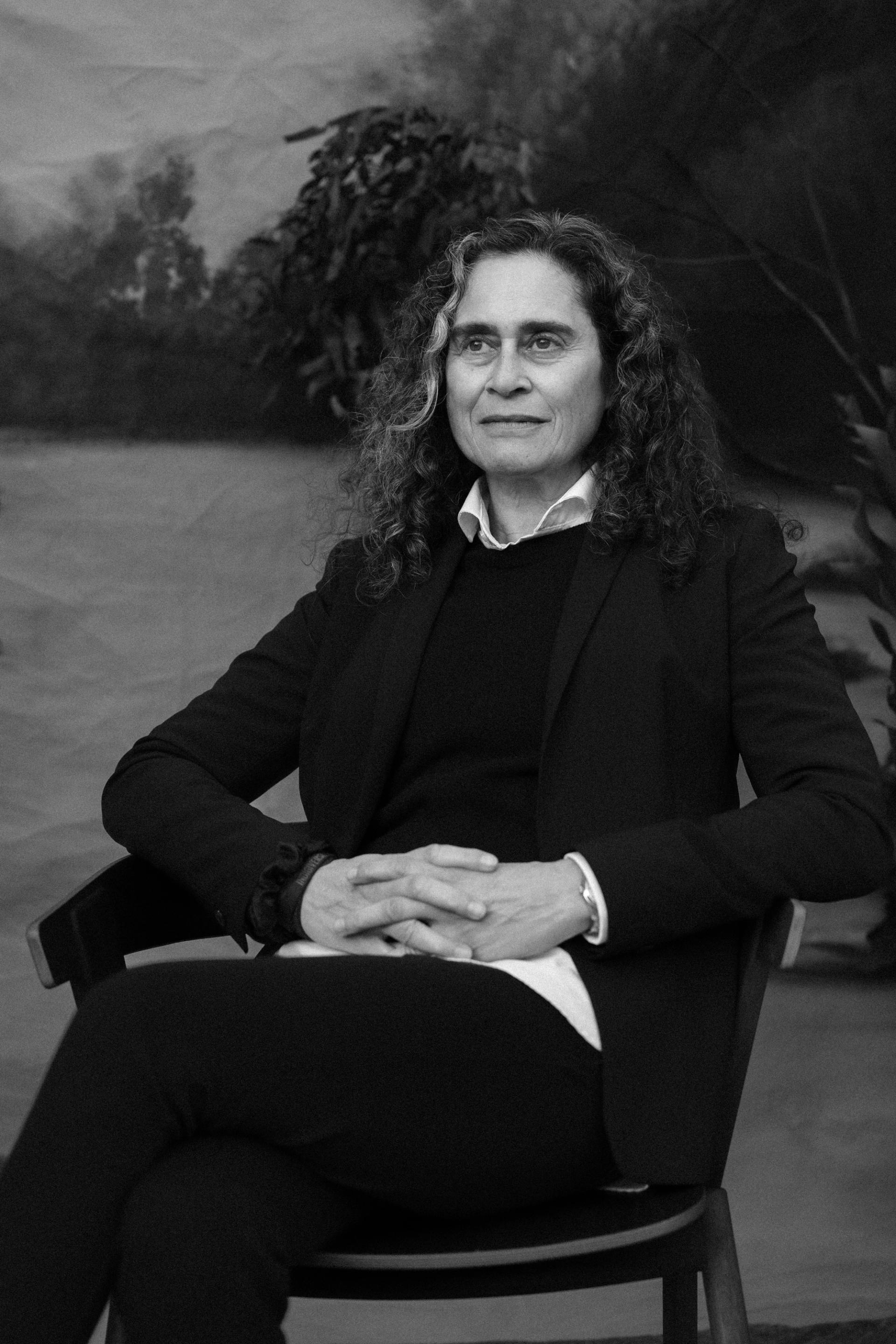
Gina Cole Also like to acknowledge the Traditional Owners of this land that we’re meeting on today and pay my respects to the Elders. Ni sa bula vinaka, my name is Gina Cole. I’m of Fijian heritage. I was born and raised in New Zealand. My mum is Fijian and her father comes from Ono-i-Lau, which is in the east of Fiji and her mother comes from Serua and my dad is Scottish Welsh, palagi or kaivalagi or white man, and I am a writer. I practiced as a lawyer for many years. I write what I call Pasifikafuturism (opens in new tab), which is science fiction from a Pacific Ocean point of view.
Dr MS Thanks, Gina. Gina has two books: one called Black Ice Matter (opens in new tab) and the other Na Viro (opens in new tab), which is Pasifikafuturism. When was that published?
GC 2022. It’s the first book in a trilogy. I’m writing the second book in the trilogy at the moment. Taking me a while.
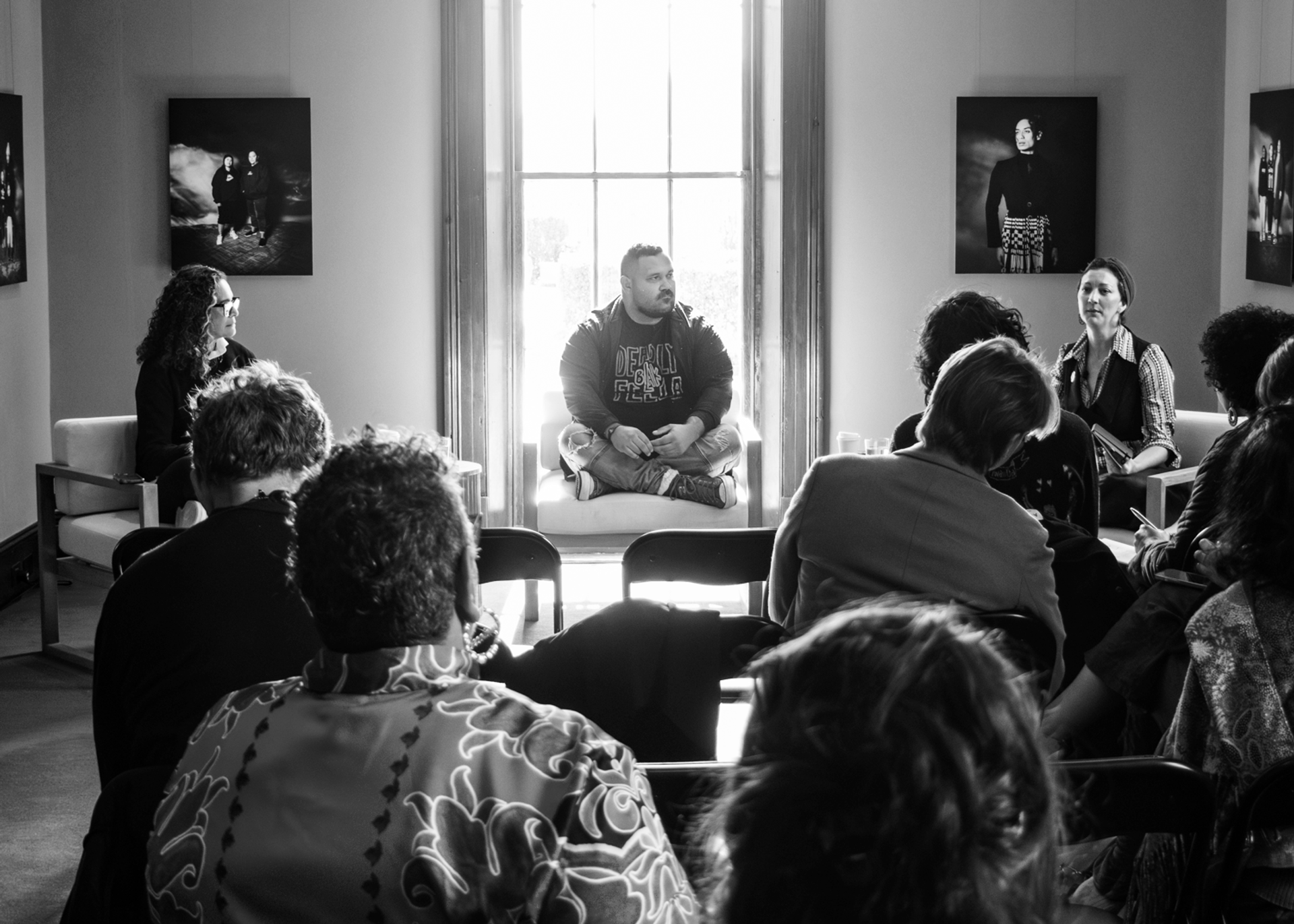
Scott Wilson Thanks, Gina. Thank you, everyone. It’s so deadly to be here. To start and to take what Gina just shared in terms of acknowledging the banda that we’re on today, I was going to share some language with you all. It’s a song for children, because here I want us to go into that space of being playful and finding that inner child in the understanding of the world. [Sings in language].
I use ‘banda’ as the soil, the very dirt that you touch. And when you touch that, that has the history and time of this place. And so, anywhere we go, try to take the shoes off and touch the banda here. We all touch Gadigal banda and pay respects to them and culture and the connection and the time that’s still here.
Dr MS In Dharug language it’s ‘nura’. So, Country, nura. Do you want to tell us a little bit about yourself and your kind of creative practice?
SW Yeah, absolutely. Scott Wilson, I’m Gooniyandi and Gajerrong from the northwest of Western Australia, known to a lot of mob as the beautiful Country of the Kimberley. It’s about 400 km from Broome and I want to pay respects to Yawuru Djugun mob from Broome, who I spend a lot of time on that Country there and the people there and the community.
I’m the founder and co-writer of the first Aboriginal superhero universe called the Indigiverse (opens in new tab). It’s the oldest living cultures inspiring the newest living superheroes. A lot of mob know Phantom comics and, funny story, my mum used to always say, ‘We should have kept those comics’. But out in the community when we didn’t have toilet paper we used the Phantom comics for toilet paper and I was like, ‘Mum, you know, they could be collectibles?’
There’s a history of comics but too much of our culture’s been taken. We sell our souls when we work with a lot of these big monopoly holders, especially in this industry. The Indigiverse is there as an umbrella to help support our peoples tell their stories, acknowledge all the ICIP — the [Indigenous] Intellectual Cultural Property — shifting the narrative on equity as well within the game, so anyone that writes and creates with us has the highest equity within it. We’re working to make sure that that goes across foundationally in how we share our stories as part of the Indigiverse.
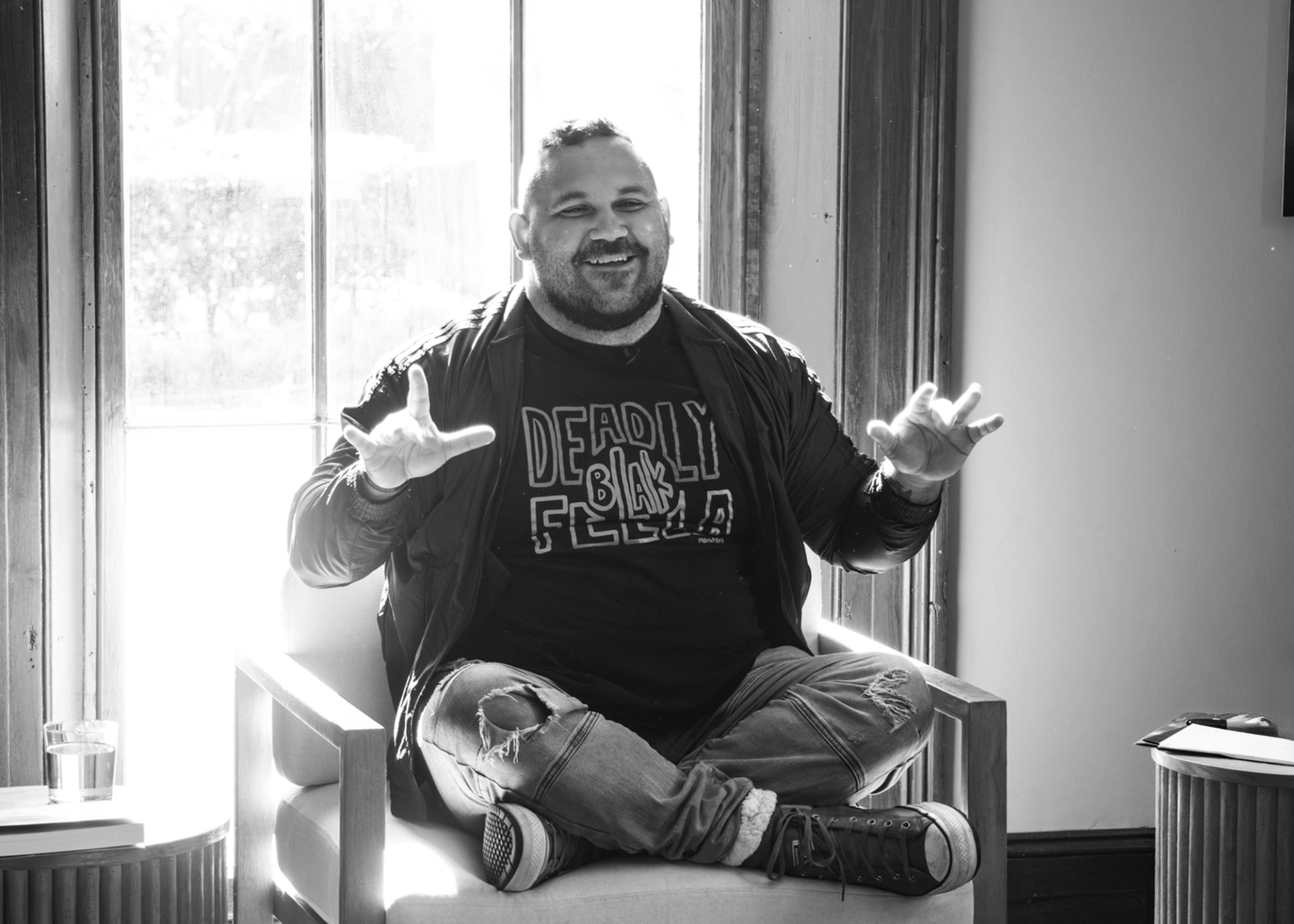
Dr MS Amazing. I’m here with two incredible writers and creatives. The common thread we all have is that we’re all very interested in speculative fiction and its various subgenres. We’re all writing, thinking, reading in it, and probably have since childhood, right? Big fans of it. And for me, the speculative genres all have very interesting relationships to time, which we’ll get into in a bit, but I want to go back to really the bare bones of the conversation before we start talking about our creative practice and talk about where we come from in our cultural understandings of time and how our people conceptualise it. Gina, would you like to talk a little bit about your cultural understanding of time?
GC I feel like there’s so many commonalities with a lot of what the previous speakers were talking about time as being — for Fijian people — nonlinear, cyclical, relational, ecological. The Fijian view of time, my understanding of it, is that the past is in front of us and the future is actually behind us. The logic of that is that the past is a known entity. For the most part we know our history better than anything and the future is unknown. It’s this cyclical notion of time where we sit or we stand in the present and we look to our past for historical solutions to present day problems, which leads us around to the future in this again, circular manner.
This view of time is contained in our language, which I’m still learning. The Fijian language is part of the Austronesian language group which spans right across the Pacific. It includes Fijian, Sāmoan, Tongan, Māori, Hawai’ian, Tahitian, and lots of others. If I can use an example which I have read about from the Fijian language by Epeli Hau’ofa (opens in new tab) who talks about these two words for the past (opens in new tab), which are ‘liu’ and ‘mua’. And ‘liu’ means ‘ahead’ and ‘mua’ means ‘in front’, and these words can be used as verbs. You can say, ‘Au sa liu’, which means, ‘I am going ahead’, literally going ahead, which leads into the future, which is behind; which is again, this circular notion of time. And of course, this cyclical notion of time is also in harmony with natural environmental phases: the phases of the moon, the phases of the planets and the stars. We know the time to harvest and the time to plant. We know when the sharks are breeding and when the fish are running.
Time that is tied to the environment, which we all know about, which is this ecological understanding of time and of course, also the relational understanding of time where our ancestors and us here in the present and future generations are in constant dialogue and in constant relation with each other. These are all in the mix of how I understand time from a Fijian point of view, which is circular, cyclical, spiral — someone said — relational, ecological. It’s very circular and non-linear.
‘... the past is in front of us and the future is actually behind us ... We know our history better than anything and the future is unknown.’
Dr MS Thank you. Scott?
SW A lot of my knowledge of Country goes back to my Elders and [artist] Jawurji Mervyn Street (opens in new tab). He’s the one that shared a lot of thangarndi, or the language that I’m sharing. My first language that I share was actually done alongside Nana June Oscar and she could speak Bunuba but also Gooniyandi; and then Robert Brooking. There’s a lot of Elders that, especially if we’re talking about time, come into this as the holders of these specific cultural rights. When I sit with them, they always tell me that you have a cultural right as Aboriginal people to learn your stories, to strive, to preserve, to protect, to listen to your stories, your language, all of these things.
When you talk about relational, I got to pay respect to time in terms of relationally around our kinship system. When you hear ‘guru’ back home in Gooniyandi thangarndi you talk about our kinship relationships that has so much time embedded within that. We actually have 16 skin groups back home in my community. We’ve actually gone full circle now in terms of the passing down of those skin groups. It’s a matriarchy system for Gooniyandi side, so I follow my great great grandmother. My sister’s children, which is Tamaya, her skin is now Nagarra, and when she goes into community my Elders don’t call her ‘Grandchild’, they call her ‘Aunty’. We see the shift of time there, right. It’s no longer about the lineage of those relationships, but how you now exist within that kinship. It’s based on your skin that shifts your relationships and it breaks this realm and understanding of time. When my niece goes back they say, ‘Hey, Aunty’ and they’re like, ‘What? She’s only four years old but my Elder is calling her Aunty’. It goes back to that time dynamic of kinship.
Then I look at time from our seasonal calendars. When you go back, we only got four seasons and we base it back home, traditionally, on two genders of cold: male cold time and woman cold time. It’s all informed by Country. Time is informed by Country. Even for Sorry Business, we call it Ngarranggarni. Ngarranggarni for Gooniyandi and for Gajerrong, it’s the same word for what we call Dreaming. All of that kinship to the seasons all come into this understanding of past, present, future all coexisting. We see it in Country.
I always thought, ‘In the future people are going to try to convert to Aboriginality because of the value of it, from time to kinship, relationships, marriage laws, people are going to go, “Actually, I want to convert into that understanding of the world”,’ because of how valuable it is to our connection to being on this planet.
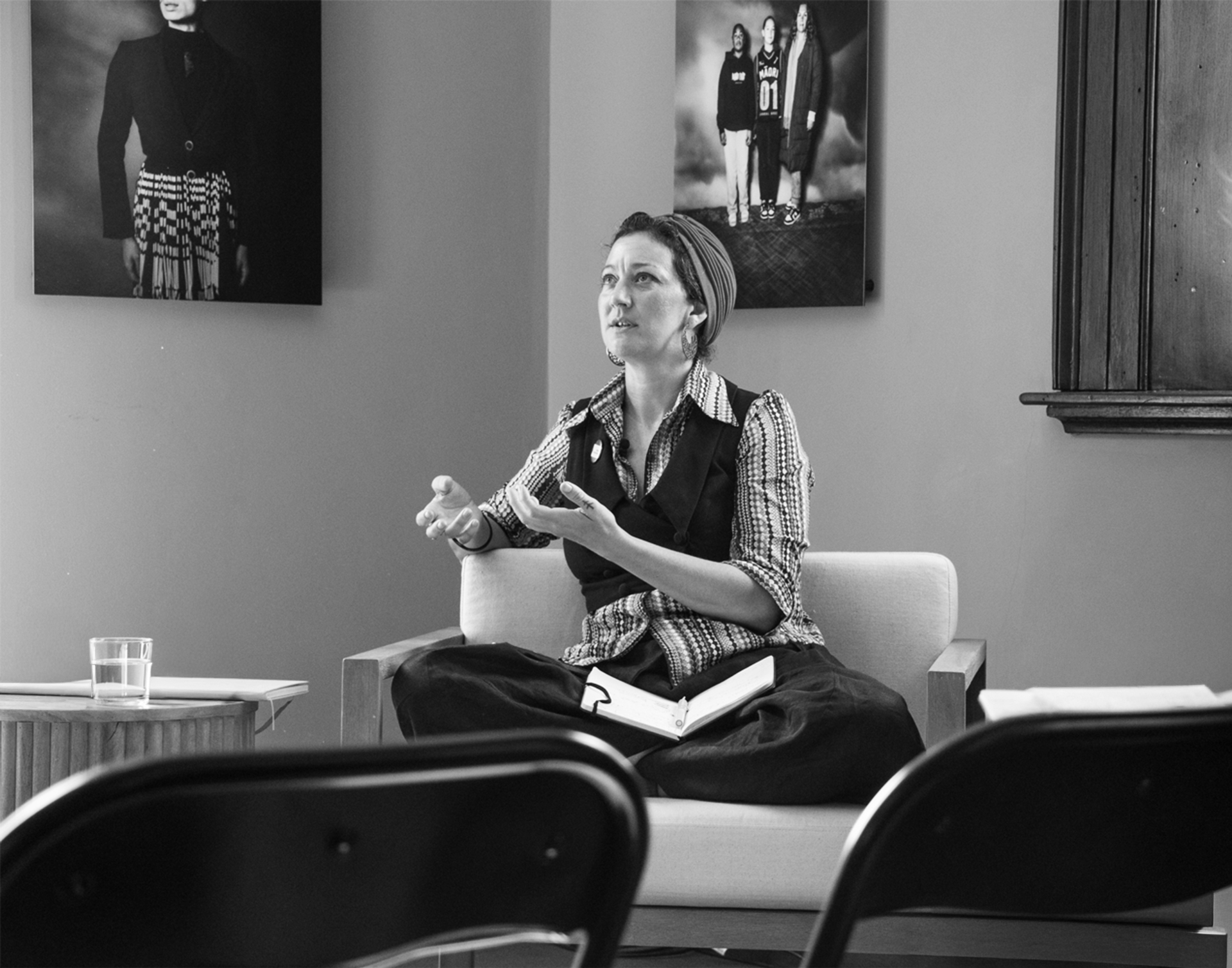
Dr MS I connect with what both of you said. I grew up in the Tweed Goori community and a lot of our understanding is that time lives in, not just the land but the waters as well, the sky. We, being human expressions of Country, of jugun, which is the Bundjalung word for land, we also have our time. We have all of our history compressed within us like sedimentary layers, all the history of our ancestors. Even our own stuff, just stacking on top and compressing and embedding and it’s just like it is in land. Cut a big slice of the earth out and you see those layers and what’s been happening over such a long period of time.
What you were saying, Scott, about the seasons: you have four seasons and in Bundjalung Country it’s six seasons. I take umbrage with this whole, ‘That happens in December’, because it goes against the whole point of watching what the processes are happening in Country. This flower is blooming which means this fish is running and they don’t follow the clock. I think something that’s very interesting to think about is capitalism and extraction’s effect on the land. Seasons are expanding or contracting because of how capitalism has mucked it up, which is then mucking up capitalism. It’s a powerful thing, the land in time.
Now that we have a really good understanding of how you both live in time and you’ve been brought up in time, do you feel tensions with this in living as we do in other systems and not just in our communities in traditional ways? What kind of tensions do you feel living in this world and its certain times?
‘We, being human expressions of Country, of jugun, which is the Bundjalung word for land, we also have our time. We have all of our history compressed within us like sedimentary layers, all the history of our ancestors.’
GC I feel like I live in at least two time zones, two temporalities. I wasn’t born in Fiji, I was born and raised in New Zealand. The first time I went to Fiji I was three years old and I kept going back there on a regular basis as a young person. English is my first language and I’m constantly learning how to speak my language. I think this is going to be a lifetime learning journey for me. I speak English, I write in English, and I practiced as a lawyer for many years; I’ve been right through the Western education system and I wrote a PhD in creative writing.
I’m well-versed in navigating the Western linear time zone and capitalism and meeting deadlines. But it’s very jarring for me because I know there is this other way of looking at time that is contained within me as an Indigenous person and contained within my Fijian culture. And of course, New Zealand has been subject to colonial disruption, just like most Indigenous people have been. There are terrible assimilation policies that were inflicted upon us and banning us from speaking our language. And the extractive capitalist practices that, as you say, impact really negatively on the land and on the seascapes, which is where memory is held. Those disruptive practices sever us from deep time and I don’t know how to deal with that a lot of the time, because I’m versed in both. It’s very difficult for me to reconcile what’s going on, where am I, what am I doing, how do I cope with this? The way I cope with it, I think, is through my writing and through creativity, because then I can use creativity as a way to mend this rupture in my life. That’s a really beneficial thing about speculative fiction and comics and art that can help us to imagine futures where maybe Indigenous sovereignty wasn’t interrupted. I think creativity has a really good healing modality.
SW I actually have a framework called ‘the bite’. If you look at the multiverses and I like Loki’s idea of the sacred timeline: from that timeline there are seven connections of social and emotional wellbeing. We have connection to all of those things until there was a disruption period — let’s just say that might be 1788 — but the disruption has caused this void. I’ve been finding that my own social emotional wellbeing was trying to fill that bite, to reconnect to the sacred timeline. So what I have to do is make sure that I go back to Country all the time. Or there’s language and culture — learning those things — and you can bounce back and forward. That timeline is there, it exists in the universe and right now, my responsibility is reconnecting to that. Any shape or form that I can to heal that bite, like a bite in the apple. It’s much like Adam and Eve, biblical, it’s the bite that has caused disruption to my journey of finding who I am.
Dr MS I love that; I love both of your models. I’m very familiar with that ‘bounce back’. You can get a little whiplash from it, which is what Gina’s talking about, but then also that whiplash in that space is the place we create in. I was walking around Tubowgule — where the Opera House is now —with family and I don’t know how it came up, it’s always at the surface, but we talk about colonisation. In so many places I walk around I’m always thinking about what the place looked like a few hundred years ago, without all the buildings; without all the other people; with everything in harmony; and everything moving as it should; and all the animals and creatures moving as they should; no fences and no huge genocides that have happened to people and to places and to creatures.
Something that struck me was Elizabeth Kübler-Ross’ five stages of grief model (opens in new tab). She theorises that there’s five stages of grief and they’re not necessarily linear and we bounce around them back and forth and sometimes we get stuck in one for a very long time. The five stages are:
- Denial, pretending it didn’t happen — that’s not really feasible for us;
- Anger, which is very justified and it can be very fertile for creation;
- Bargaining;
- Depression;
- Acceptance.
I feel like a lot of my creativity in these speculative fiction genres is in that bargaining space. Because with bargaining, you keep saying, ‘But what if?’: ‘What if this didn’t happen?’ or ‘What if we did that instead?’ or ‘What if – another split of the timeline?’ That’s that bargaining stage. I find it actually really fertile. How do you use these understandings and these tensions that you feel, and how does that inform your storytelling?
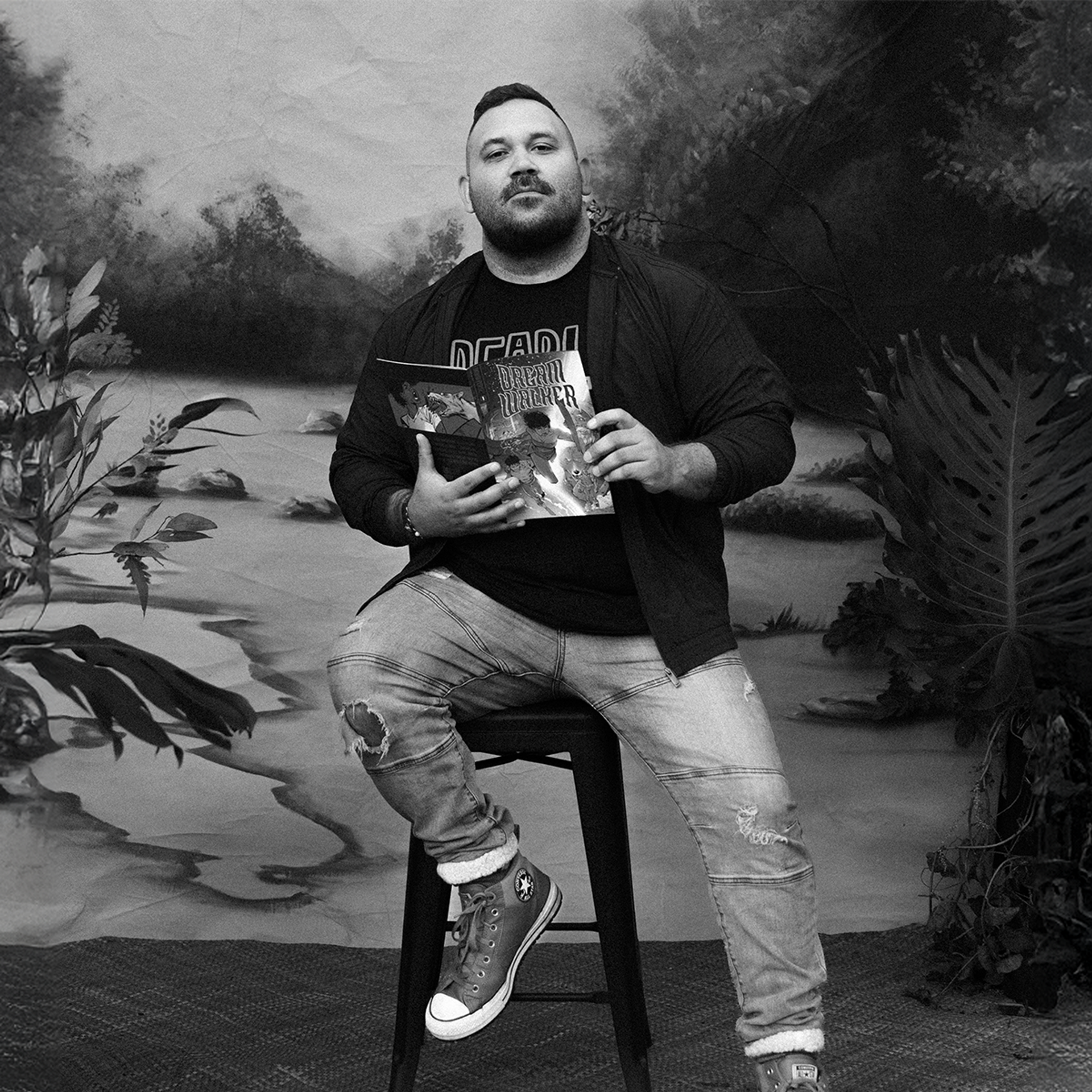
SW I have to share Dreamwalker (opens in new tab). It follows Mungala, who is my great grandmother. My grandmother was taken from her with the Stolen Generations, taken 400 km to Karajarri Country and LaGrange missions. I wanted to go deeper into that story using space and time. So, I’m looking at, ‘How do I build that and use that as a Trojan horse for young people to understand their responsibility in this timeline?’ In this story, my great grandmother goes to search for a child that’s been taken from her and she’s been taken out into, actually, the cosmos. Upon returning, because of time and relativity, time hasn’t stopped, it is as if she was just taken. Then she goes back to our sacred site, where my great grandmother was born, to travel through space and time to connect to her skin name in the future, which is my niece, and they form one superhero together.
I try to teach through the storyline that any kind of thing, they all hold time and space. We can travel through space and time by connecting to any of these things. They’re not inanimate objects; they’re animate with life, story, history. That’s why I carry dirt from my Country everywhere I go.
‘My idea was that there is a galaxy in the ocean and there is an ocean in space and that we could travel and navigate through space in a similar way that we navigate across the ocean ...’
Dr MS Gina, how do you bring these tensions into your storytelling practice?
GC With Na Viro, I wanted to write a science fiction book from an Indigenous Pacific Ocean point of view. I wanted to feature Pacific characters, Pacific culture, Pacific practices and values and principles. Because there are so many different peoples in the Pacific we don’t have one Pan Pacific identity, but what we do have in common is building waka or oceangoing canoes.
Allied to that is the art of celestial navigation or what we call wayfinding. And so, I wanted to feature that wayfinding, which was an art that was almost lost in the colonial project but has had this remarkable comeback — and so has the art of waka building. There are quite a few waka now that are travelling across the sea, which is how my ancestors travelled across the sea hundreds of years ago, without the use of Western instrumentation.
Wayfinding is the art of using the planets and the stars and the Pacific environment — the wind, the waves, the currents, the clouds — to enable you to travel across the ocean. I wanted to take that up into space. My idea was that there is a galaxy in the ocean and there is an ocean in space and that we could travel and navigate through space in a similar way that we navigate across the ocean and that there would be similar environmental situations that we’d have to navigate in space. That was one thing I wanted to incorporate.
Another thing was Epeli Hau’ofa (opens in new tab). He’s a Tongan writer and academic He talks about this idea of the Pacific being a sea of islands (opens in new tab), which is a notion of how interconnected and related we all are. And it is in opposition to the colonial view of the Pacific as islands in a far-flung sea, which has this view of remoteness and isolation and being far from the colonial centres of power. And so, I wanted to bring that interconnected idea into the writing as well and the idea of the vā, which Albert Wendt (opens in new tab), the Sāmoan writer defines as ‘the space between’. And it is not empty space, which resonates with the theme of our symposium: No Space is Empty. It can be a space between two people or two islands or, in my world, two galaxies or two universes. It is a space of connection; and it is a space which needs to be nurtured and looked after. And so, I wanted to take all of these principles and ideas up into space. That’s my idea of Pasifikafuturism.
Dr MS I love talking to both of you. Brilliant minds, brilliant creatives. Thank you both.
Knowledge Holders
About the Series
No Space is Empty is a First Nations knowledge symposium exploring time beyond the clock. The digital series encourages us to consider how different temporal frameworks shape our worldviews, relationships and practices.
The live symposium was held on Gadigal Country at Sydney Observatory in June 2025.