Time Across Cultures
In Time Across Cultures, Dr Lilly Brown and Wejdan Shamala, in conversation with Gemma Pol, discuss their roles in the film Motherhood in the Colony and its themes of time, motherhood and intergenerational wisdom and resilience.
‘Motherhood is the transmission of wisdom across time and generations.’
Gemma Pol Yiradhu marang. I want to begin by acknowledging the unceded lands I’m joining from today, the lands of the Biripai people, and acknowledge the matriarchs, mothers and memory holders who have carried story, language and culture through every attempt to sever it. I honour the knowledge systems that continue to shape how we imagine our futures.
My name is Gemma Pol and I come to this conversation as a Wiradyuri, Ngemba and Paakantji woman from Central New South Wales, raised on Worimi Country, not too far from here.
I come to this conversation as the CEO of Common Ground First Nations (opens in new tab), a First Nations-led not-for-profit dedicated to changing systems through storytelling. At Common Ground our work is grounded in a deep knowing; that as Indigenous peoples our stories are our power. They're a form of resistance and healing, of remembering and of world building and when they are shared on our terms, they can shift how people think, feel and act; and in turn, how systems work.
Settler colonialism operates by controlling not only land, but time — through forced separations of families, of communities and of people from their lands, cultural practices and histories. This is a system that decides which stories are remembered, which futures can be imagined, whose lives are allowed to exist and in what places. In Palestine, settler colonial violence is unfolding in real time in its most extreme form. It is being survived, grieved, resisted and live streamed all at once. Technologies like AI and surveillance are accelerating this violence while also shaping how we bear witness to it. Here on this continent, the violence against First Nations people is too often cast as something historical; something to be acknowledged but not fully reckoned with. This framing erases the present-day realities of dispossession, child removal, ecological destruction and state violence. Even still, story continues to stretch time. It holds memory, it reclaims continuity and — in the face of destruction — acts of care and creation, like mothering, become a form of defiance, a refusal to disappear.
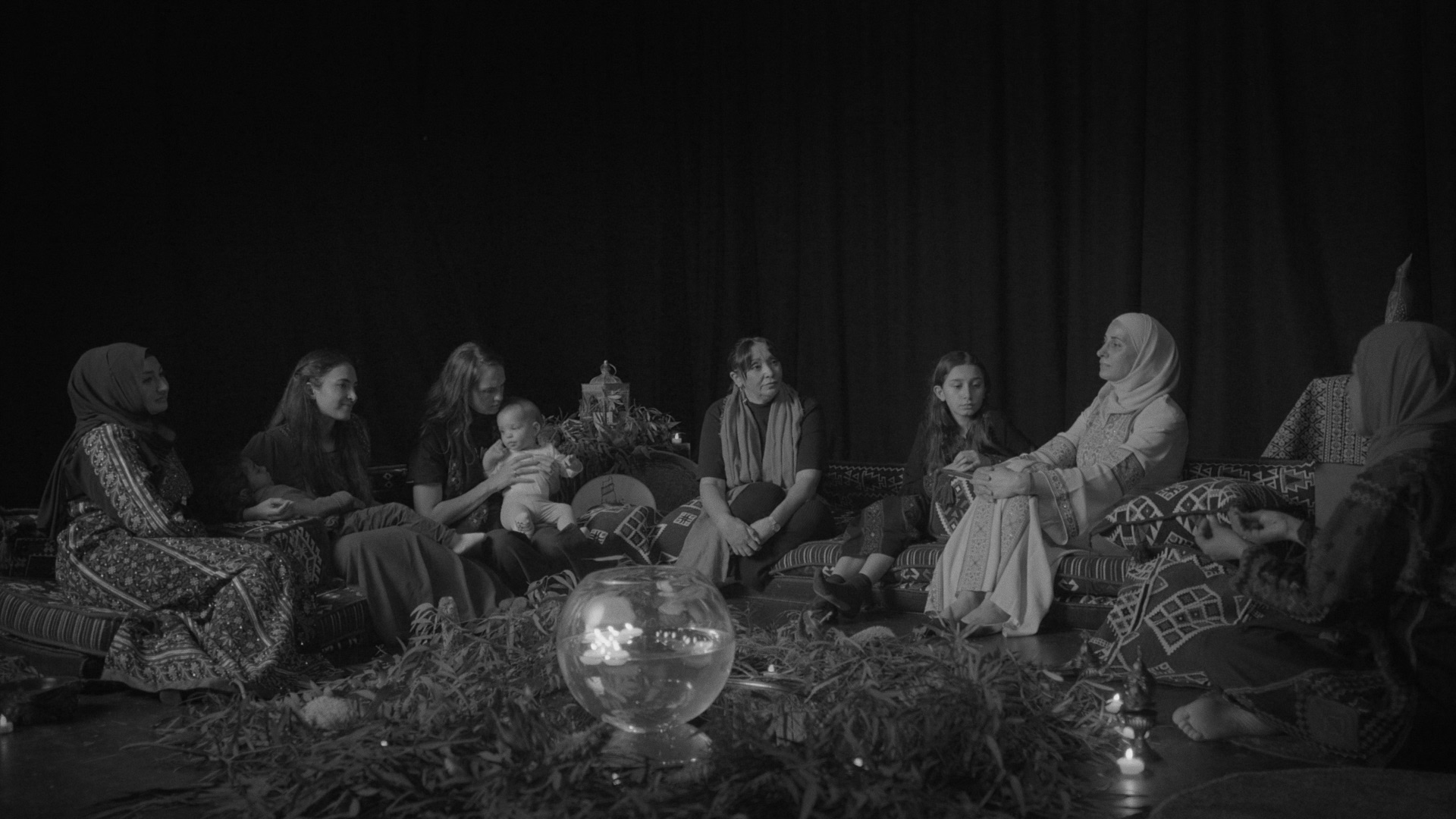
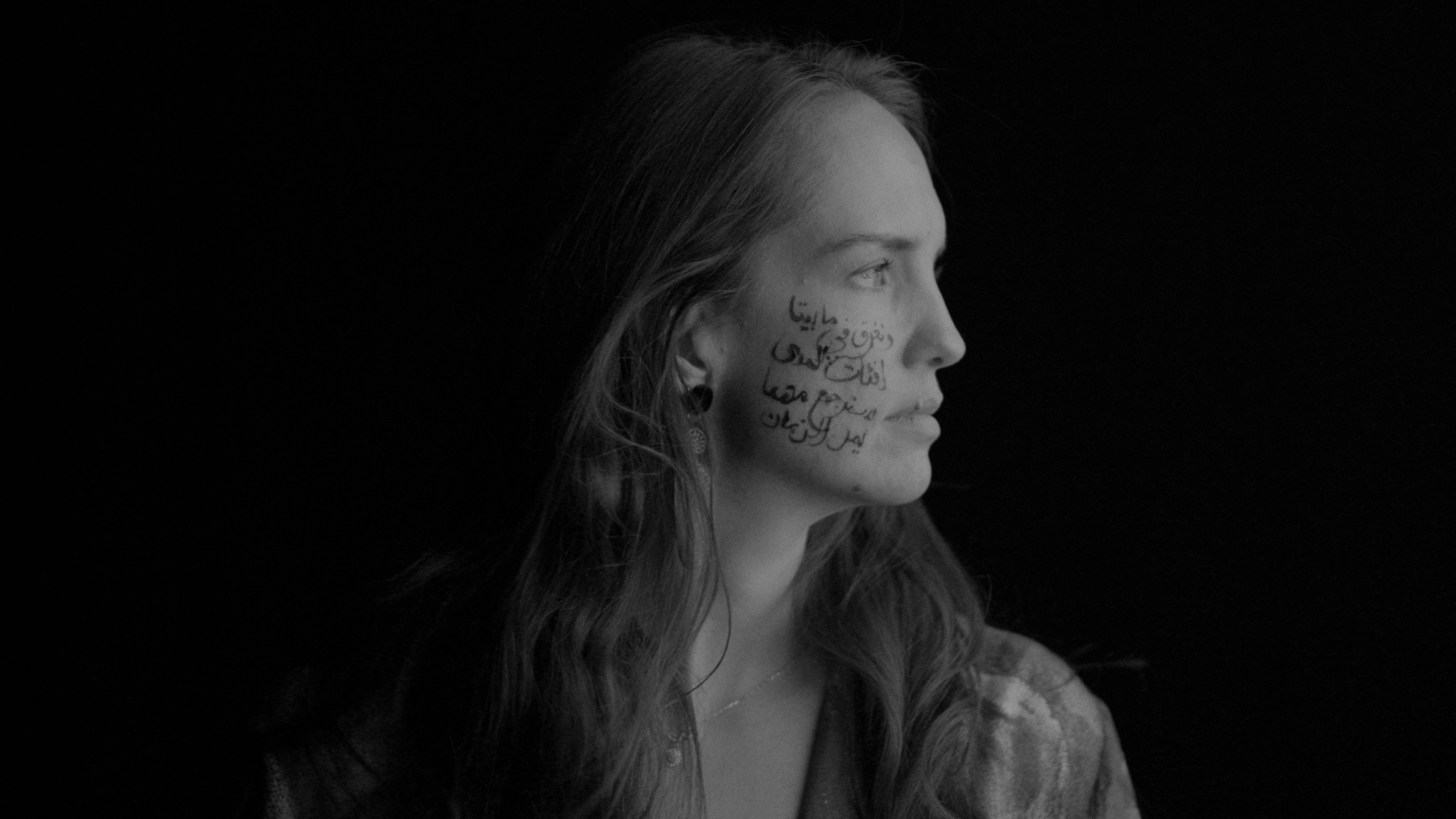
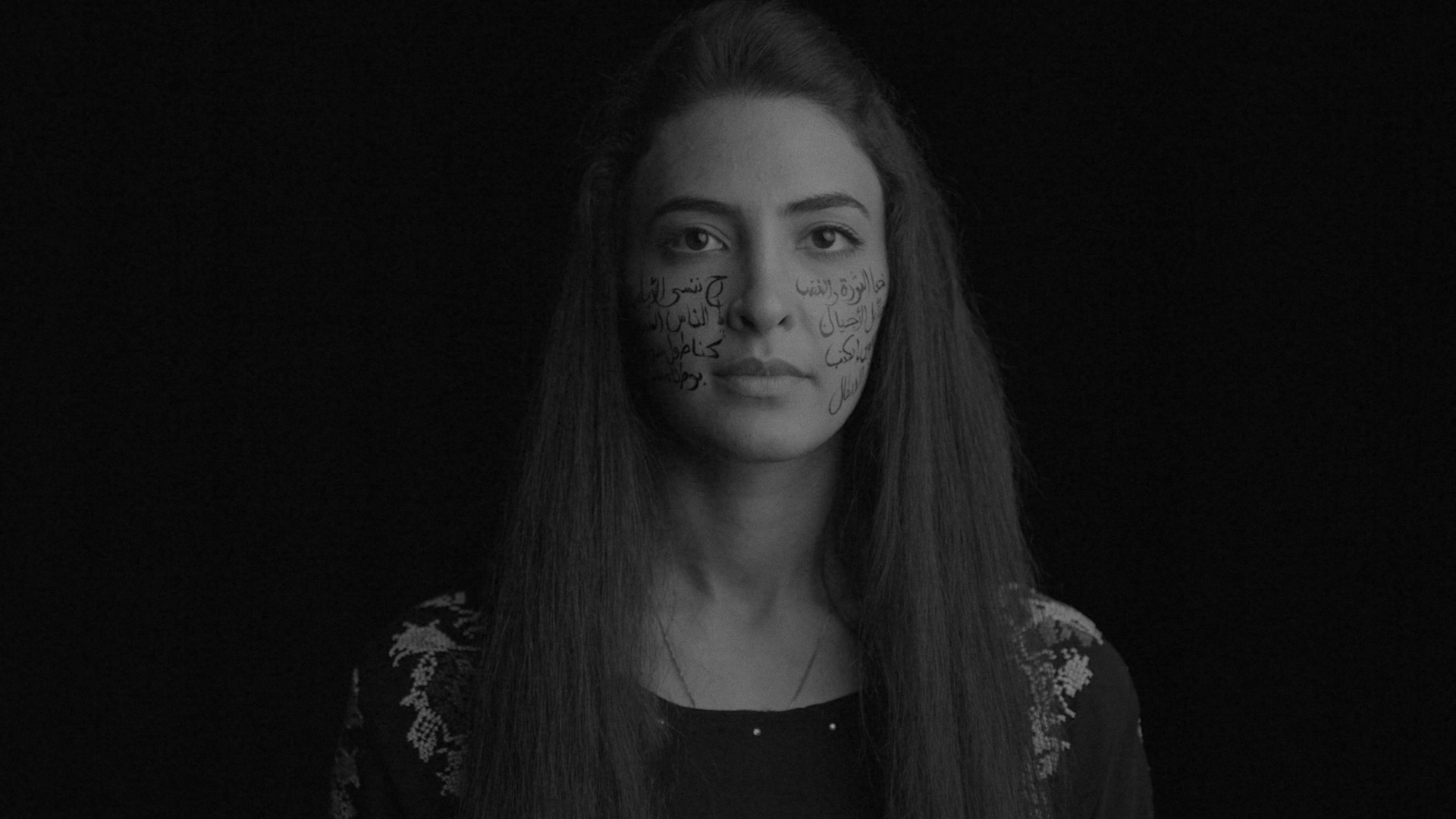
For this conversation we’re joined by storytellers Dr Lilly Brown and Wejdan Shamala. We’re brought together for this dialogue through our participation in the film Motherhood in the Colony (opens in new tab), born from grief, solidarity and love in response to genocide. Co-directed by Worimi filmmaker Genevieve Grieves and Palestinian artist Aseel Tayah, it invites us to build a conscious movement around cultures to understand storytelling as a vital practice.
Can you tell us who you are, what you do, and why you responded to Genevieve and Aseel’s invitation to be part of Motherhood in the Colony?
Dr Lilly Brown Thank you, Gemma. That was just such a powerful introduction. I am Dr Lilly Brown. I am a Gumbaynggirr woman and I also have ancestral connections down to the South Coast. Through my father’s family we are Donovan and Marshall people and very early on in the last century a lot of my family travelled thousands of kilometres north from Yuin Country up into Gumbaynggirr Country, which ended up being the place where many of my foremothers and fathers called home and it’s now also the place in which I belong.
I’m currently on the unceded lands of the Yawuru and Jugun people, in a place called Rubibi, a small tidal town which many people know better as Broome, up on the northwest coast of WA [Western Australia].
I am currently the CEO of Magabala Books (opens in new tab), which is an Aboriginal not-for-profit publishing house. It’s a community-controlled Aboriginal organisation, one of the most remote publishing houses in the world and also nationally and internationally acclaimed. So, I really resonated with what you said: the importance of keeping our stories alive; countering the genocidal violence that’s occurred here on this continent.
I am the mother of Yawuru children. I am not Yawuru myself but my partner and kids are Yawuru, Bardi and Gita. It’s a real privilege as an Aboriginal mother to be able to grow my kids up on their Country, because I know that many of our foremothers didn’t have that opportunity over the last two centuries because of colonisation and the things that people had to do to ensure the survival of our families for generations to come.
It’s an absolute privilege to grow my kids up on a Country that has nourished their people and their families for thousands of generations.
I’m also the co-founder and director of Shifting Ground (opens in new tab), which is a First Nations women-led collective. In a conventional sense we could be understood as a consultancy but we really exist to support First Nations people, and particularly women and queer folk, to get the resources to get their land back. I keep on thinking, ‘How do we create a business where people can get paid to live their best lives as self-determined First Nations people?’
The last almost two years have been really tough. I don’t just mean since the most recent iteration of the genocide in Gaza. I also mean since the ‘No’ referendum, where over 60% of Australians voted ‘no’ to have a Voice to Parliament recognised in our constitution. I find solace in my children at the same time as I just mourn so deeply every single morning when I wake up, the fact that there are so many other mothers and parents and carers across the world that don’t have that privilege.
Why I responded to the call that Genevieve and Aseel made? I had been watching this most current iteration of the genocide begin and finding myself nursing my son to sleep and sobbing for children and parents in Gaza and feeling this overwhelming fury and rage that I had the privilege and the resources to keep my child safe. The injustice for me was so animating. When I saw the callout I was like, ‘I need to come together with other mothers that are experiencing this moment like I am.’
I think that for people who have, in the fibre of their being, this survival history where you know that decisions have been made to ensure your presence in this current moment, that’s part of who we are as a people. Often we don’t have the privilege of really knowing those stories, but how do we honour the mothers in this context? In a moment where you’re feeding and nourishing another human being, you’re giving so much of your body, of yourself. I needed to tether myself. Rubibi is a long way away — it’s 4000 km away from Naarm. I could see these people coming together and I was like, ‘I need to be there for this. I need to get the energy from somewhere to weather this most recent storm.’
Wejdan Shamala Thank you for that, Lilly and Gemma. I’m Wejdan, Arabic for ‘conscience’ and I’ve been grappling my whole life with what I feel is my predestination. We have very strong connections to names, so it’s something that is very intentional in our communities and when the grief is too much, I blame my parents for their choices of name. I’ve spent a lot of my adult life trying to reconcile with this and trying to live what it truly means to feel for others and to care for things outside of myself.
My family is half from Gaza and half from Qalqilyah in the West Bank. I have never been to Palestine, unfortunately, which is really difficult both for myself and for my discussions about Palestine, because it triggers a lot of questions, including things like, ‘Why don’t you live there?’ which is so multi-folded. I can go back as a ‘Western person’, but what that means for a life going back as someone who’s recognised as not being from the land is a whole other story.
I work in education; I run women’s circles; I advocate for animal rights; I write; I try to grow spiritually; and I try to have that common thread between all the different things that fill up my time at the moment.
Why I responded to Aseel’s call about taking part in Motherhood in the Colony? There wasn’t a single emotion at the time that wasn’t flooding my veins. I had just learned of my pregnancy in the same moment that I started seeing videos of mothers carrying pieces of their children and at the time it felt like doing something was better than doing nothing at all.
We can talk forever about how we define impact and how impactful art is. The name Shifting Ground really resonates with me: the belief that when we speak, we are shifting the energy around us, and that’s a start. I know it can sound like fluff but then I remind myself that no, it’s much more powerful than that. The world at the end of the day is a culmination of our intentions. The more vocal we are about that and about shifting that energy, the more there is a possibility for that to be translated into action.
GP I really mirror both of your thoughts around how art and action and coming togetherness can be really powerful tools against despair.
How does the ongoing violence and the genocide in your communities shape your daily life, daily relationships and mothering?
Dr LB Living in a remote town where just under 50% of the population here identify as First Nations people, this town is really built on the blood, sweat and tears of Aboriginal people and their negotiation with different industries over centuries, like mining and pearling and pastoralism.
I think to be an Aboriginal person in 2025 in Australia, you’re constantly negotiating what it means to exist again in a continent where genocide has occurred. I was reading something that Nathan Mudyi Sentance (opens in new tab) wrote about ow many people were here 200 years ago as a thriving community of, I think it was 1.2 million people and then just over 100 years later, there was 100,000 of us left. When you see what’s unfolding in Gaza as an Aboriginal person, whether you’re here or on Turtle Island, you start to reflect on why we have survived what we haven’t been privy to and the things that haven’t been passed down for generations. And we feel it: we feel the loss and absence in our bodies. We haven’t been given the knowledge and our memories, so many of them were lost with the people who were murdered. There were hundreds of massacres across this continent. That past manifests in the present in the way we as a people are always in mourning and feeling that we’ve lost something.
I think there’s a lot of hope in knowing that we’ve lost it and we will find it again. I think Country’s always talking to us and Country holds these stories and memories for us in the absence of explicitly people having had the opportunity to pass these things down.
In my everyday life I’m really lucky because I am the CEO of a Blak organisation. When I’ve worked in non-Indigenous organisations, I would have spent 95% of my time pushing shit up a hill; in a self-determined organisation that takes up 2% of my time. For so many of us who work so hard to get into these positions of power and to try and move into powerful non-Aboriginal organisations to make change, there are a lot of distractions. In a professional context, these kinds of things are happening.
All of my research really has been around young people and education. I’ve always been interested in the power of knowledge and what that means in different contexts. As an Aboriginal mother, I’m conscious every day when I send my kids out the front door that the world will be telling them that they’re not good enough. In the media, mainstream media, in so many different spaces that communicate messages about what it means to be a First Nations person, overwhelmingly, those messages are negative. So I’m always thinking about, ‘How do I protect my children and my nieces and nephews, my niblings, from those negative messages?’
I feel really privileged that I work in an organisation that deals with stories and books and we’ve had so much success in creating children’s books. And so actively, when I drop my daughter off at school and I go in and we’re a little bit early, I can pick up a Magabala book and read to her a story that reflects her lifeways and her life world, which is such a privilege.
‘As an Aboriginal mother, I’m conscious every day when I send my kids out the front door that the world will be telling them that they’re not good enough ... So I’m always thinking about, ‘How do I protect my children and my nieces and nephews, my niblings, from those negative messages?’
Dr LB The Kimberley has one of the highest suicide rates in the world (opens in new tab). Police are flown up to Broome almost every other weekend from the south, in a town where there are not enough houses, safe houses, secure houses for Aboriginal women and mothers that have families. Those same police are in safe and secure housing.
There’s this ongoing cycle of violence where the State is creating a problem for us as Aboriginal people and then they think they know how to solve it. You have kids being flown down to Boorloo in Perth and they’re put in adult prisons (opens in new tab) and they’re self-harming and they feel hopeless. The way that our young people are framed is a really important consideration when we’re talking about time. In a lot of my work I’ve thought not about education and criminal justice as separate systems, but actually as systems that interact to arrest our children. So if you’ve got a kid who’s failing at school then they’re picked up by the criminal justice system, while at the same time the education system is put forward as the system which should solve the problem of Aboriginal kids — and yet they actually work in relation to each other to kill our kids. You can see that with Kumanjayi White being killed by police (opens in new tab) at a local shopping centre, not for stealing because he hadn’t left the shop yet — you can’t steal something if you haven’t left the premises — but our kids are placed in this box, this risk box, where it’s like they’re always about to do something criminal. Or if they’re succeeding, then they’re an exception. But if they’re an exception that means there’s a rule and generally, the rule is that Aboriginal kids don’t deserve to live.
When I think about the ways that colonisation and genocide continue to manifest in my everyday life, I think about it in terms of myself as an individual, but also the systems and structures that inform the way that I move through the world and that inform the way that other First Nations people in my community move through the world. For me, as a fair skinned Aboriginal woman, that manifests very differently to people in my community who might really visibly be identifiable as First Nations people. Even just being at Woolies today, you see the way that people have to move through that space to protect themselves. I can just go through the self-checkout with my little basket of goods but if you’re identifiably a Blak person in this town, you probably don’t want to do that because there’s more of a risk that you’ll get accused of stealing, so you line up at the checkout.
There’s lots of little ways that the continued microaggressions of settler colonisation and the ways in which the killing of First Nations people is acceptable continue to manifest as a part of an ongoing genocide that’s been happening here for centuries.
GP Something that really challenges me as a young person today is it feels like there’s so many different realities that we have to navigate and that we’re exposed to. Here where I live, we still have a Mission and the reality of the communities who live in Missions is completely different to the realities of those who live closer to the coast. I think what is so resonant with what is happening in Gaza at the moment is that we have that ancestral memory of that reality. I’d love to move to you, Wejdan: how does this ongoing violence show up in your daily life? And how it affects your sense of time, as well?
WS Thank you for that, Gemma. I guess everyone, whether Palestinian or non-Palestinian, but cares about what’s happening, has that overwhelming sense of ... you don’t respond to something like this by sitting at your desk behind a computer. I keep asking people in my family, ‘How is this not making us just stay on the street? Why aren’t we all so disturbed that our lives have come to a complete stop until this is dealt with?’ That’s a bit of a shame that I carry and that I know a lot of people carry as well.
I relate a lot to what both you and Lilly said about those different realities. I think that the new thing that we’re experiencing now — of bearing witness and not being physically present — is messing up with our heads so much because the juxtaposition of these realities is very ... I honestly don’t even know how to put it into words. It’s really confusing because our bodies are feeling things that are having the effect of something immediate even when it’s not. Having to go about your life on a completely different land to where the genocide is happening is throwing us out of balance in every possible way.
How that looks in my life is that I’m stuck in a rat race that most of us are stuck in and we have to compartmentalise in ways that don’t make any sense, to keep going so, I schedule my cry sessions and then I wipe my tears and I show up at work pretending that my entire people are not being annihilated in the same moment that I’m sitting there talking about something completely irrelevant. That’s the reality that a lot of Palestinians in the West are living at the moment.
WS I wanted to mention a little bit about that sense of time and something that’s slightly less immediate to me in my life. My mum was talking to me earlier about what that seasonal sense of time was like for her parents and grandparents growing up on their lands and it was a lot more protected from the reach of capitalism than the life we have over here.
Mum was saying how people worked their lands and lived off their lands and their entire life was centred around that. Both parents would wake up early in the morning and the wife would sometimes hand a pan to her husband to take when he goes to work the land so that he can just put whatever the land yielded. We were talking about how time would have looked very different back then and when I try to compare it to what my life as a Palestinian is right now it’s obviously very disconnected and very different.
I think we have a lot of luxuries that aren’t really luxuries, but that are packaged to us that way. For example, in those years in Palestine mum would talk about how a mum would let their children out in the neighbourhood and no one had that massive anxiety that we have now if my son is, for example, out of my direct line of sight, because people looked after each other and they lived in real communities and that’s relatable to that constant feeling of being on edge. How communities are organised today is entirely different. There is so much more focus on survival that it’s taking away from children’s ability to dream and to imagine a future for themselves. Looking at all the footage coming out of Gaza and the things that children are saying, one of my biggest frights is that they don’t even have the capacity to dream anymore. Their questions are all crisis questions, obviously, and things that we should never hear from a young child.
Dr LB And Wejdan, when I look at what’s unfolding in Gaza and the West Bank and then I think about the crisis that the entire world is in, but also the crisis of capitalism and the way that it functions to order everyone’s lived realities.
Here we all are on these devices constantly, watching a live stream genocide unfold, feeling wholly hopeless and not trusting or even knowing the names of our neighbours, when we are also hyper aware of an impending climate crisis. When you have this system, capitalism, that makes people believe that their happiness is contingent on luxuries and not community and not knowing your neighbour’s name and dependent on disputes being figured out by police as protectors, when in reality they’re absolutely not that for a majority of people, I think that we are just in absolute crisis. And we have been taught really only recently to not trust one another. That distrust is eroding our humanity.
A year and 10 months ago I think it was probably worse than ever. I think what’s happening in Gaza is probably rehumanising people. And it’s also positioning those that are not being rehumanised by what they’re witnessing as part of the problem. Whereas two years ago, many of those people were part of all the solutions. Something’s got to give, something is giving.
WS Yeah, absolutely. My grandparents, they’d laugh at life right now, where if you have an item missing from your pantry, then it was crisis mode, run to the supermarket. They were very reliant on their land but also on a very flourishing barter system where people exchange things and that was very much alive in Palestine. And right now, people have lands that are either stolen or impending — and for what? The greed for financial gain is very much at the centre of a lot of what’s happening around the world.
Little Parallel Lines by Wejdan Shamala
What do we tell them about the world they were born into?
That they were conceived out of rage, out of refusal to be erased
That there’s less of us to love so we’ll make love until you see a Gazan child everywhere you turn, and we will return
We will transform every death you give us into new life
And we will return to plant olive trees
To resurrect joy from the depth of the rubble
GP This poem links that pain of making life with the grief of witnessing death and how rage and love and refusal are also acts of creation.
Can you share anything with us about holding grief and creation in the same breath? And how has motherhood and being Palestinian shaped your sense of time?
WS Something that I’ve been reflecting on a lot lately is that I’m in touch with some mothers in Gaza at the moment who have given birth very recently. What I’m about to say might sound a bit insensitive, but it’s genuinely me trying to understand how the human brain works in these circumstances.
A lot of these mums, their children are severely malnourished. And I guess they knew that that was a big possibility before conceiving them because the families were already starving long before we’ve seen it as the emergency that it is right now. That intention was made clear two years ago.
Thinking about how people are continuing to have children, I don’t know, but it seems that that holding onto life is the only way we can continue to exist, even if we know the pain and the horror that are about to unfold with that decision.
At the moment I try to live a lot in my imagination. I ... it’s one of the ways that I’ve been trying to cope and that’s to really extend that love for my children beyond our household and to channel that energy. I know that it sounds like nonsense. It’s how I stay sane: I just imagine that the love that I’m giving my children is extending to other children in Gaza and elsewhere.
I came across a quote the other day by Ingrid LaFleur (opens in new tab) that for the oppressed people to cultivate pleasure is in itself an act of resistance. And the more broken we feel, the more the system has succeeded. So we have no other choice. We have no other choice but to continue asserting ourselves in our existence, even when that means that we have to balance that with that overwhelming fear that we have for our children.
Gaza is something else. Like, honestly, if we weren’t as stubborn as we are as people, I think we would have been wiped out a long time ago. It is these things that make absolutely no sense to us in our more privileged lives that allow them to continue to be. It is the fact that mums respond with, ‘I’m going to make more children’ after they’ve murdered that mum’s children in huge numbers. Some mums are losing five and six kids and responding with resistance and making more children. I’m sorry, I’m not very eloquent when I talk about motherly losses. It’s so hard to put in words.
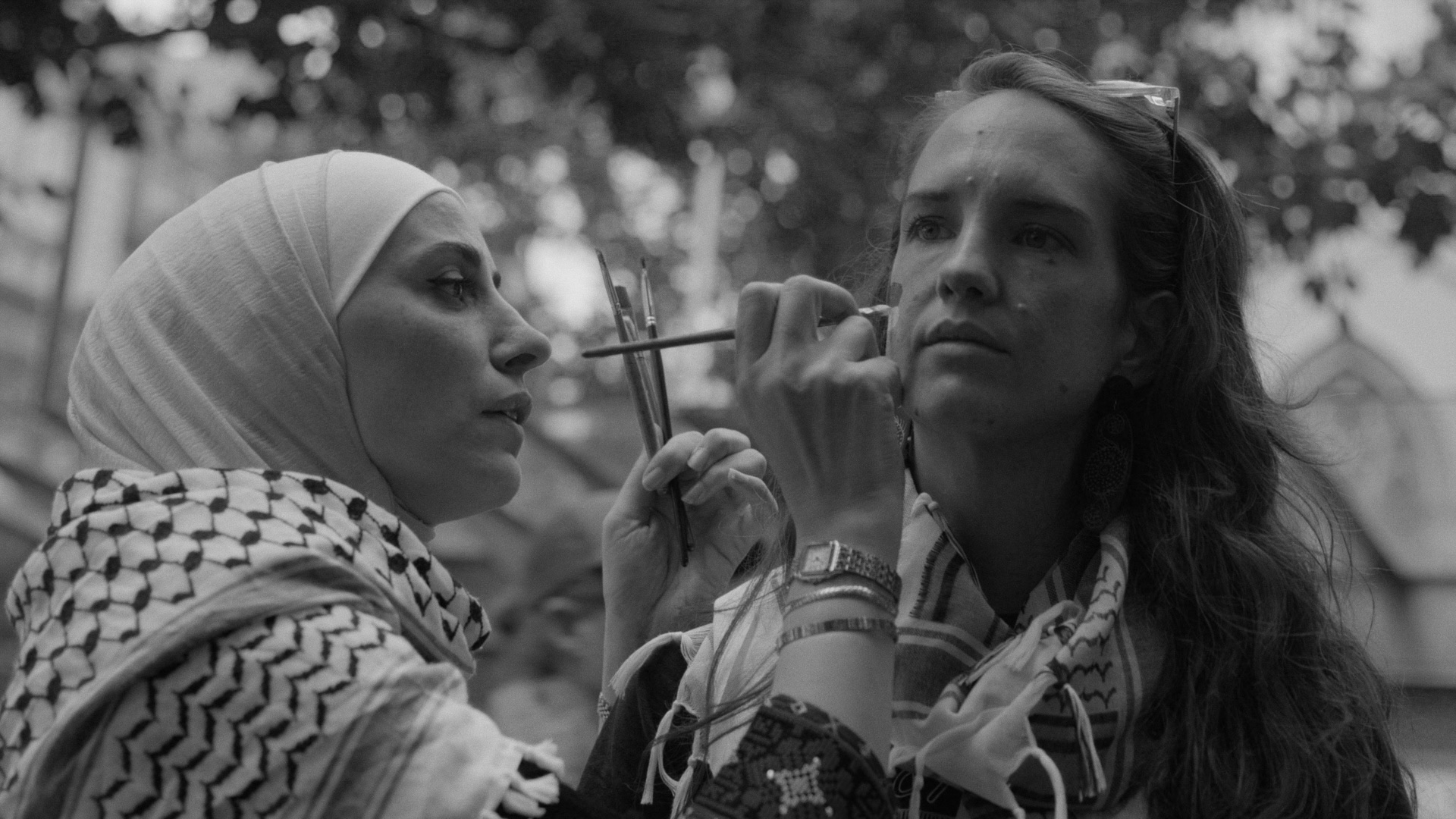
GP When we were all together doing the shoot in Naarm I really felt that strength or that stubbornness. Being surrounded by all these mothers, you could feel that refusal to stop. Once you have bubs, I imagine that is even stronger and deeper.
WS One of the things that is shifting a little bit at the moment is women being more present and more out there. Regardless of where on the feminism spectrum people are, or what their definition of feminism is, I think that the existence of the feminine energy in the public space is absolutely crucial to creating a better future. I didn’t think that that was the case until I became a mother. It’s very natural, that feeling that you care for things beyond your immediate and beyond your children. I genuinely believe that you need to be conditioned so much to feel otherwise — not the other way around. I don’t think the more natural disposition is for people to be entirely selfish and self-centred and then for them to have to polish their character to care. I don’t think that’s the natural order of things. Just by the strength of that force that I felt the moment I gave birth, in that very night, suddenly — okay, people might dismiss it as just hormones but even if it were hormones, they’re serving a purpose —that everything looked very different that night; I’m talking with my first son before this last iteration of the genocide, just seeing the suffering of children suddenly looked very different, even though I’ve always seen myself as a very, very strongly empathetic person. Channelling that energy and allowing it to be part of decision making politically, socially, globally, I think is one way that we can counter the current state of the world.
‘Regardless of where on the feminism spectrum people are or what their definition of feminism is, I think that the existence of the feminine energy in the public space is absolutely crucial to creating a better future.’
GP I totally agree. Lilly, something else I was reminded of is how Blakfullas often yarn about this concept of ‘everywhen’ or circular time. I wanted to read a poem that you shared in your PhD and ask you a little bit about this fusing of time and past, present and future and memory.
Holding by Dr Lilly Brown
for those who sit holding
experience and knowledge
in their bones carrying
the stories of their families
on the tips of their tongues
holding fist tight fires burn
behind clenched teeth
for those who sit with heart
holding back
words hurting sweating
palms rushing blood red
sights set on where you are
going from where you come
holding heavy the future
Could you share a little bit about that poem and how do you understand this relationship between past, present and future?
Dr LB I’ve done so much work and have been so privileged to do work with many First Nations young folk, especially in education contexts. Being an Aboriginal young person once myself and having a negative experience with the education system where you’re told you have to show up every day to this space and it’s going to give you all these tools to succeed and participate in the economy. Yet, really finding it hard to reconcile your joy and your desires with this need to be schooled and to sit at a desk and listen to someone talk at you, often with information that doesn’t feel relevant, and often with information that is really harmful and violent.
When I was writing my PhD and looking at that relationship between education and the criminal justice system, not as separate but as working in tandem to catch our kids, I had on the corkboard above my desk, a list of names of all the young people that had died in custody since I started. Every other morning I would wake up feeling really heavy, expecting to have to add another name to that list.
I worked with one young man many years ago ... At school, someone had said something racist to him, so he left the school grounds. He went to McDonald’s where one of the servers at the McDonald’s counter refused to serve him. He threw a chair through the McDonald’s window and the police were called and then he was put in youth detention. He was doing really well at school up until that point and yet all of a sudden, he was captured by the criminal justice system and just couldn’t escape. And there was no meaning making around, ‘What does it mean for a child to be racially vilified in a place where he’s forced to attend 30 hours a week? And he’s told to do so will benefit him.’
When I met him, we were trying to support him to reinvest back into a love of learning. We had to go to the detention centre to pick him up and I remember sitting there in the bush with him and he was telling me about how much he loved a show on the TV in the juvenile detention centre. It was Brian Cox, who talked about the universe and physics, and he was telling me all of these things that went completely over my head but, as he was speaking I was thinking, ‘You’re one of the most intelligent people that I know and all of the systems that are set up to fail you are not capable of recognising that’. I thought about what it would have taken for him to sit in that classroom and to sit on those school grounds and to experience that level of harm and to have to swallow that.
When I wrote that poem I was thinking about all of those things and how so many of our ancestors have fought for us to exist. And it comes back to what Wejdan was saying before as well, with women who say, ‘In the face of this genocide one of the few forms of resistance I can really enact is to create more Palestinian people’. Every time one of us stands up and says, ‘We are here. We refuse this violence and this harm’, we demonstrate the lack of success that previous governments actually had in implementing their policies of assimilation and erasure.
And so, working with young folk and Elders as well, in that context, feeling constantly humbled to be in their presence and knowing they were incredible and brilliant, and then I would look at the education system and just think, ‘Why? Why do we have this system that is not able to recognise and foster that brilliance?’ It fosters the brilliance of non-Indigenous kids every day, but it doesn’t foster the brilliance of our kids. It forces them to comply, or if they do succeed, to be an exception to the rule of Aboriginal disadvantage and criminality.
Most state governments spend $300,000 a year to lock a kid up; they’re willing to invest in their incarceration and yet they’re not willing to invest in their joy, in their living of life, because for First Nations kids who refuse to comply — especially to Western education systems — it means that we’re still here. And it means that the systems that the West use to prop up their existence and to validate and justify, most often, the existence of settler colonial invaders on unceded First Nations lands, are not set up to benefit us. They’re set up to continually ensure that settler colonialism will work to erase us.
I wrote the poem for all of the young folk that I’ve worked with who I know show up every day, or don’t, and I wanted to honour that. I wanted to honour non-compliance. Because I think that those kids are usually our brightest, actually. The kids that are like, ‘Hang on a second, this system, there’s something going on, you can’t get me out of bed for this place’, they’re onto something. That’s who I wrote the poem for.
WS You went through that system so you can address it: you did your PhD, and similar with a lot of us who are forced to speak that language to relay the problems, it’s just ridiculous how the onus keeps going back on the oppressed to prove that they have a problem and to prove it in a language enforced on them. It doesn’t happen overnight. People don’t just wake up starving. A lot of decisions have to have been made for the situation to be what it is today. And then we need to now prove to the world that is seeing all of this on their screens that people are starving.
Dr LB And the irony Wejdan, too, is that we can see people are starving, are being starved, and then the international community is also validating Israel and the United States as the nations who are doing the starving. They’ve been given also the authority to solve the problem they’ve created. And you can see how that unfolds in different settler colonial contexts and different moments: this interconnected web where the oppressed are murdered, killed, maimed, colonised, and then systems are set up and participation is made compliant. These systems that are actually part of settler colonialism — they’re not separate from it — are the ones that everyone is told is going to fix the problem.
So, how do we step outside of this? I think that debate is even happening right now with the concept and practice of international human rights. The irony is that Black and Brown people are not considered human under that framework in the same way that white folk are. For me, it’s like, what are the frameworks that we’ve been using to make sense of the world, to leverage, to wield power and then actually, what are the newfound fighting sticks we need to ensure that the future is not one where capitalism is the system which actually enables people to value or not value? In what world is going to one of the big supermarkets to pick up your spinach the thing that’s valued most, rather than the joy of actually picking something from the ground that you’ve grown yourself. And I often think about that being here in Rubibi, where trucks of food are driven thousands of kilometres to this place that is so fertile and in climate is more like Southeast Asia than the south in WA [Western Australia]. We’re dishonouring this Country, constantly. We’re not recognising it for its abundance and in doing so we’re continually contributing to the demise of the world. The absurdity of the current moment we live in and the lack of humanity and the lack of regard for the countries that have nourished us, not just First Nations people, but everyone on this planet for thousands of years, for thousands of generations. Something’s got to give.
There’s so much abundance. I can’t even eat a piece of toast without, in my mind, honouring the struggle and the fight of people in Gaza. Then I see this wilful disregard of the humanity of Palestinian people. Shame, shame, shame. Shame on anyone that for any moment has actually enabled this to occur. Knowing how complicit we are and the co-option of us into these homicidal systems, which for some reason we’ve been brainwashed as the things that we need to participate in to ‘live the good life’. Again, just absurd.
WS I wrote something about time. I would love to have the privilege of reading it here before anywhere else.
Hours Unlike Ours by Wejdan Shamala
Not every hour has 60 minutes
There’s your hour and mine and there’s the hour of the hungry
The hour on a clock in Al Nasr Hospital, the ward of the malnourished children waiting for a syringe loaded with a few drops, just enough for the angel of death to do another few rounds
There’s the hour of the father waiting for his sons to return from the GHF location
wondering will it be both, one or none?
There’s the hour in childbirth labour, like the one you and I have undergone, but there is also the hour in labour in a haunted ward, in a makeshift tent on or under the rubble
Will they cry to be fed? Or will they feed the earth?
There’s the hour of Layan
sitting in the rowdy hospital corridor that’s not loud enough to muffle the rumbling in her tiny belly, waiting for mama who’s putting the starving baby Mahmoud to sleep
Playing with the ghosts who seem more possible than any sign of a real toy
There’s the hour of those buried alive by the weight of crumbled stone,
The fright, oh, the fright of muted screams, of forced stillness, of slow death
Not every hour is like yours and mine.
GP As we close, I’d love to return to this idea of non-compliance. What does non-compliance or hope and its deliberateness mean to you?
Dr LB For me, in this current moment, non-compliance must be valued. Often people say that for violence to occur, someone has to be silent about it; silence is complicity. My esteem for people has just grown so much when I see someone who understands what the cost is and they do it anyway — that’s what we need in this moment. We need people to be rowdy. We need people to scream from the rooftops. We need people to scream into the void, to rally, to email, to write letters, to get on ships, to try and break the siege. We need people to be non-compliant. This is not the time for complacency. This is not the time to rest. This is the time to fight. And in doing that, then you honour the resistance and the fight that people have been putting up against Israel and its partners for decades. And when you do that too, you need to also recognise that Israel and the United States do not sit on their own, they are part of a global imperial network which has existed for centuries and it continues to exist and it continues to ensure that Black and Brown folk, that folk that are different to what is considered normal in these countries, in these continents that hold so much power, can continue to be at the service of those who are invested in the luxuries, in capitalism as a system that benefits them.
Non-compliance is everything. If people are compliant in this moment, then they are actively supporting the demise and the erosion of our humanity and the real-life consequences of that — that’s what we’re seeing unfolding in Gaza right now.
WS It’s a good thing that we always feel like we need to do more. And I hope that that feeling doesn’t go away, I really do. I second what you were saying about non-compliance and disruption. In the very, very, very least, we should not allow those conversations to die. At least it will make certain people uncomfortable. And if that happens at a mass scale, it will definitely sway the pendulum.
The other thing, and I will feel like a big hypocrite saying this, but it’s a work in progress. I grew up in the UAE [United Arab Emirates] and our entire life was capitalism. So to make that shift is difficult and it requires a lot of time because it has legs in every part of our lives and it’s really, really not easy to escape — practically impossible — unless you live in a very, very isolated community. We can still try to push the boundaries of our involvement.
What I’m trying to do is to de-commodify my life and encourage everyone around me to do the same. One thing that helps is always asking ourselves, ‘Can I do without this?’ We’re attached to a lot of things that we don’t necessarily have to be attached to. So to really challenge ourselves to boycott, to make different consumer decisions. There’s a lot of information out there about the real impact boycotting is doing but of course, they don’t want that to be on the front pages, so it’s up to us to continue to believe in the power of consumer choices and to make the most ethical choices where possible, to bring community back in whatever capacity: joining community gardens, supporting local initiatives.
It’s funny how we see these things in isolation, but they really aren’t. How powerful is it for you to be able to feed yourself? I have a little miserable garden, I’m not gonna lie, it’s so sad, but I’m hoping that it’s better than nothing. And it’s the process of teaching my children the importance of growth and for them to actually know the sources of things — that in itself is huge. The fact that we’re bringing up an entire generation that thinks eggs just come from supermarket shelves. So, creating that awareness and that consciousness and really trying to decide where our investments go.
And Lilly, in the film where you said for you to invest in your children and the children of other people, that’s a huge step.
I’ll end with just talking about hope. I had so much anxiety before the march on Sunday and I thought, ‘Am I making the difference? Like, why do I need to haul my children and pay for parking?’ But I still decided that it’s better that I go than not go. It was a massive inconvenience and I feel ashamed saying that because that’s first world problems, but the power that I saw in the march was absolutely worth it: it really, really gave me hope as someone who can be a little more on the pessimistic side sometimes to see good out there and in magnitude is really important because good people exist. But sometimes when we’re all deep in our own little part of the world we don’t get to see it. So for you to experience that on a mass scale is very, very powerful. We were in the same spot for over an hour and the kids were starting to lose it. I was getting really claustrophobic because I was trying to get out of the crowd and I couldn’t; there were women who held umbrellas up for us the entire march. To see that selflessness and to see people put so much effort for others brings back that hope that we can definitely choose otherwise.
Dr LB I’m 4000 km away from Sydney but when I saw the images of people marching across the Sydney Harbour for the first time in such a long time I just sobbed from like, relief, because I feel like so many people have been screaming into a void because we live such insular lives it’s really hard to say, ‘Yes, we feel the same way about this.’ The Guardian just came out and said they actually think it was between 225,000–300,000 protesters (opens in new tab). I cried in a way I haven’t cried for in so long, actually ever, because in this moment that is humanity, really. We cannot normalise colonisation. We cannot normalise the level of violence and disconnection that we’ve been experiencing.
Knowledge Holders
About Motherhood in the Colony
In a world shaped by violence and erasure, Motherhood in the Colony brings eight First Nations and Palestinian women together.
Through intimate storytelling, the film unravels stories of colonial trauma, and mothering as an act of resistance, while inviting audiences to listen, learn, and envision a future beyond the oppressive structures of colonisation.
Created by Worimi filmmaker, Genevieve Grieves (opens in new tab) and Palestinian artist, Aseel Tayah (opens in new tab).
About the Series
No Space is Empty is a First Nations knowledge symposium exploring time beyond the clock. The digital series encourages us to consider how different temporal frameworks shape our worldviews, relationships and practices.
The live symposium was held on Gadigal Country at Sydney Observatory in June 2025.
Time Across Cultures was recorded online in August 2025.